English
 中文简体
中文简体 Español
 Deutsch
-
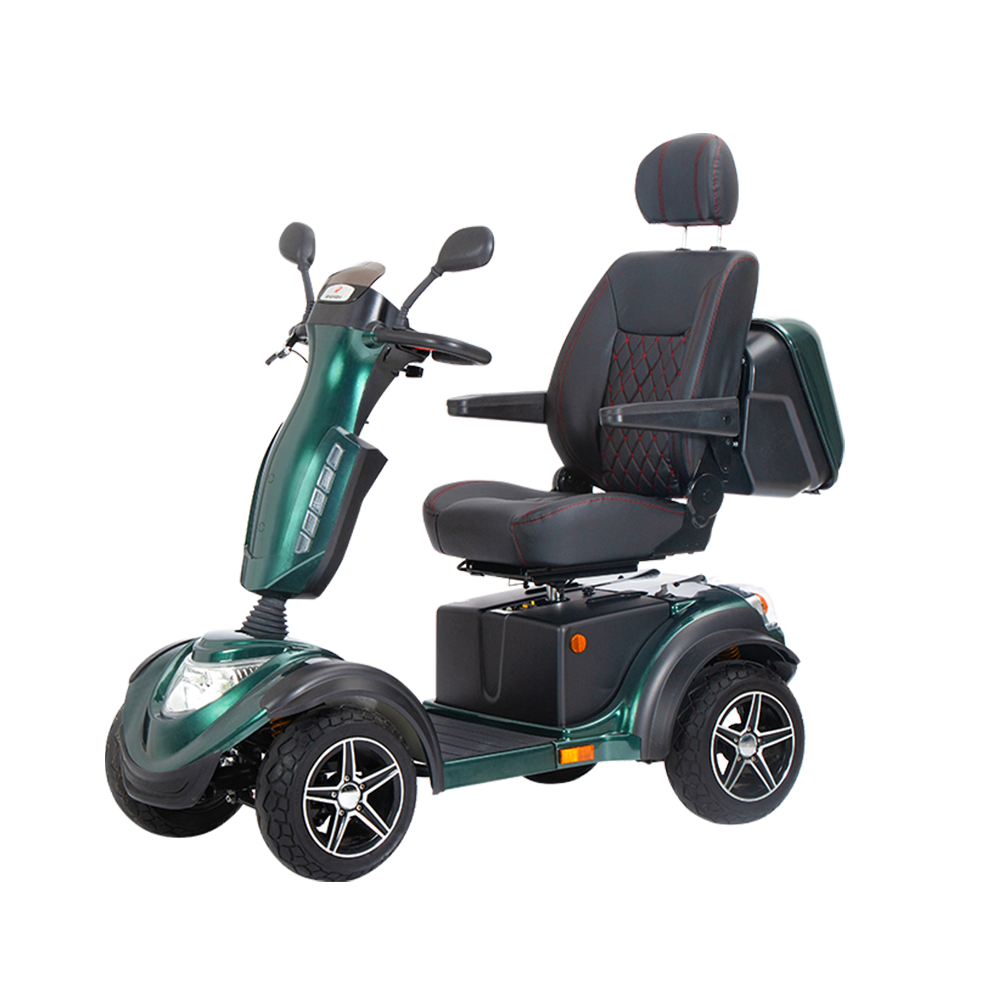 Master of Terrain R68SPRO Conquer Any Path, 65km Freedom Ride
R68SPRO
The Ruidi R68SPRO Pro-Enhanced Mobility Scooter redefines the standards of premium pe... -
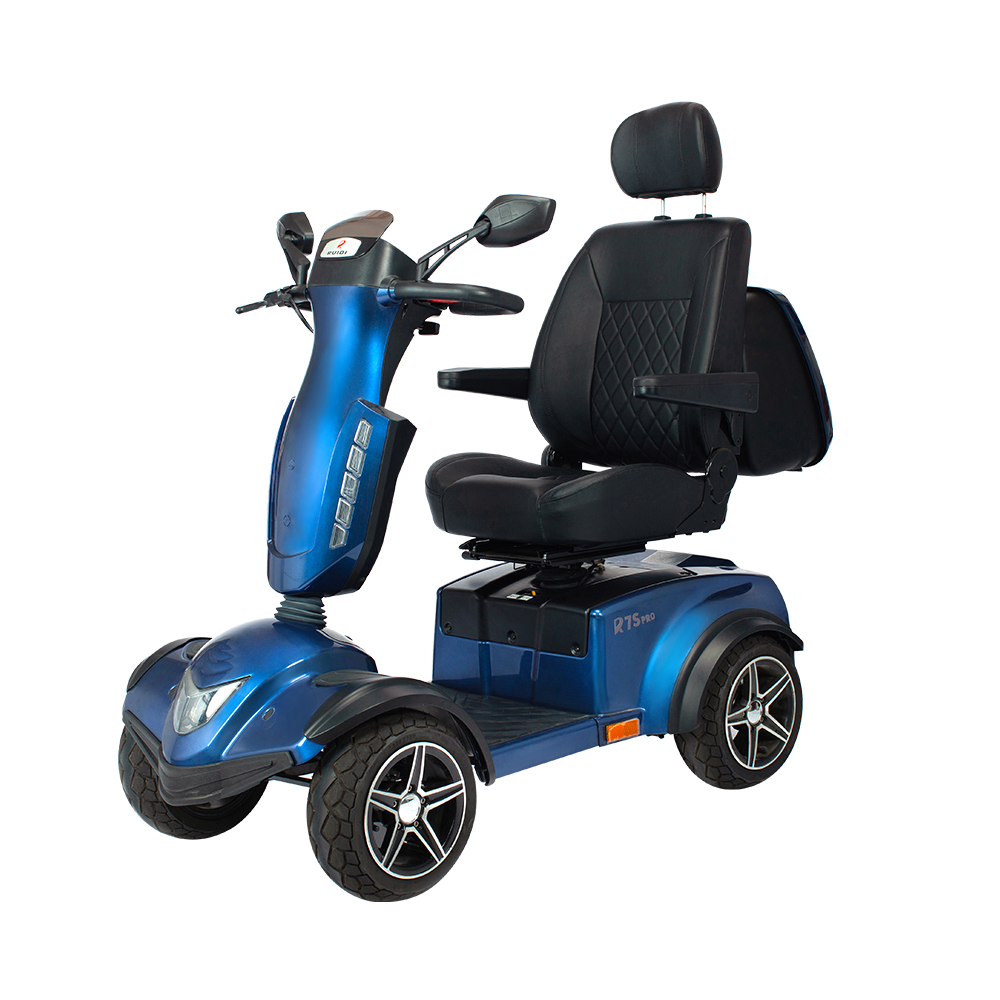 Mobility Scooter R7SPRO: Powerful Performance, Stable Control
R7SPRO
The Ruidi R7SPRO is an all-weather mobility scooter that combines powerful performanc... -
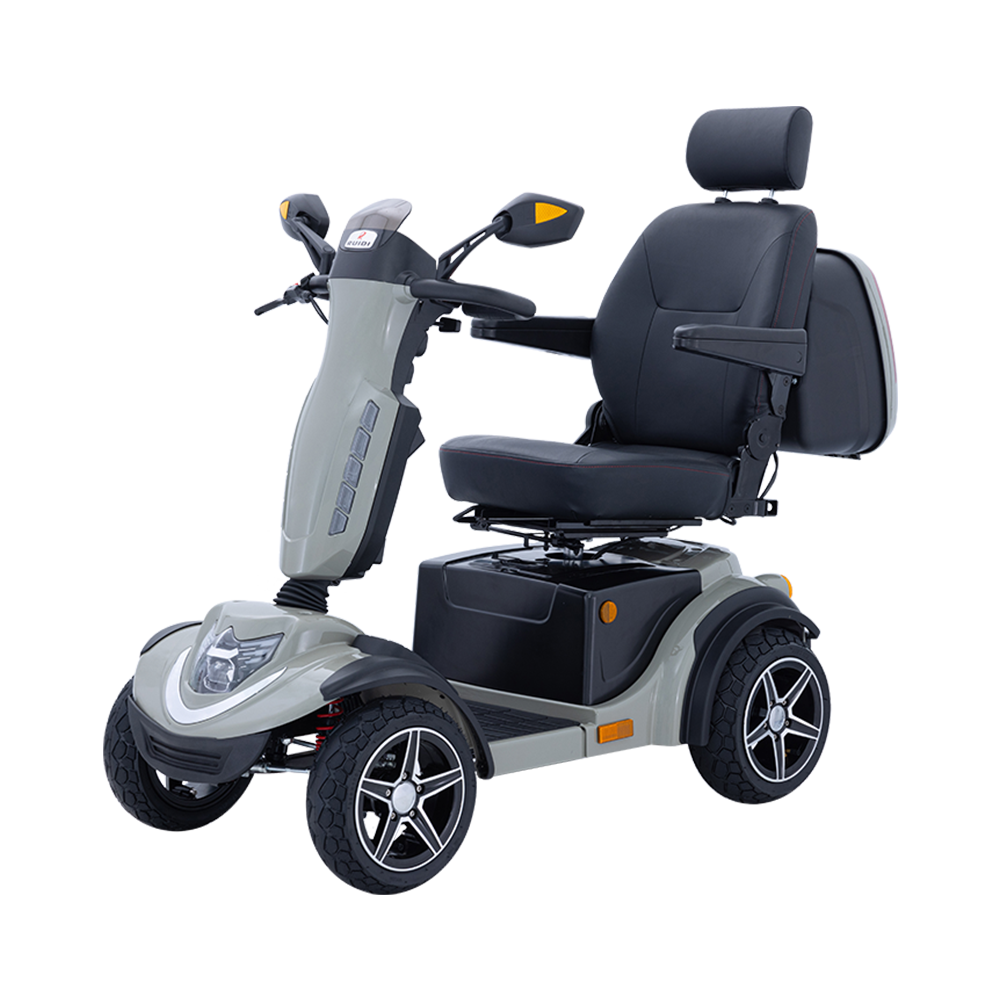 Tech-Luxury Mobility Scooter: TFT Display, Keyless Start, Dual Safety
R49SE
This all-new tech-luxury mobility scooter seamlessly integrates intelligent technolog...

Medium Mobility Scooters
Striking the ideal balance between agility, comfort, and range. Ruidi's Medium Mobility Scooter is equipped with a high-efficiency power system and a high-capacity battery, delivering reliable and extended mileage for daily city commuting. Its reinforced chassis and optimized suspension ensure a smooth and stable ride on various road surfaces. It is your dependable daily partner for going to work, shopping, or enjoying park visits.

ABOUT
Zhejiang Ruidi Vehicle Industry Co., Ltd.
Zhejiang Ruidi Vehicle Industry Co., Ltd. is a professional manufacturer engaged in the research, development, and production of Medium Mobility Scooters. Our products are widely applied in elderly mobility, sports and leisure, and recreational fields.
The company’s manufacturing base is located in Jinhua Industrial Park, Zhejiang Province, covering an area of approximately 35,000 square meters. The facility is equipped with over 100 sets of advanced production equipment and four efficient production lines, ensuring stable production capacity and reliable product quality.
At present, our products are exported to the United States, Canada, Europe, and Australia, as well as supplied to the Chinese domestic market. Our main product series include mobility scooters for the elderly, electric walking chairs, foldable electric mobility scooters, and enclosed cabin-type electric mobility scooters.
We consistently adhere to a quality-centered management philosophy and are supported by a professional and efficient team. We are committed to providing electric mobility products that are easy to operate, energy-saving, environmentally friendly, low-noise, and pollution-free. We believe these products bring greater comfort, convenience, and freedom to elderly and mobility-impaired users, helping them enjoy a higher quality of life.
View More
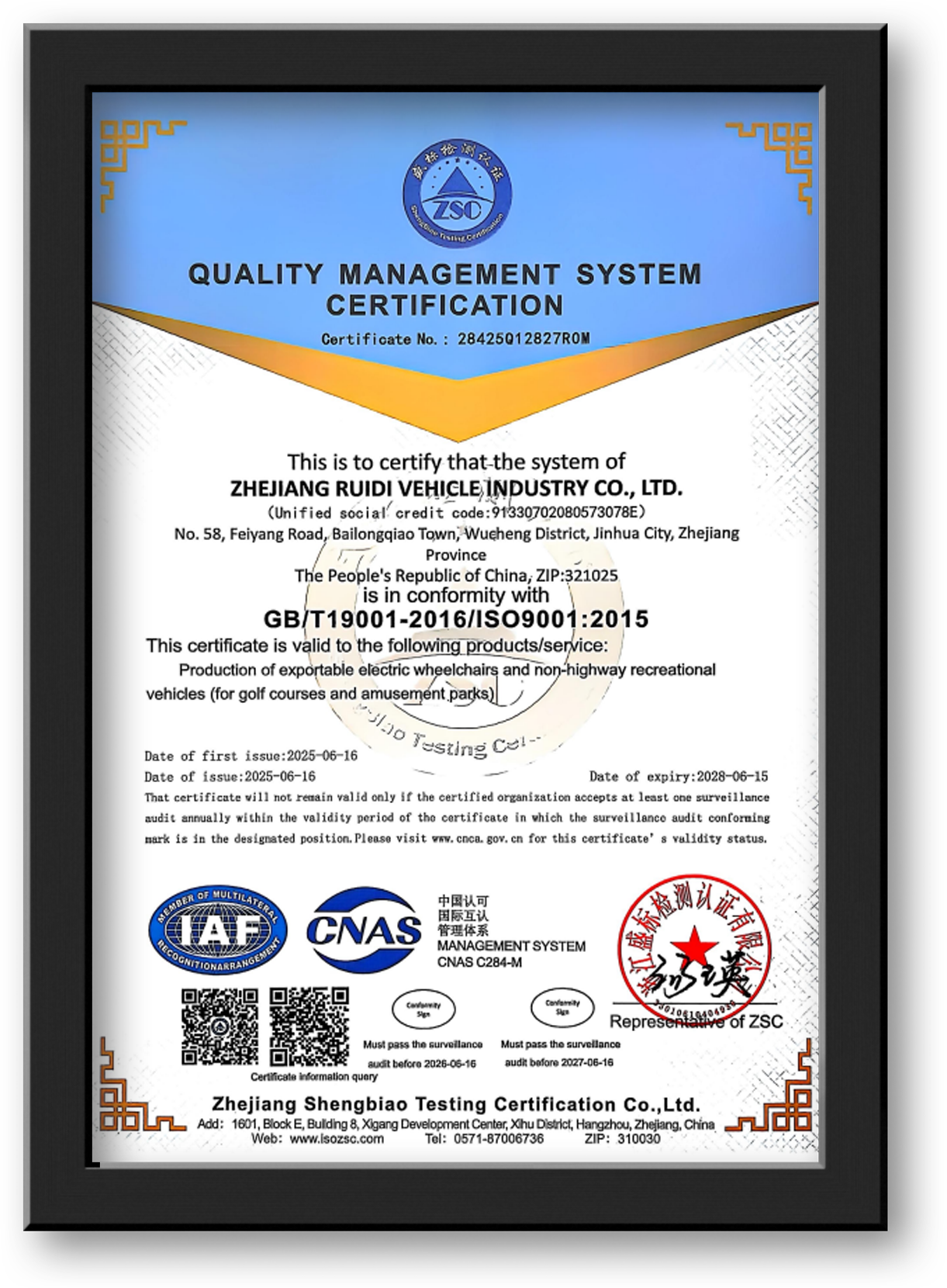
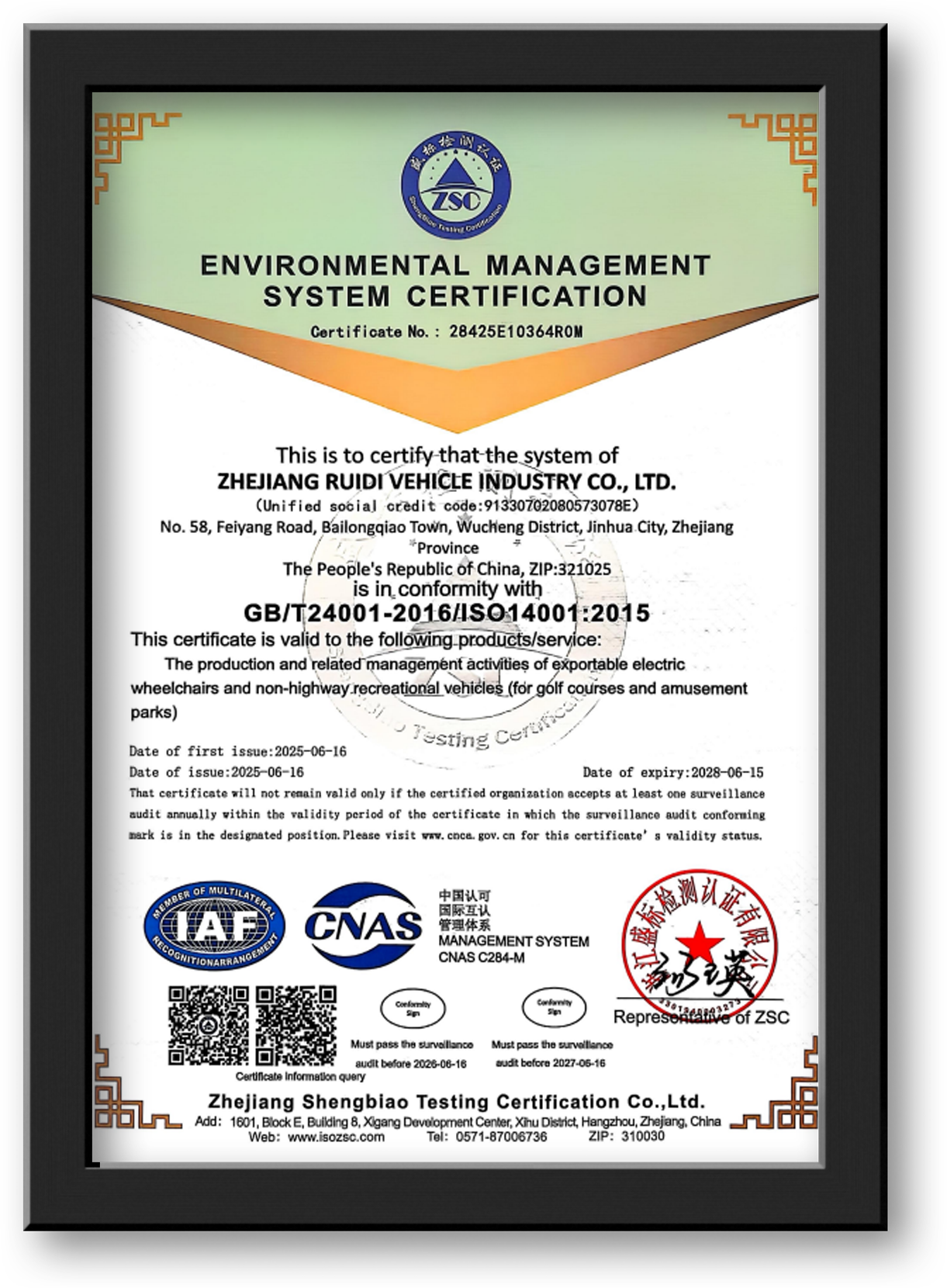
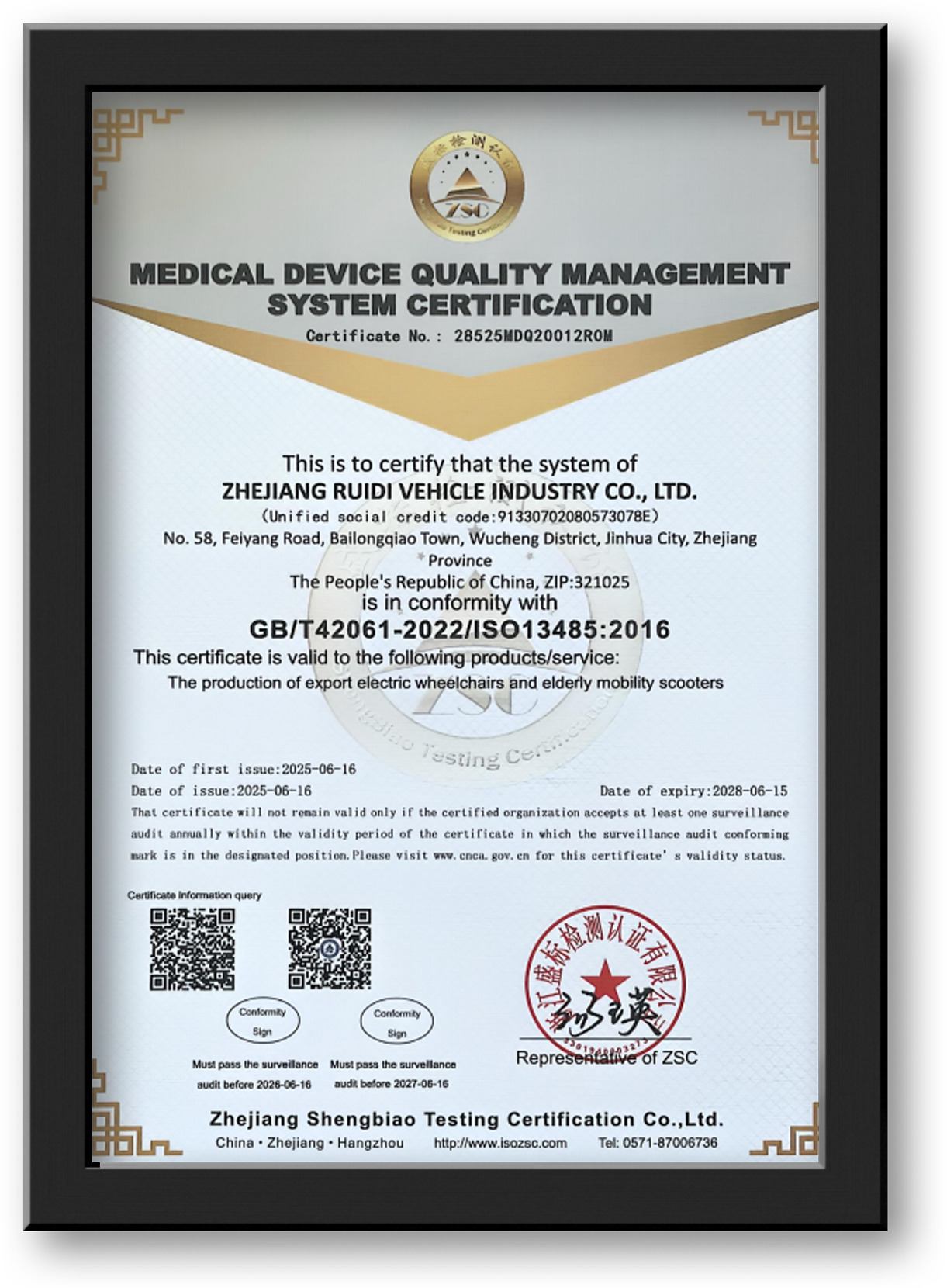
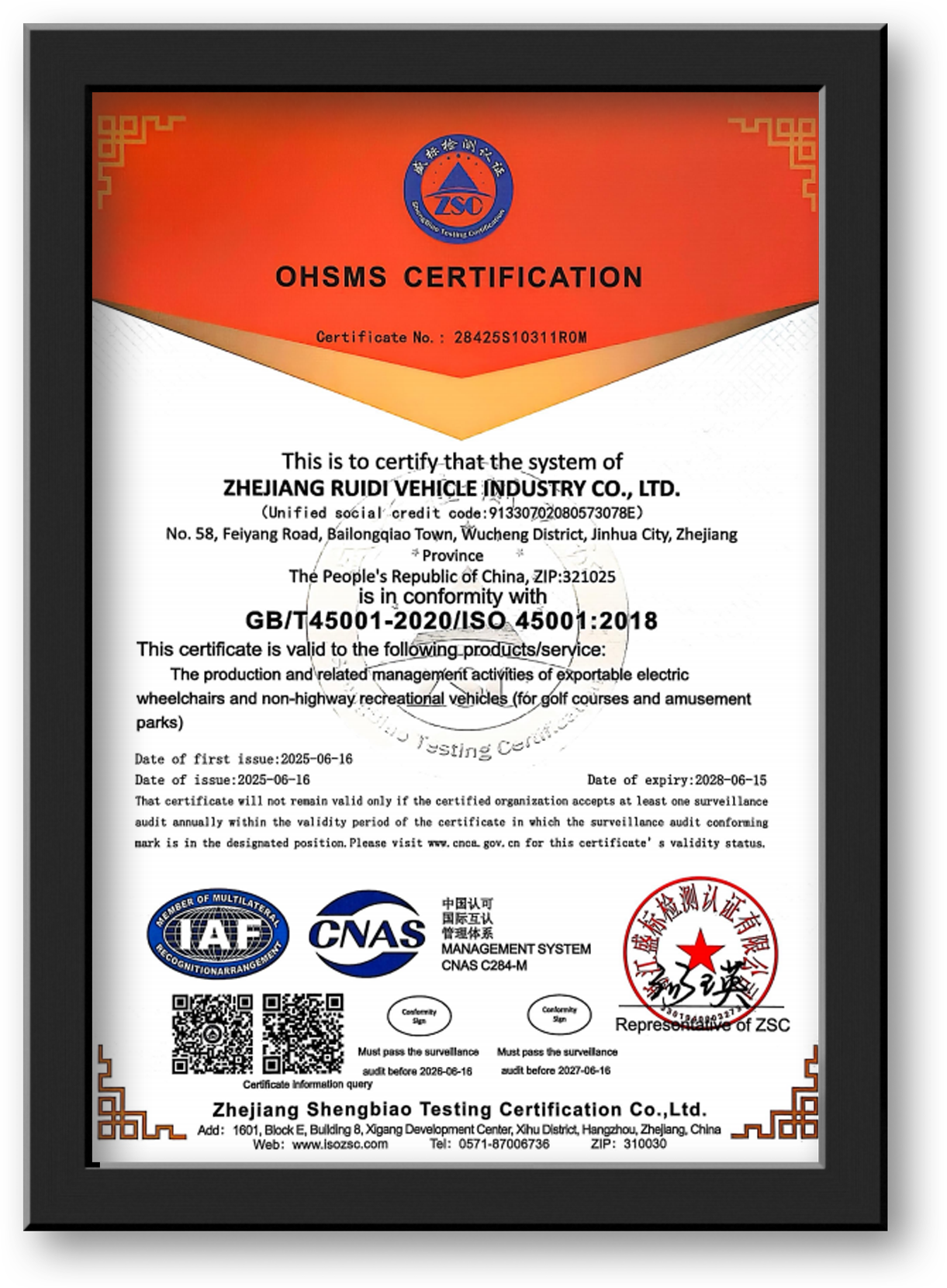
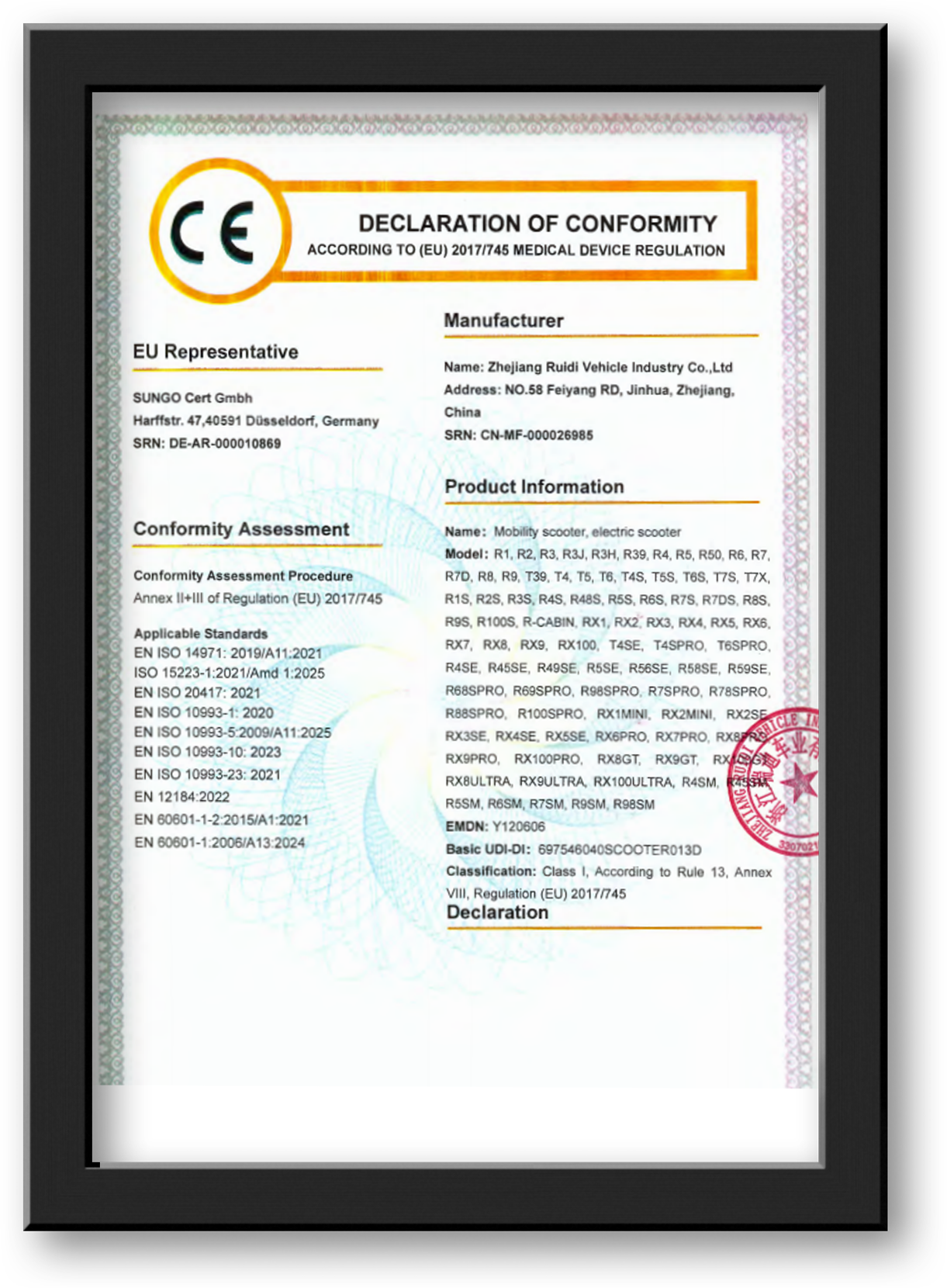
Patent Certificate
Latest Updates
View More-
2026.10.16
Travel Mobility Scooter Design Shifts Toward Outdoor Usability
A Travel Mobility Scooter designed for longer outdoor use faces different requirements from a compact model intended mainly for short local ...Read More -
2026.10.09
Small Lightweight Scooter Balances Portability With Daily Performance
A Small Lightweight Scooter is shaped by a practical balance between easy handling and usable mobility. Reducing dimensions can improve stor...Read More -
2026.10.02
How Do Factories Test Small Portable Mobility Scooters?
Testing Starts With the Folding Frame For small portable mobility scooters, the folding frame is a key part of product design. Users may fol...Read More -
2026.09.25
4 Wheel 2 Seat Mobility Scooter Expands Shared Mobility Options
A second seat changes more than the number of people a mobility scooter can carry. It changes how two people enter, sit, communicate, and mo...Read More
Industry Knowledge
Mobility scooters are not a monolithic category; rather, they are systematically differentiated by duty class, intended usage environment, and ergonomic configuration. Among these, the Medium-Duty Mobility Scooter and the Comfortable Seat Mobility Scooter represent two converging yet distinct design philosophies—one prioritizing structural robustness and operational range, the other emphasizing prolonged ergonomic comfort and user experience optimization.
Functional Positioning of Medium-Duty Mobility Scooters
Medium-Duty Mobility Scooters occupy an intermediate performance tier between lightweight travel scooters and heavy-duty outdoor mobility platforms. Their design objective is to achieve a balanced trade-off between portability, structural durability, and operational endurance.
Key engineering characteristics include:
- Load Capacity Optimization: The chassis and drivetrain are typically engineered to support moderate user weights while maintaining structural stiffness under dynamic road conditions.
- Extended Range Capability: Battery systems are configured to provide medium-to-long operational range, suitable for suburban travel, retail environments, and semi-outdoor usage.
- Terrain Adaptability: Suspension systems are designed to accommodate mixed-surface environments, including pavement, ramps, and mildly uneven terrain.
- Motor Power Calibration: The propulsion system is optimized for stable torque output rather than peak acceleration, ensuring smooth speed regulation under variable load conditions.
Design Verification Criteria for Medium-Duty Mobility Scooters
The engineering validation of a Medium-Duty Mobility Scooter typically follows several core criteria:
- Structural Fatigue Resistance: The frame must withstand repeated cyclic loading without permanent deformation, particularly at stress concentration points such as steering columns and rear axle mounts.
- Battery Discharge Stability: The energy storage system must maintain voltage stability under continuous discharge, ensuring consistent speed performance across the entire charge curve.
- Braking System Reliability: Electromagnetic or mechanical braking systems must ensure predictable stopping distances under rated load conditions.
- Thermal Management of Drive System: The motor controller must maintain operational stability under prolonged medium-load operation without thermal throttling.
- Steering and Stability Control Consistency: The turning radius and anti-tip geometry must remain stable across different payload conditions.
Operational Logic of Comfortable Seat Mobility Scooters
Comfortable Seat Mobility Scooters are engineered primarily for extended-duration user occupancy, emphasizing biomechanical ergonomics rather than aggressive mobility performance. The system design prioritizes pressure distribution, posture support, and vibration attenuation.
Core design principles include:
- Ergonomic Load Distribution: Seat structures are designed to redistribute body weight across pelvic and lumbar support zones, reducing localized pressure accumulation.
- Suspension-Based Comfort Enhancement: Multi-point suspension systems are implemented to decouple road vibration from the seating interface.
- Adjustable Seating Geometry: Seat height, backrest inclination, and armrest positioning are dynamically adjustable to accommodate different anthropometric profiles.
- Low-Frequency Vibration Suppression: Frame damping systems are tuned to attenuate oscillations in the 1–10 Hz range, which are more strongly associated with user fatigue.
Verification Criteria for Comfortable Seat Systems
The performance validation of Comfortable Seat Mobility Scooters focuses primarily on human-factor engineering metrics:
- Pressure Distribution Uniformity: Seat cushioning must demonstrate even pressure mapping across extended use periods to prevent localized ischemia.
- Postural Stability Index: The seating system must maintain spinal alignment support under dynamic acceleration and deceleration.
- Vibration Transmission Reduction: The effective vibration transmissibility ratio between chassis and seat must remain within ergonomically acceptable thresholds.
- Thermal Comfort Regulation: Seat materials must maintain breathability and prevent heat accumulation during prolonged occupancy.
- Ingress/Egress Efficiency: The design must minimize biomechanical strain during mounting and dismounting operations.
Comparative Configuration Logic: Medium-Duty vs Comfortable Seat Scooters
| Design Dimension | Medium-Duty Mobility Scooter | Comfortable Seat Mobility Scooter |
| Primary Objective | Balanced performance and range | Extended user comfort and posture support |
| Structural Focus | Frame strength and drivetrain efficiency | Seat ergonomics and suspension isolation |
| Typical Usage Scenario | Suburban commuting, mixed terrain | Long-duration indoor/outdoor seating use |
| Suspension Tuning | Stability-oriented damping | Comfort-oriented vibration isolation |
| Battery Strategy | Sustained output under load | Smooth discharge with minimal fluctuation |
| Control Response | Moderate acceleration profile | Gentle, smooth speed transitions |
Integration Considerations in Real-World Deployment
In practical deployment scenarios, Medium-Duty Mobility Scooters and Comfortable Seat Mobility Scooters are often not mutually exclusive categories but intersecting design configurations. Modern mobility platforms increasingly integrate both paradigms:
- Medium-duty structural platforms are often enhanced with comfort seat modules.
- Comfortable seat systems may be embedded into medium-duty chassis architectures to extend usable range without compromising ergonomics.
- Controller systems increasingly incorporate adaptive torque mapping to reconcile performance stability with comfort-driven acceleration smoothing.
Ultimately, the engineering evolution of mobility scooters reflects a broader transition from purely mechanical transportation devices toward integrated human-centric mobility systems, where structural performance and ergonomic intelligence are co-optimized rather than independently maximized.
We'd love to hear from you!

QUICK LINKS
PRODUCTS
CONTACT INFORMATION
 No.58 Feiyang Road , Jinhua 321025, Zhejiang, China
 +86-13905796145
 [email protected]
  +86-579-82268015
Medium-Duty Mobility Scooter Manufacturer
Copyright © Zhejiang Ruidi Vehicle Industry Co., Ltd. Rights Reserved.