English
 中文简体
中文简体 Español
 Deutsch
information to be updated

Product Categories
- Mobility Scooters
- Electric Wheelchairs
- Sightseeing Scooters
-
Recreational scooters/Golf Cart
-
Accessories
Quad Sightseeing Scooters

ABOUT
Zhejiang Ruidi Vehicle Industry Co., Ltd.
Zhejiang Ruidi Vehicle Industry Co., Ltd. is a professional manufacturer engaged in the research, development, and production of Quad Sightseeing Scooters. Our products are widely applied in elderly mobility, sports and leisure, and recreational fields.
The company’s manufacturing base is located in Jinhua Industrial Park, Zhejiang Province, covering an area of approximately 35,000 square meters. The facility is equipped with over 100 sets of advanced production equipment and four efficient production lines, ensuring stable production capacity and reliable product quality.
At present, our products are exported to the United States, Canada, Europe, and Australia, as well as supplied to the Chinese domestic market. Our main product series include mobility scooters for the elderly, electric walking chairs, foldable electric mobility scooters, and enclosed cabin-type electric mobility scooters.
We consistently adhere to a quality-centered management philosophy and are supported by a professional and efficient team. We are committed to providing electric mobility products that are easy to operate, energy-saving, environmentally friendly, low-noise, and pollution-free. We believe these products bring greater comfort, convenience, and freedom to elderly and mobility-impaired users, helping them enjoy a higher quality of life.
View More
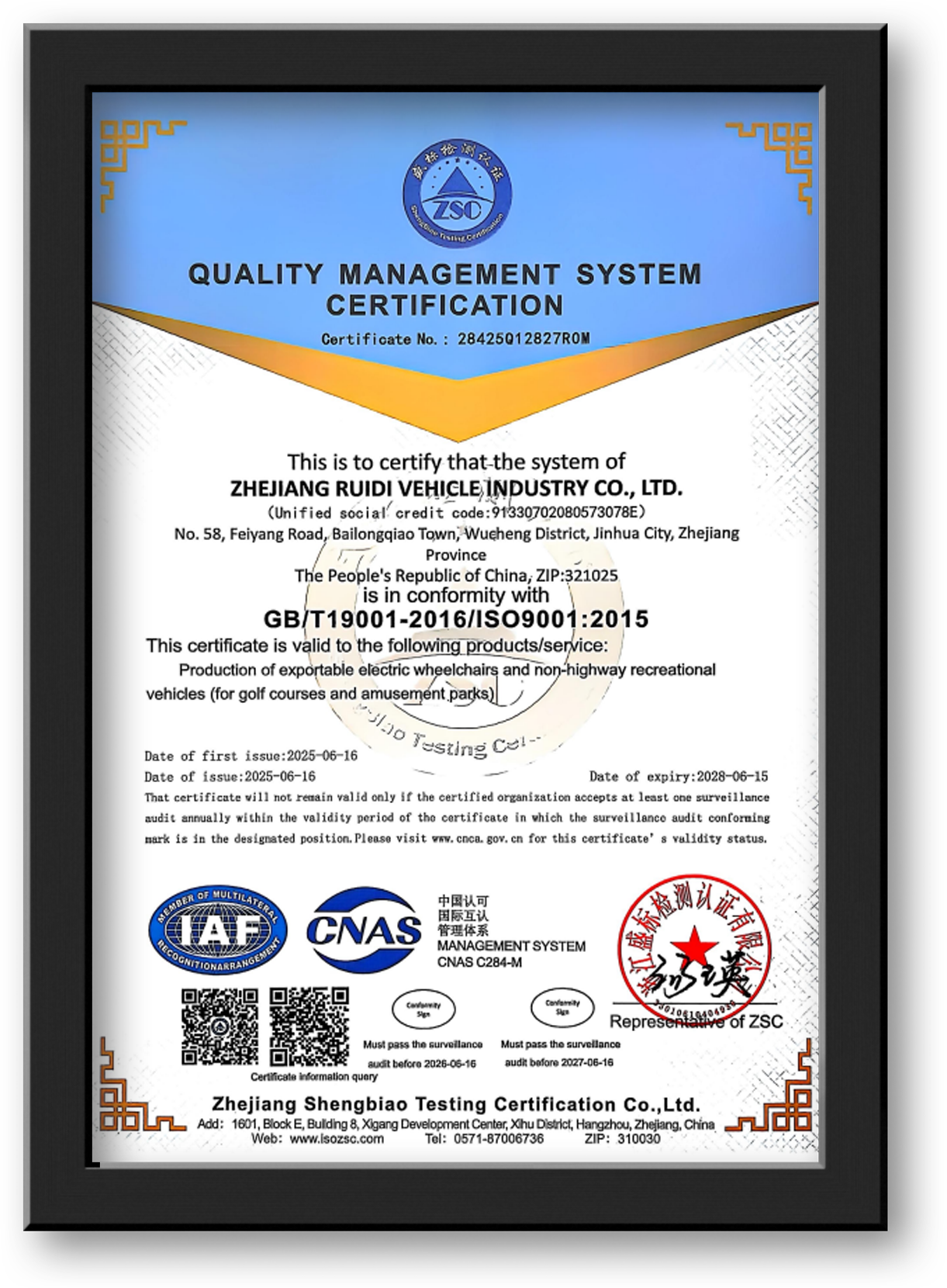
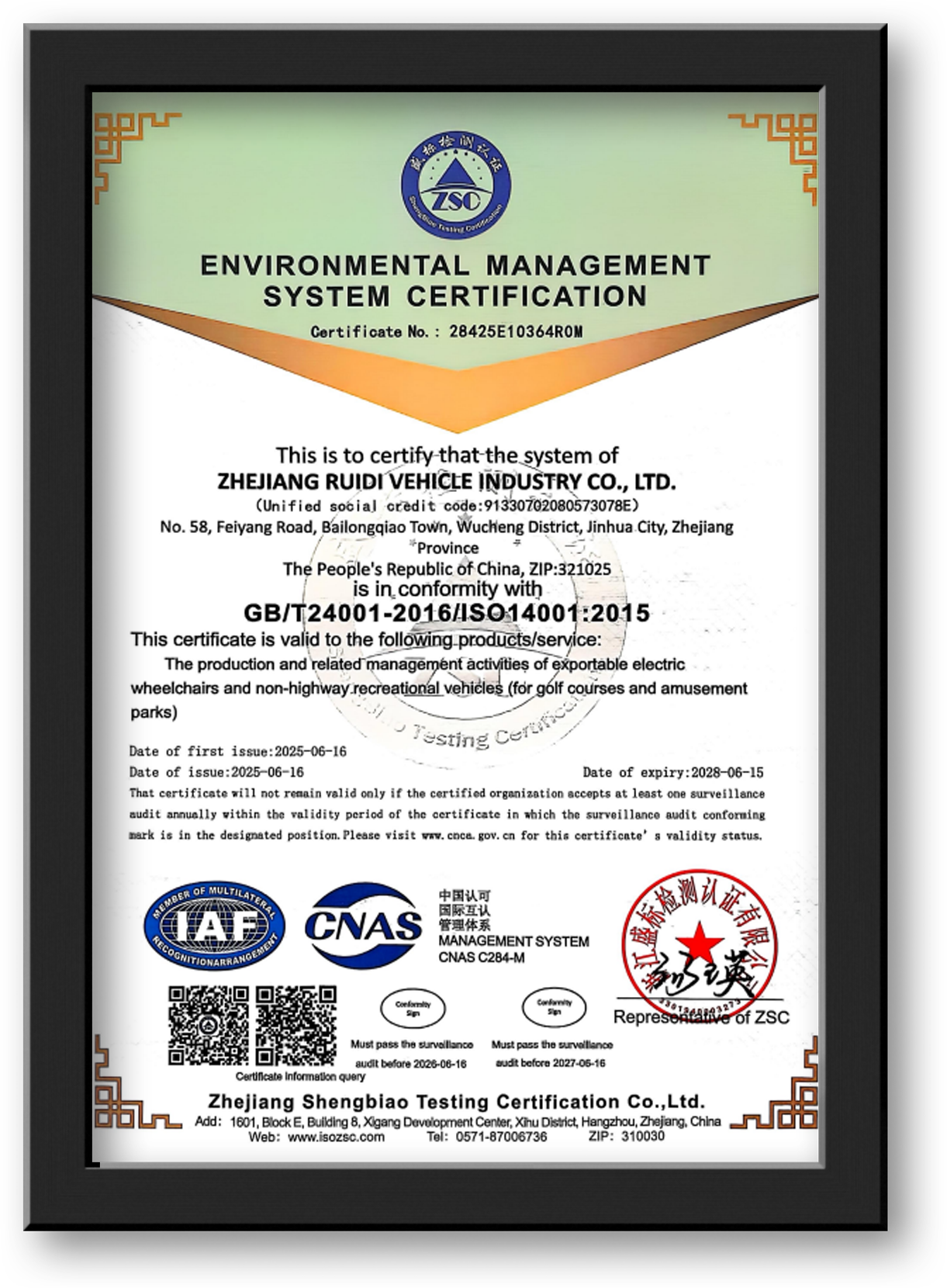
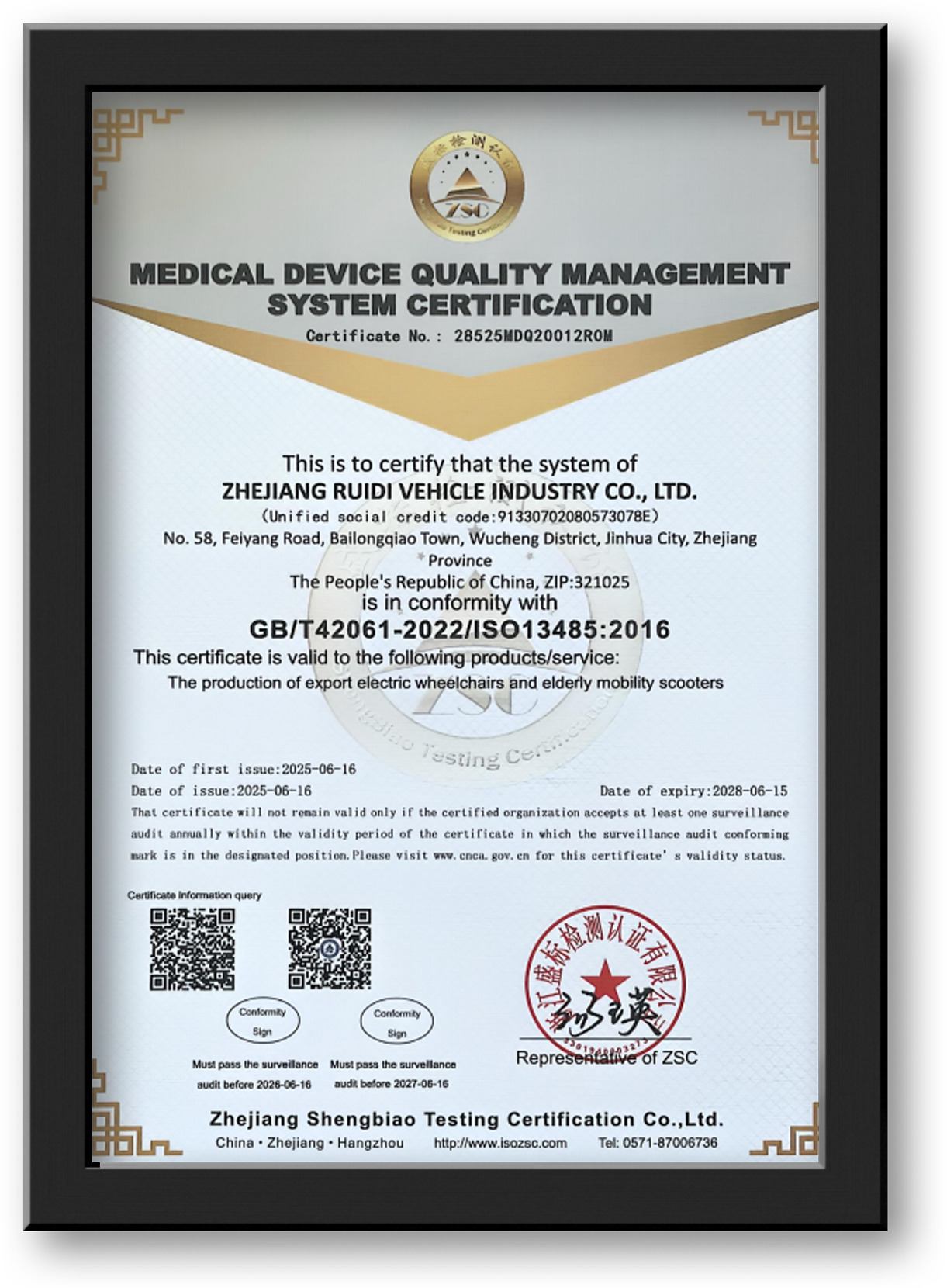
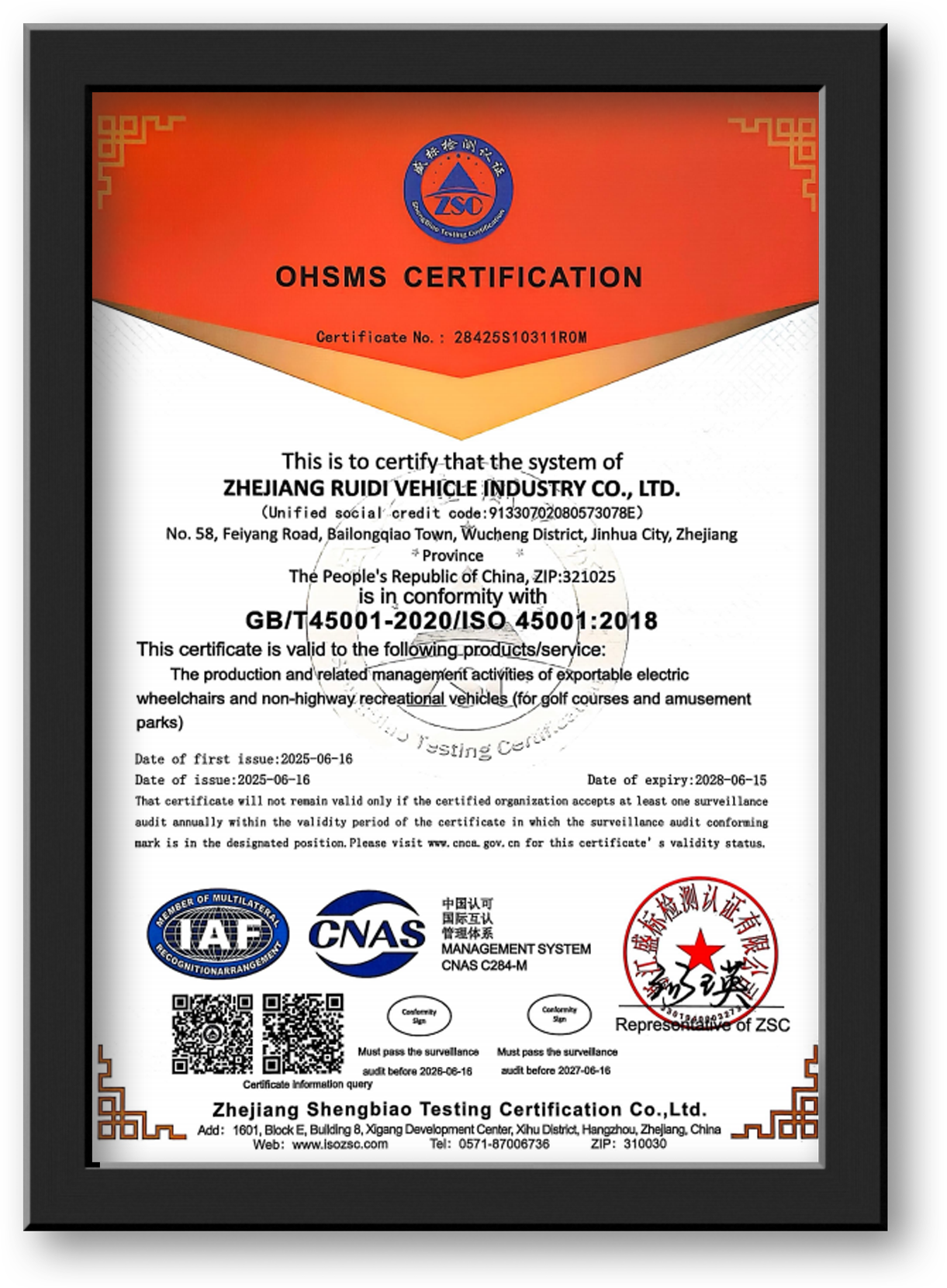
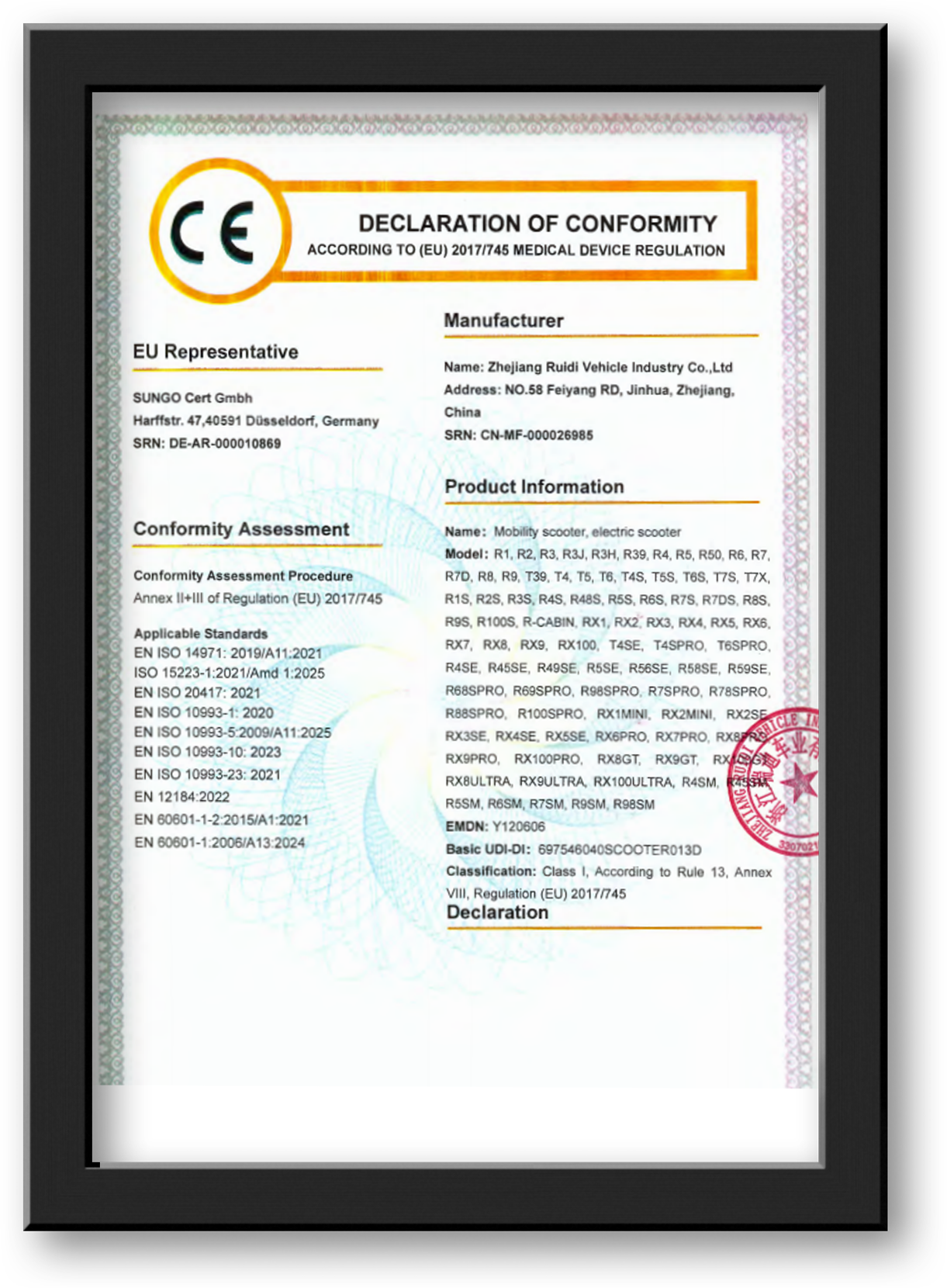
Patent Certificate
Latest Updates
View More-
2026.07.17
When Should A Senior Consider A Mobility Scooter For Elderly Use?
A parent skipping the grocery run because the parking lot feels too far, or a grandmother declining a family outing because standing in line...Read More -
2026.07.10
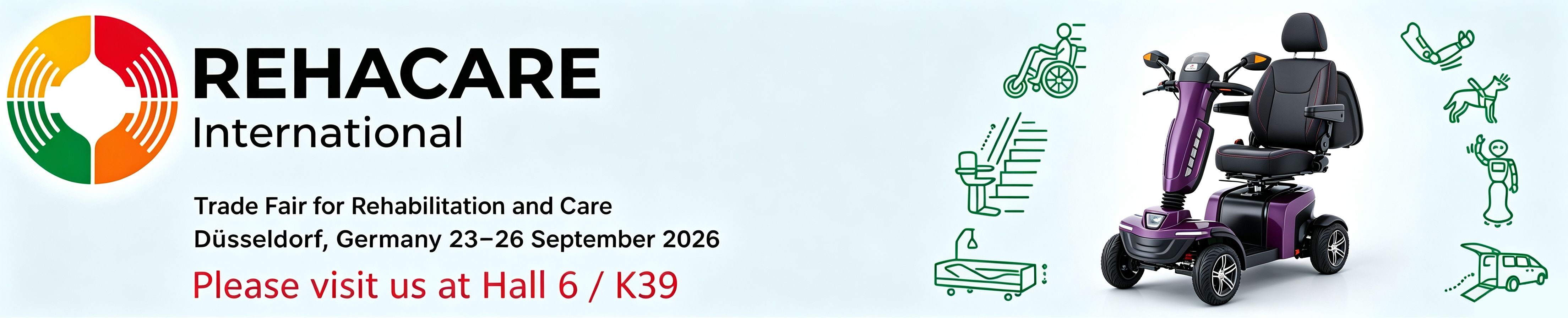
Ruidi Mobility to Attend REHACARE 2026
We are pleased to announce that Ruidi Mobility will participate in REHACARE International Trade Fair for Rehabilitation and Care 2026, one ...Read More -
2026.07.10
How Does Enclosed Mobility Scooter Improve Daily Travel?
Enclosed mobility scooter is becoming part of everyday transportation for people who want to remain active while reducing the physical effor...Read More -
2026.07.03
Who Actually Needs A Mini Electric Wheelchair?
A worn-out shoulder from folding a bulky wheelchair into a trunk, or a narrow apartment hallway that a full-size chair simply won't clear, i...Read More
Industry Knowledge
The Quad Sightseeing Scooter is a four-person sightseeing vehicle, commonly utilized for tours within scenic spots and park grounds. It accommodates multiple passengers simultaneously, making it ideal for families or small groups, and emphasizes interactive and shared experiences. The vehicle operates smoothly, making it well-suited for low-speed sightseeing routes and short-distance touring scenarios.
Product Structural Classification and Definitional Boundaries
In industry applications, four-person and multi-passenger sightseeing scooters are typically distinguished based on their seating layout and carrying capacity.
1. Quad-Seat Sightseeing Scooter
This type typically employs a tandem or tiered seating arrangement, capable of accommodating four passengers simultaneously.
Structural characteristics include:
- A fixed four-seat design with various arrangement options
- A primary focus on centralized control systems
- A significantly extended vehicle body length
- Suitability for level roads and fixed routes
2. Multi-Passenger Sightseeing Scooter
This category leans toward an expandable design; passenger capacity can be adjusted based on the specific structure, making it typically suited for group tours or collective sightseeing scenarios.
Structural characteristics include:
- Capacity for four or more passengers
- Some designs feature modular expansion capabilities
- Higher demands placed on the power system
- Greater suitability for circular touring routes within scenic areas
Comparative Analysis of Structural Forms
Different types vary in their design priorities, which can be observed across several dimensions:
| Comparison Dimension | Quad-Seat Sightseeing Scooter | Multi-Passenger Sightseeing Scooter |
| Passenger Capacity | Fixed at four | Four or more |
| Structural Form | Fixed seating structure | Expandable structure |
| Operation Method | Single control point | Centralized or assisted control |
| Usage Scenarios | Scenic spots, park routes | Group tours, large-scale areas |
| Flexibility | Moderate | High |
Overall, the four-seat structure leans toward standardized applications, while the multi-passenger structure places greater emphasis on adaptability to varying scale requirements.
Segmentation and Expansion of Application Scenarios
As operational models for cultural tourism and park management evolve, multi-passenger sightseeing scooters are gradually finding their way into a wider variety of scenarios.
- 1. Unified Group Sightseeing Scenarios
For educational tours, team-building activities, or organized travel groups, allowing multiple passengers to ride together minimizes dispersion during movement and enhances overall organizational efficiency.
- 2. Circular Tours in Large-Scale Parks
In expansive park grounds, these vehicles are frequently deployed for fixed-route tours, enabling visitors to cover multiple points of interest within a relatively short timeframe.
- 3. Family and Group Travel Experience
For large families or groups of friends and relatives traveling together, this structural design eliminates the communication inconveniences often associated with having to split up into separate vehicles.
- 4. Shuttle Services within Enclosed Scenic Areas
Within enclosed or semi-enclosed zones—such as theme parks, resorts, or large recreational complexes—these types of vehicles are frequently deployed for short-distance shuttle transportation.
Key Design and Engineering Considerations
The structural design of four-seater and multi-passenger sightseeing scooters requires careful consideration of several critical engineering factors.
- 1. Vehicle Body Structural Stability
As the vehicle's length and weight increase, the overall structure must possess enhanced torsional rigidity and load-bearing capacity.
- 2. Power Output Matching
When carrying multiple passengers, the powertrain system must ensure smooth acceleration from a standstill and maintain consistent power output.
- 3. Braking System Reliability
Braking performance directly impacts safety, particularly regarding the vehicle's ability to come to a stable stop when fully loaded.
- 4. Steering and Handling Coordination
As the vehicle body lengthens, the turning radius increases; consequently, the steering mechanism must be optimized to navigate the specific roadways and pathways within the park or facility.
- 5. Seat Layout Rationality
The arrangement of seating must strike a balance between efficient space utilization and passenger comfort.
Diversification and Evolution of Operational Models
In practice, multi-passenger sightseeing scooters typically employ the following operational models:
- Full-Vehicle Rental Model: Suitable for families or small private groups.
- Route Cruising Model: Operates on a continuous loop along a fixed route.
- Centralized Shuttle Model: Used to facilitate internal transportation connections within a facility or park.
- Themed Event Model: Integrated into specific festivals, celebrations, or special events.
Collectively, these models form a flexible operational framework that helps maximize equipment utilization efficiency.
Key Aspects of Maintenance and Management
Given their higher passenger capacity, these vehicles require a more systematic approach to maintenance and management:
- Regular inspection of the vehicle frame's structural connections.
- Monitoring of battery health and powertrain system load levels.
- Verification of braking system responsiveness.
- Maintenance of tires, including wear assessment and air pressure checks.
- Inspection of seats and safety components.
In high-frequency usage scenarios, maintenance intervals typically need to be shortened appropriately to ensure consistent operational stability and safety.
We'd love to hear from you!

QUICK LINKS
PRODUCTS
CONTACT INFORMATION
 No.58 Feiyang Road , Jinhua 321025, Zhejiang, China
 +86-13905796145
 [email protected]
  +86-579-82268015
Quad Seat Sightseeing Scooter Exporter
Copyright © Zhejiang Ruidi Vehicle Industry Co., Ltd. Rights Reserved.