English
 中文简体
中文简体 Español
 Deutsch
information to be updated

Triple Sightseeing Scooters

ABOUT
Zhejiang Ruidi Vehicle Industry Co., Ltd.
Zhejiang Ruidi Vehicle Industry Co., Ltd. is a professional manufacturer engaged in the research, development, and production of Triple Sightseeing Scooters. Our products are widely applied in elderly mobility, sports and leisure, and recreational fields.
The company’s manufacturing base is located in Jinhua Industrial Park, Zhejiang Province, covering an area of approximately 35,000 square meters. The facility is equipped with over 100 sets of advanced production equipment and four efficient production lines, ensuring stable production capacity and reliable product quality.
At present, our products are exported to the United States, Canada, Europe, and Australia, as well as supplied to the Chinese domestic market. Our main product series include mobility scooters for the elderly, electric walking chairs, foldable electric mobility scooters, and enclosed cabin-type electric mobility scooters.
We consistently adhere to a quality-centered management philosophy and are supported by a professional and efficient team. We are committed to providing electric mobility products that are easy to operate, energy-saving, environmentally friendly, low-noise, and pollution-free. We believe these products bring greater comfort, convenience, and freedom to elderly and mobility-impaired users, helping them enjoy a higher quality of life.
View More
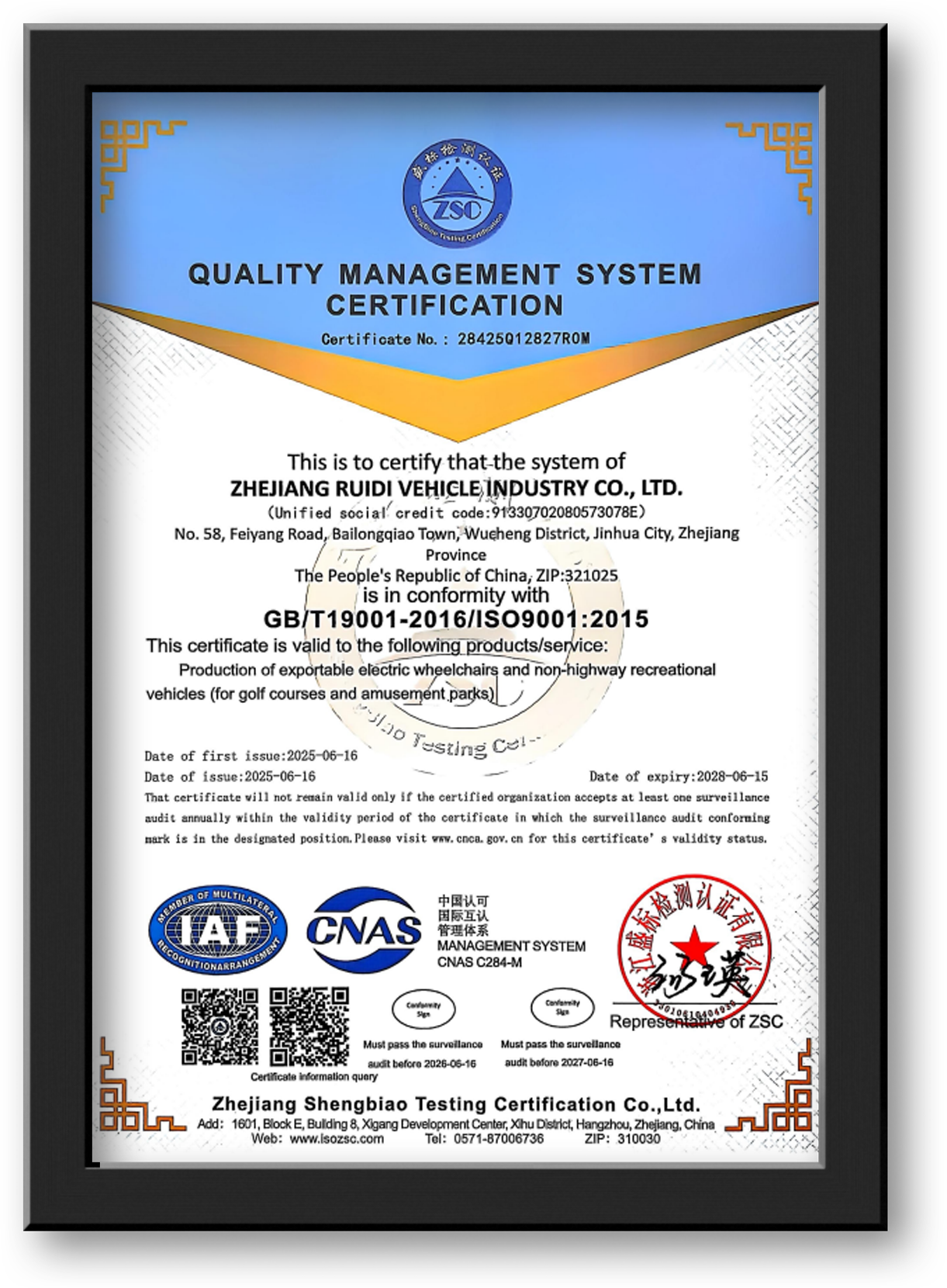
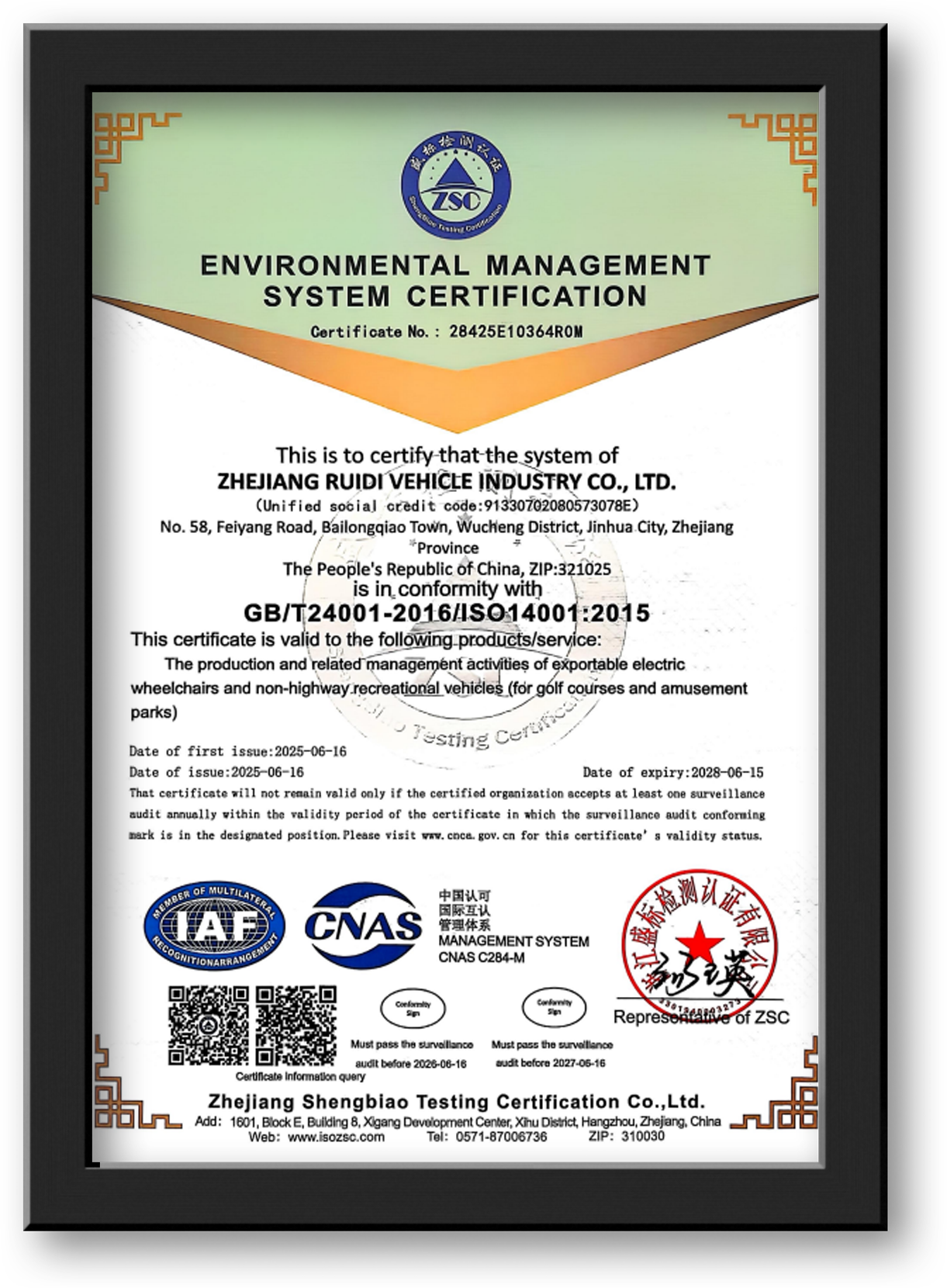
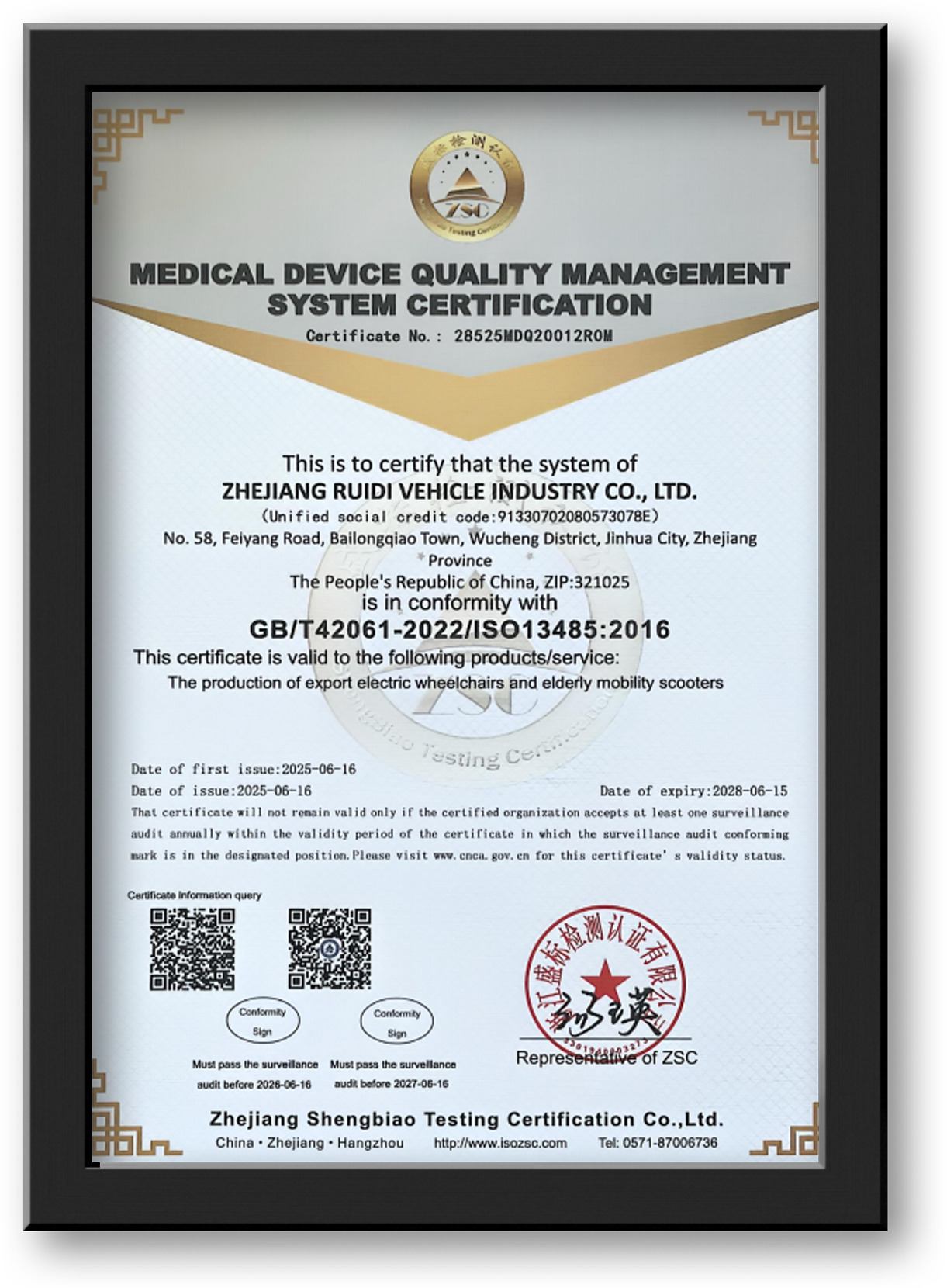
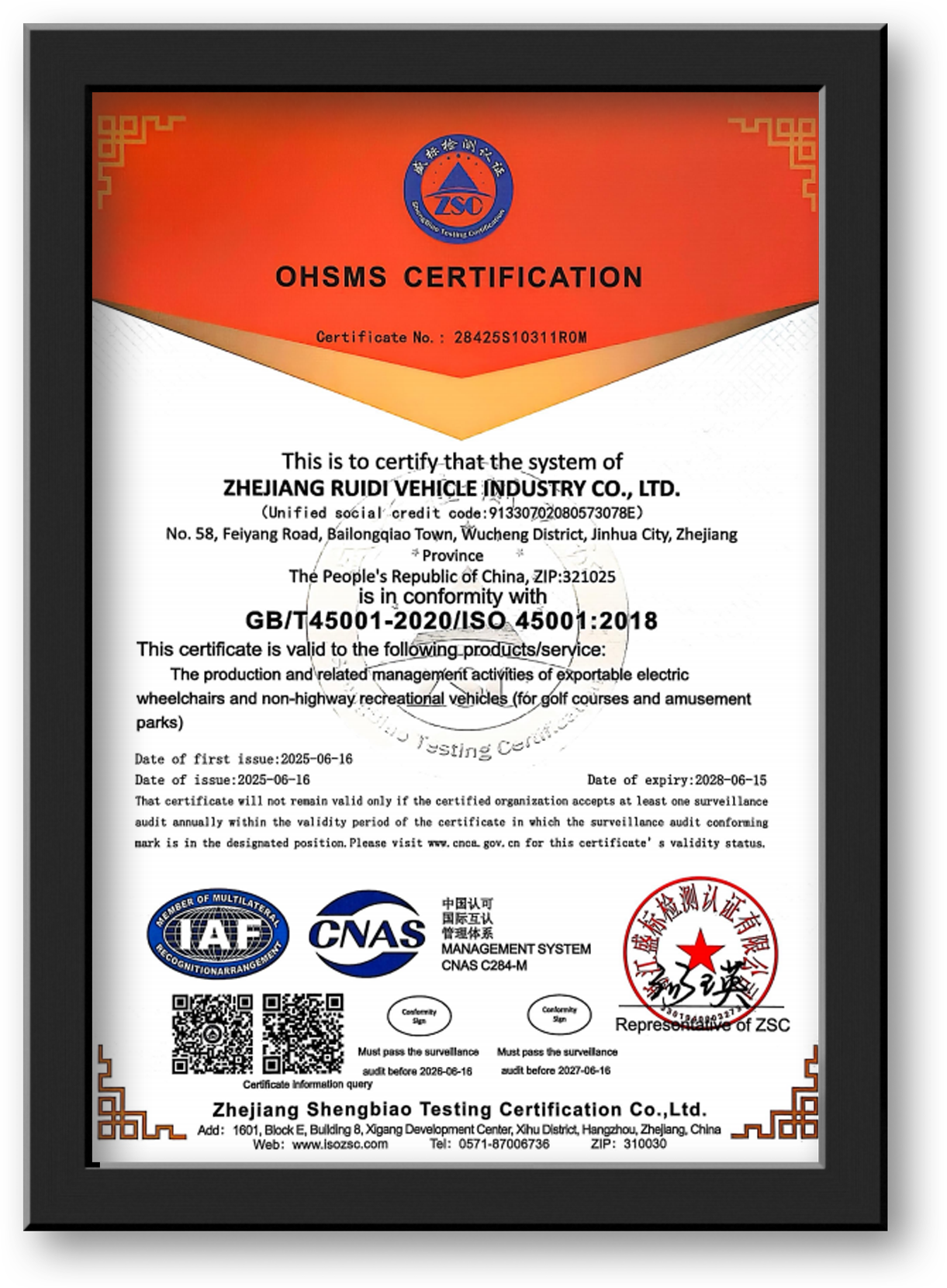
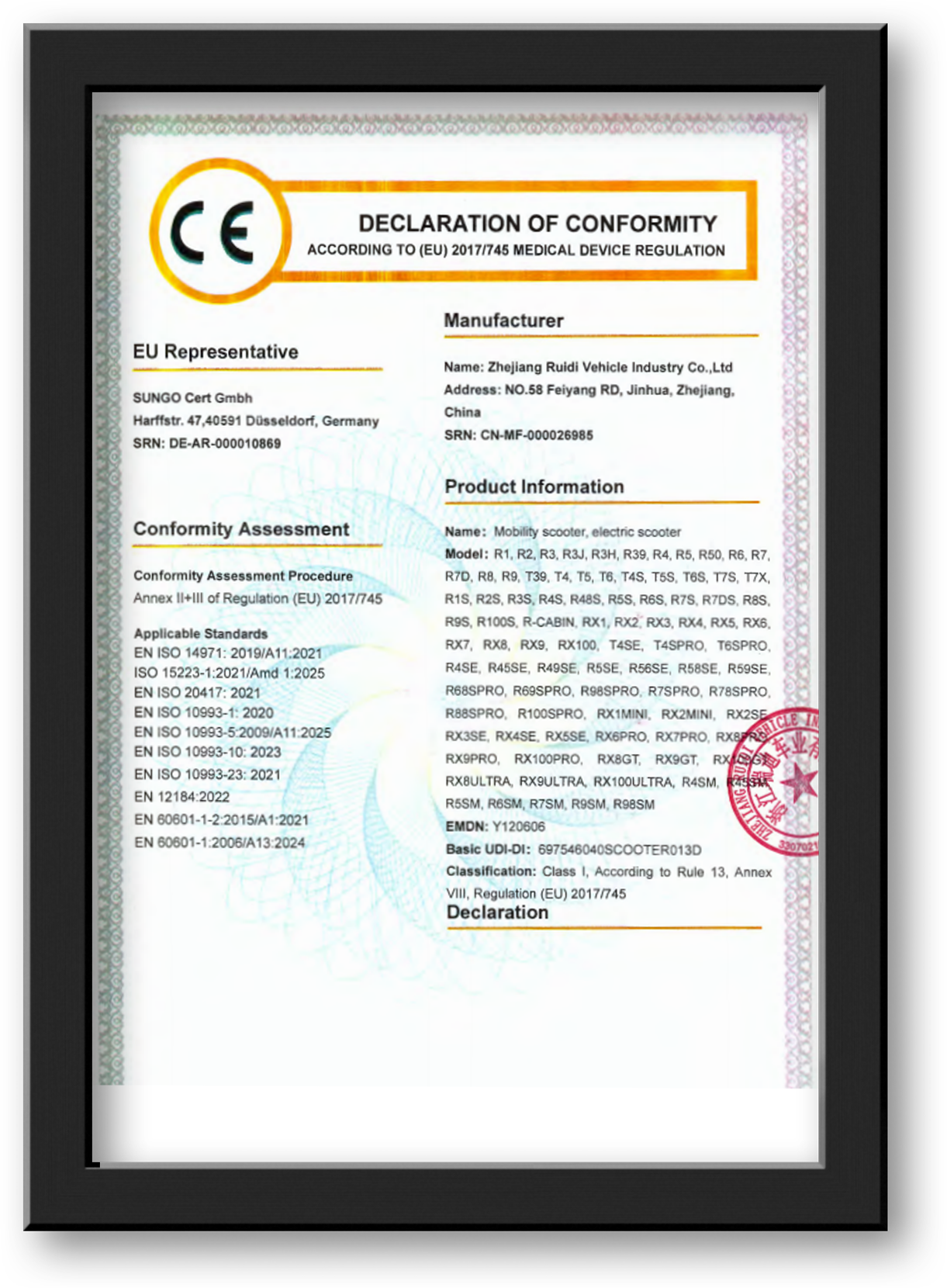
Patent Certificate
Latest Updates
View More-
2026.10.16
Travel Mobility Scooter Design Shifts Toward Outdoor Usability
A Travel Mobility Scooter designed for longer outdoor use faces different requirements from a compact model intended mainly for short local ...Read More -
2026.10.09
Small Lightweight Scooter Balances Portability With Daily Performance
A Small Lightweight Scooter is shaped by a practical balance between easy handling and usable mobility. Reducing dimensions can improve stor...Read More -
2026.10.02
How Do Factories Test Small Portable Mobility Scooters?
Testing Starts With the Folding Frame For small portable mobility scooters, the folding frame is a key part of product design. Users may fol...Read More -
2026.09.25
4 Wheel 2 Seat Mobility Scooter Expands Shared Mobility Options
A second seat changes more than the number of people a mobility scooter can carry. It changes how two people enter, sit, communicate, and mo...Read More
Industry Knowledge
The Triple Sightseeing Scooter is a recreational vehicle designed to accommodate three or more passengers, commonly utilized for touring scenic spots and large parks. Characterized by its shared-riding capability, it enhances the interactive experience for families or small groups; it is ideally suited for low-speed cruising scenarios and features a stable structural design that ensures a comfortable ride.
Product Form and Basic Structure
In terms of structural design, sightseeing scooters accommodating three or more passengers typically address multifaceted challenges—including stability, spatial layout, and power output—leading to the emergence of a distinct classification system.
1. Family Sightseeing Scooter
This category is primarily designed for three passengers, often employing a tandem or slightly staggered seating arrangement to emphasize close interaction among family members.
Key Features:
- Accommodates 2 to 3 passengers; suitable for small families.
- Seating layout features a compact design.
- Control system is typically centralized at the front row.
- Operating speed is optimized for smooth, leisurely sightseeing.
2. Group Sightseeing Scooter
This category caters to small groups of three or more individuals, as well as the centralized touring needs of large scenic areas; its structure is more complex, with some designs featuring extended chassis or modular seating arrangements.
Key Features:
- Capable of carrying multiple passengers for a shared riding experience.
- Vehicle body structure is longer or wider.
- Requires more robust power and braking systems.
- Better suited for fixed routes or large-scale park patrols.
Comparative Analysis of Different Structural Types
To provide a clearer understanding of the differences between these two types, a comparison can be made across several dimensions:
| Comparison Dimension | Family Sightseeing Scooter | Group Sightseeing Scooter |
| Passenger Capacity | 2–3 people | 3 or more people |
| Operation Method | Single-point control | Centralized or zone-based control |
| Applicable Scenarios | Small scenic spots, parks | Large parks/complexes, group tours |
| Structural Complexity | Moderate | High |
| Interactive Experience | Primarily family-centric interaction | Primarily group-centric interaction |
As illustrated in the table, the "Family" type prioritizes an intimate, personal experience, whereas the "Group" type emphasizes organizational efficiency and passenger carrying capacity.
Trends in Application Scenarios
The advent of multi-passenger sightseeing scooters has expanded the scope of short-distance transportation—which was traditionally centered on individual users—to encompass group-oriented scenarios.
1. Family Outings
During travel, allowing family members to ride together in a single vehicle minimizes the inconvenience associated with moving separately while simultaneously enhancing interaction throughout the journey. This demand is particularly pronounced during holidays and weekends.
2. Group Activities and Park Tours
For small teams or educational study tours, multi-passenger sightseeing scooters facilitate a unified pace of movement, making the touring process more cohesive and preventing group members from becoming separated.
3. Scenic Area Shuttles and Loop Routes
Within enclosed or semi-enclosed park environments, these vehicles are frequently utilized for short-distance shuttle services along loop routes, thereby enhancing overall touring efficiency.
Key Design Points and Technical Considerations
In terms of design, multi-passenger sightseeing scooters must strike a careful balance between safety and comfort.
1. Optimization of Load-Bearing Structures
As the number of passengers increases, the vehicle body requires a higher load-bearing capacity while simultaneously maintaining structural stability.
2. Power System Matching
Under multi-passenger load conditions, power output must be smoother and more consistent to prevent issues such as uneven acceleration or insufficient power.
3. Enhanced Braking Systems
Braking distance and response speed are critical elements of safety design; the braking system must maintain its reliability specifically during low-speed sightseeing operations.
4. Rational Seat Layout
The arrangement of seats must balance efficient space utilization with passenger comfort, avoiding overcrowding or obstructed views.
Diversification of Operational Models
In practical application, multi-passenger sightseeing scooters are typically integrated with a variety of operational models:
- Per-Vehicle Billing Model: Suitable for families or small groups.
- Fixed-Route Model: Ideal for loop tours within scenic areas.
- Free-Roaming Zone Model: Allows for unrestricted use within a designated area.
- Thematic Tour Model: Combines vehicle use with specific activities to create an immersive, scenario-based experience.
This diversification of operational models helps boost equipment utilization rates while simultaneously catering to the diverse needs of different visitors.
Key Aspects of Maintenance and Management
Multi-passenger vehicles require more meticulous maintenance and management during their operational lifecycle:
- Regular inspection of the stability of frame connections.
- Monitoring the status of the battery and power system.
- Checking for tire wear and proper tire pressure.
- Maintaining the responsiveness and sensitivity of the braking system.
- Cleaning the seats and the vehicle body structure.
Due to the higher passenger load, wear and tear on these vehicles typically exceed that of single- or dual-passenger models; consequently, the frequency of maintenance must be increased accordingly.
We'd love to hear from you!

QUICK LINKS
PRODUCTS
CONTACT INFORMATION
 No.58 Feiyang Road , Jinhua 321025, Zhejiang, China
 +86-13905796145
 [email protected]
  +86-579-82268015
Family Sightseeing Scooter Supplier
Copyright © Zhejiang Ruidi Vehicle Industry Co., Ltd. Rights Reserved.