English
 中文简体
中文简体 Español
 Deutsch
information to be updated

Electric Wheelchairs
The Ruidi Electric Wheelchair series, with a focus on user-centric design, is dedicated to providing thoughtful mobility support. We prioritize ease of use and comfort, striving to make every journey effortless. Our products emphasize intuitive and responsive operation for quick user adaptation. We consider the needs of various environments, balancing indoor maneuverability with outdoor accessibility. For comfort, we pay close attention to seat design and shock absorption to reduce fatigue during prolonged use. As a manufacturer, we focus on details during production, emphasizing overall product quality and consistency. Understanding the importance of our products in users' daily lives, we always put safety and reliability first. Ruidi Electric Wheelchairs are not just mobility aids; they represent our commitment to enhancing users' quality of life.

ABOUT
Zhejiang Ruidi Vehicle Industry Co., Ltd.
Zhejiang Ruidi Vehicle Industry Co., Ltd. is a professional manufacturer engaged in the research, development, and production of Electric Wheelchairs. Our products are widely applied in elderly mobility, sports and leisure, and recreational fields.
The company’s manufacturing base is located in Jinhua Industrial Park, Zhejiang Province, covering an area of approximately 35,000 square meters. The facility is equipped with over 100 sets of advanced production equipment and four efficient production lines, ensuring stable production capacity and reliable product quality.
At present, our products are exported to the United States, Canada, Europe, and Australia, as well as supplied to the Chinese domestic market. Our main product series include mobility scooters for the elderly, electric walking chairs, foldable electric mobility scooters, and enclosed cabin-type electric mobility scooters.
We consistently adhere to a quality-centered management philosophy and are supported by a professional and efficient team. We are committed to providing electric mobility products that are easy to operate, energy-saving, environmentally friendly, low-noise, and pollution-free. We believe these products bring greater comfort, convenience, and freedom to elderly and mobility-impaired users, helping them enjoy a higher quality of life.
View More
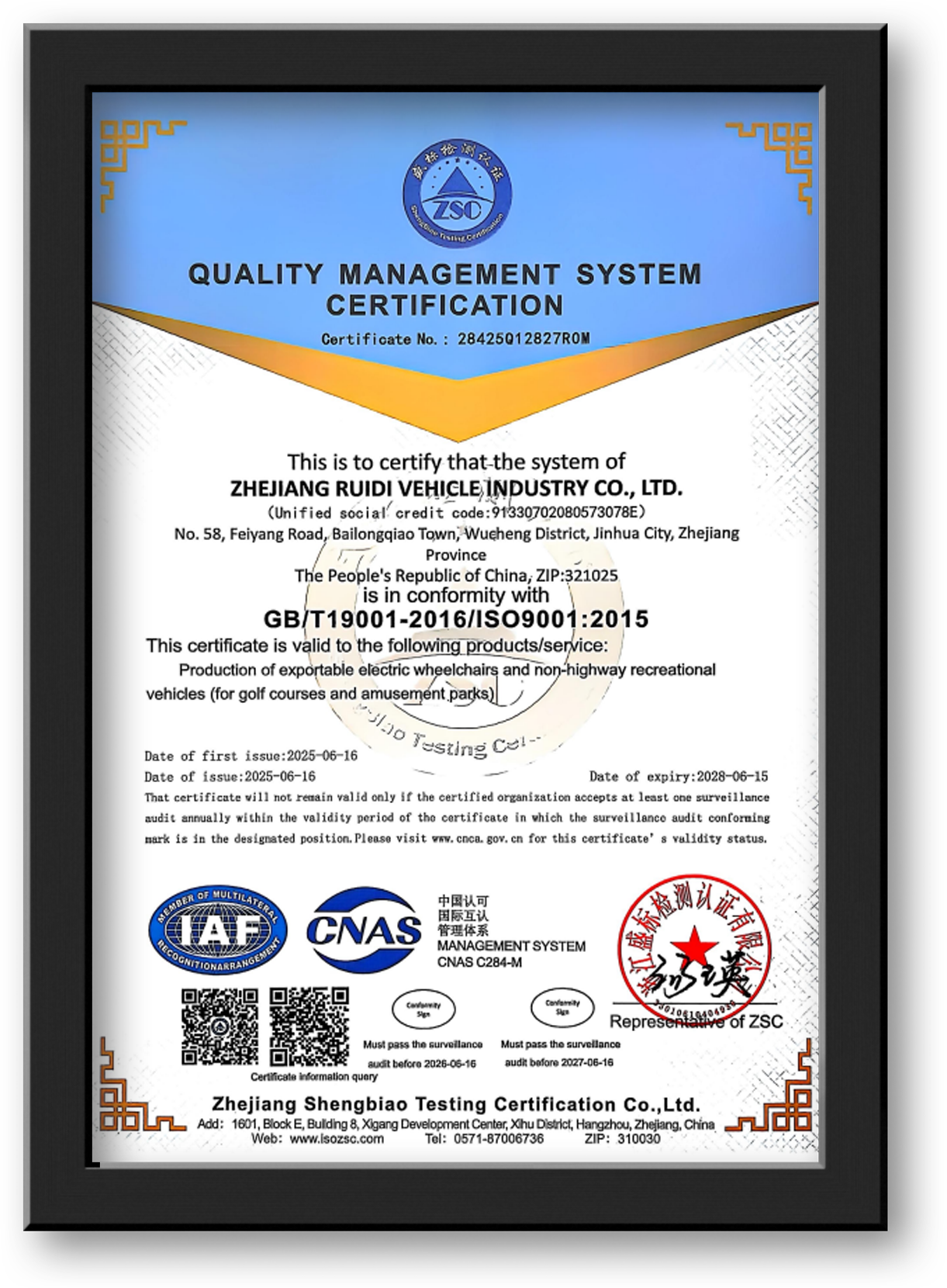
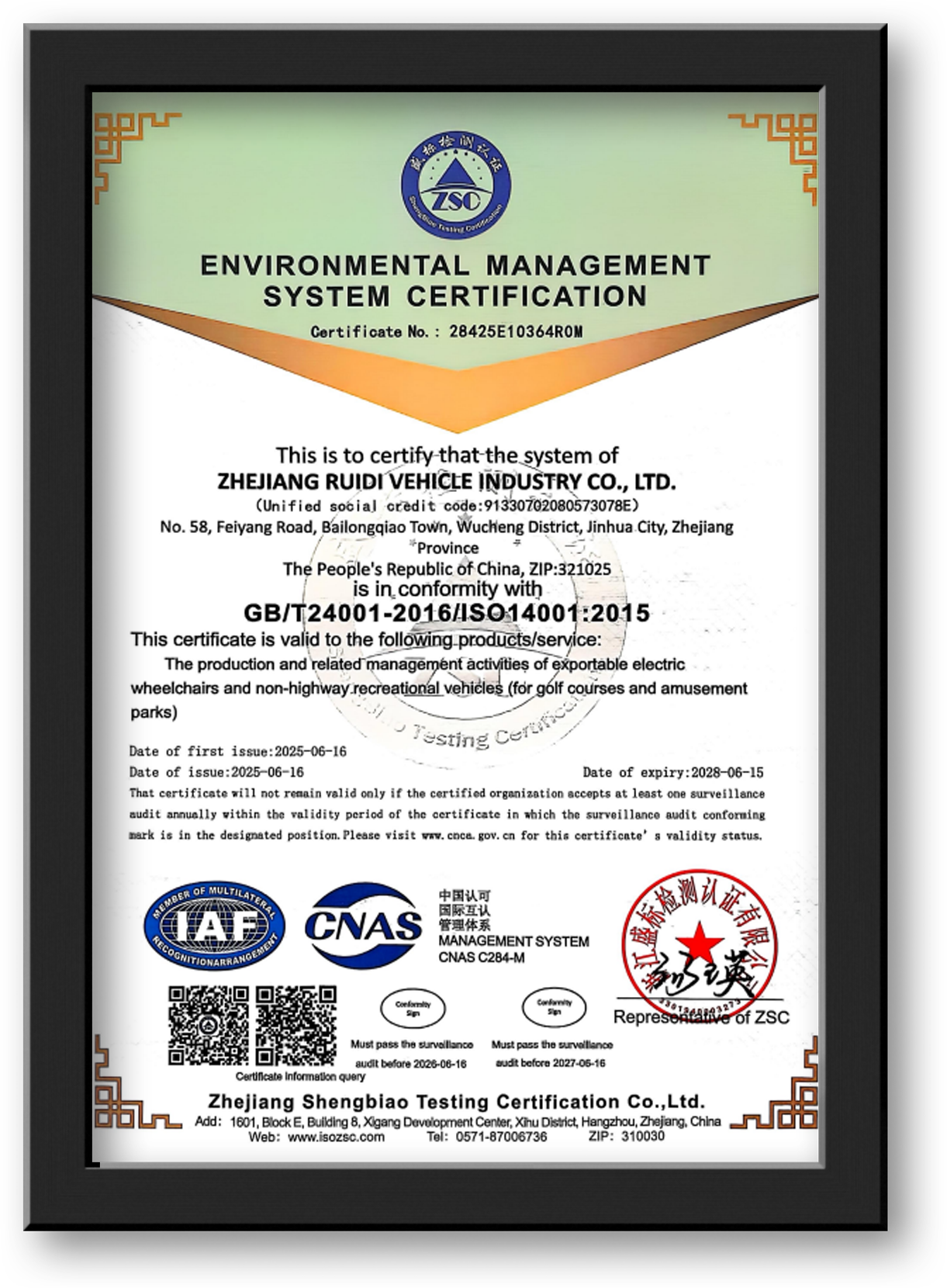
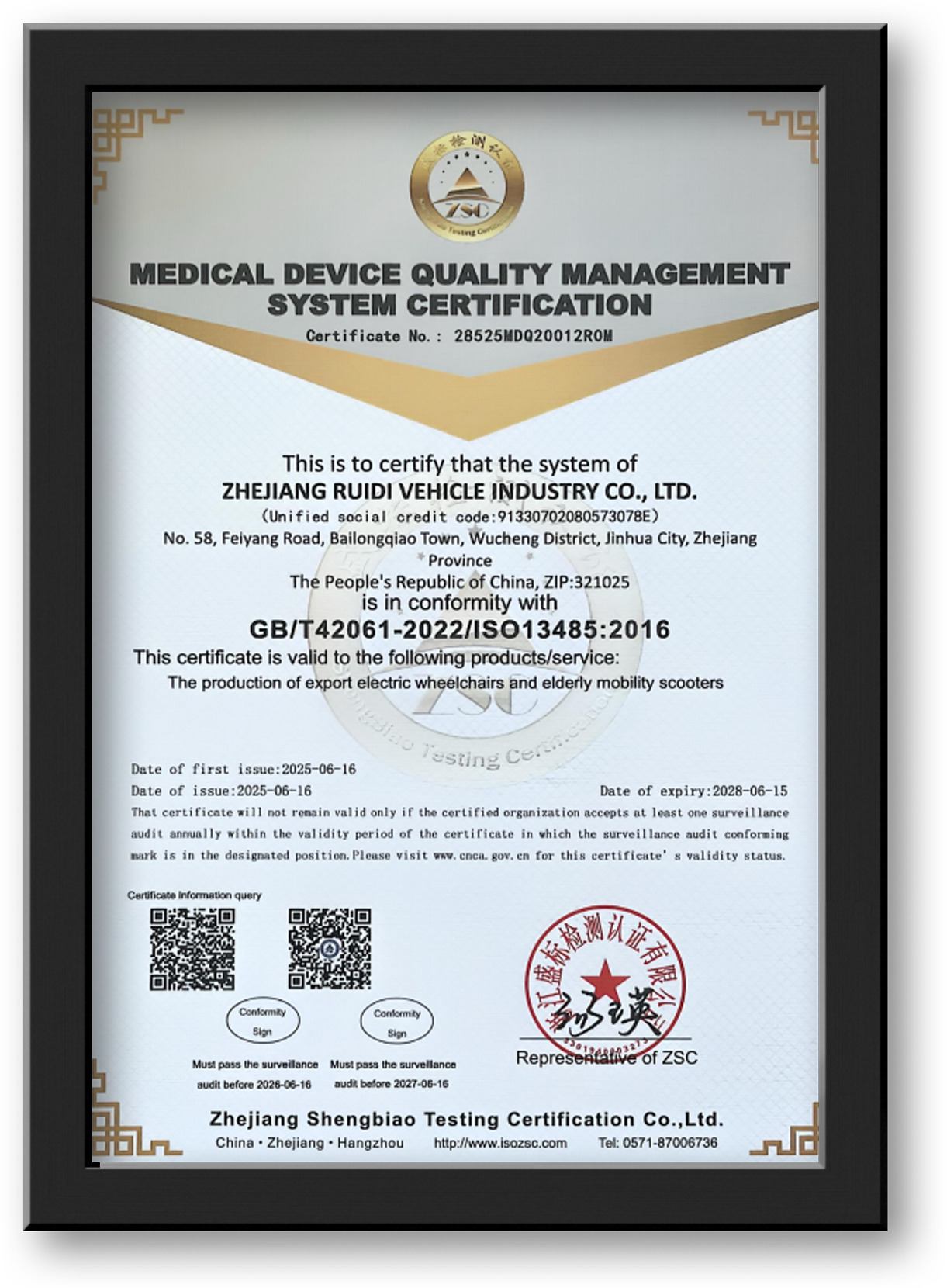
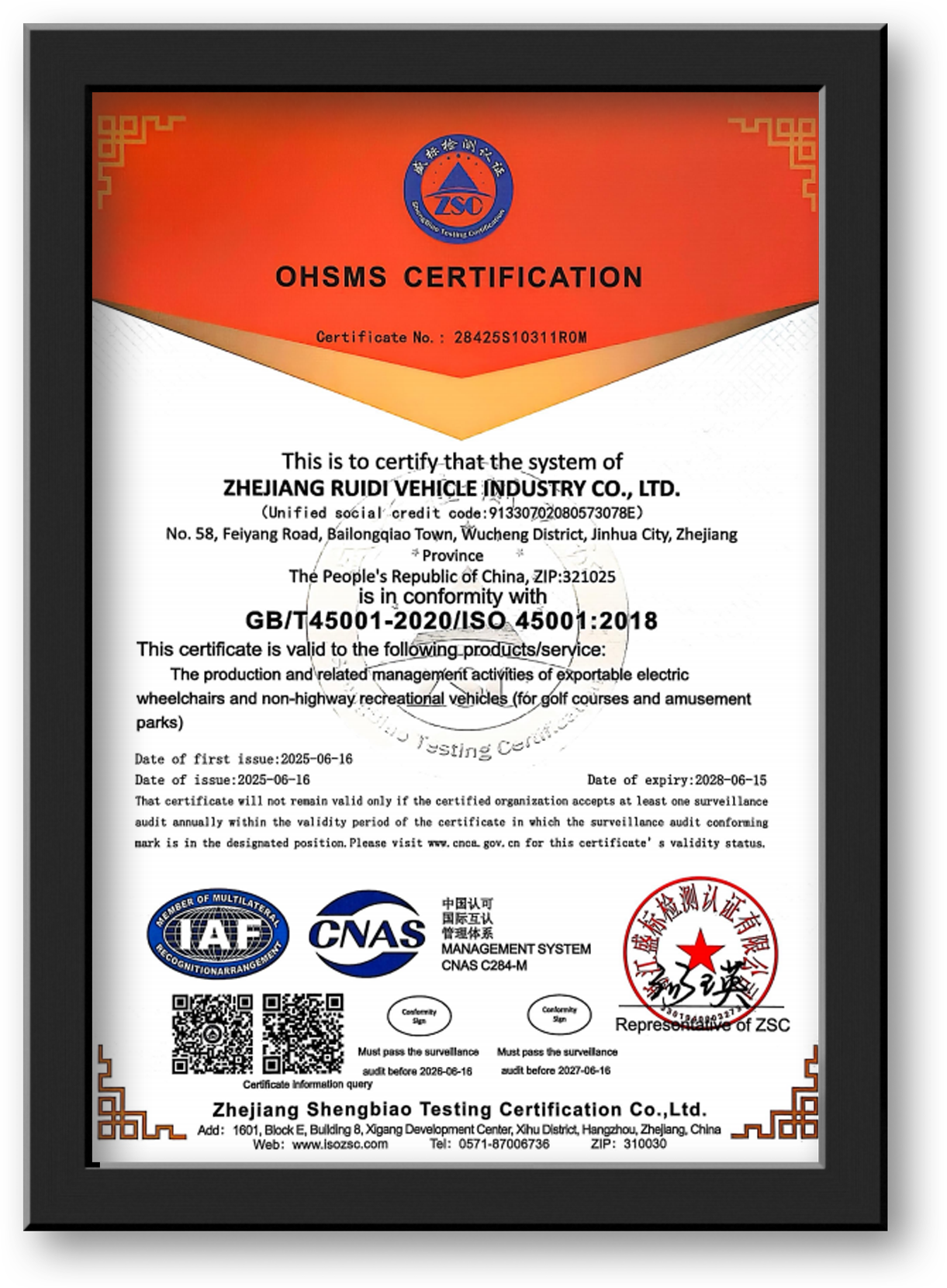
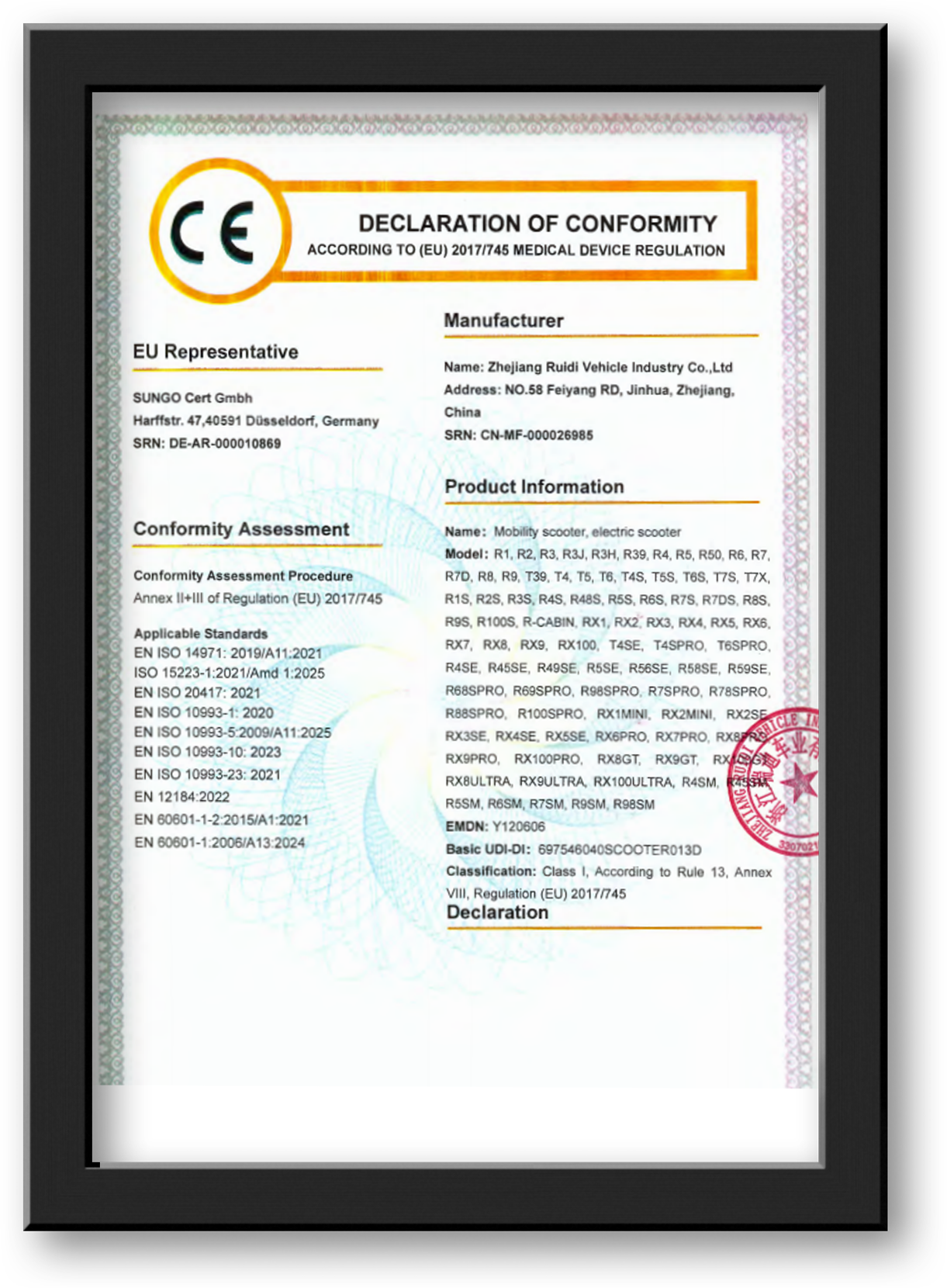
Patent Certificate
Latest Updates
View More-
2026.10.16
Travel Mobility Scooter Design Shifts Toward Outdoor Usability
A Travel Mobility Scooter designed for longer outdoor use faces different requirements from a compact model intended mainly for short local ...Read More -
2026.10.09
Small Lightweight Scooter Balances Portability With Daily Performance
A Small Lightweight Scooter is shaped by a practical balance between easy handling and usable mobility. Reducing dimensions can improve stor...Read More -
2026.10.02
How Do Factories Test Small Portable Mobility Scooters?
Testing Starts With the Folding Frame For small portable mobility scooters, the folding frame is a key part of product design. Users may fol...Read More -
2026.09.25
4 Wheel 2 Seat Mobility Scooter Expands Shared Mobility Options
A second seat changes more than the number of people a mobility scooter can carry. It changes how two people enter, sit, communicate, and mo...Read More
Industry Knowledge
Electric Wheelchairs are a category of electrically powered personal mobility devices designed for individuals with mobility impairments. Their primary objective is to replace or supplement the functions of manually propelled wheelchairs, thereby enabling greater independence in daily mobility. Unlike traditional mobility scooters, electric wheelchairs—in terms of their design philosophy—place a greater emphasis on "medical assistive attributes combined with precise maneuverability," rather than merely serving as a means of transportation.
Disabled Mobility Scooters: The Engineering Positioning of an Assistive Mobility System
Disabled Mobility Scooters represent the category of devices within the electric wheelchair ecosystem that is more closely aligned with everyday living scenarios. Their core design objective is to lower the barriers to mobility for users with physical impairments, enabling them to travel independently within low-complexity environments.
1. Core Functional Positioning
These devices primarily serve the following user groups:
- Users with mobility impairments who retain a certain degree of upper-body control
- Elderly individuals requiring independent mobility over short distances
- Patients undergoing rehabilitation who require mobility assistance
Fundamentally, they serve as "low-speed personal mobility assistance platforms," rather than medical care equipment.
2. Control System Design Characteristics
Disabled Mobility Scooters typically feature a minimalist control structure:
- Single-joystick control (integrating forward/reverse movement and steering)
- Low-force input design (requiring minimal physical effort)
- Automatic speed limitation system
The core objective of this design is to minimize the learning curve, allowing users to operate the device without the need for complex training.
3. Safety Assistance Systems
To accommodate the specific needs of their user demographic, these devices are typically equipped with:
Automatic deceleration systems (reducing speed during turns)
- Accidental-start prevention mechanisms
- Anti-rollback features for inclines
- Automatic electromagnetic braking and locking systems
Collectively, these features constitute a foundational safety protection framework.
4. Structural and Comfort Design
In terms of structural design, Disabled Mobility Scooters emphasize:
- Low seat height (facilitating easy mounting and dismounting)
- Adjustable armrests and footrests
- Basic shock absorption systems
- Medium-range battery configurations
The overarching design goal is "stability, safety, and ease of use."
Heavy-Duty Electric Wheelchairs: A Specialized, High-Load Electric Wheelchair System
Heavy-Duty Electric Wheelchairs represent an enhanced variant within the electric wheelchair ecosystem. Their design objective is to transcend the limitations inherent in traditional wheelchairs regarding load-bearing capacity, environmental adaptability, and operational range.
1. Structural Reinforcement Design Logic
The core characteristic of a heavy-duty electric wheelchair is its high-strength structural frame:
- Thickened aluminum alloy or steel chassis
- Reinforced load-bearing seating system
- Dual-motor or high-torque single-motor drive
- Enhanced joint connection design
Its load-bearing capacity is typically significantly higher than that of standard electric wheelchairs.
2. Power System Configuration Features
- Heavy-Duty Electric Wheelchairs typically employ:
- High-torque motors (to enhance climbing capability)
- Dual rear-wheel drive architecture (to boost traction)
- Independently controlled drive systems (to improve steering precision)
This power configuration enables the device to handle:
- Ramped environments
- Uneven terrain
- Extended periods of continuous operation
3. Suspension and Stability Systems
To accommodate high-load operation, the system typically features:
- Independent suspension and shock absorption systems
- Anti-tip center-of-gravity control design
- Wide-track wheelbase structure
These design features significantly enhance stability across complex terrain.
4. Battery and Range Systems
Heavy-duty electric wheelchairs are typically equipped with larger-capacity battery systems:
- High-energy-density lithium battery packs
- Modular battery replacement design
- Range optimization algorithms for extended operation
They also incorporate:
- Overheating protection mechanisms
- Low-battery safety speed-limiting modes
Comparison: Disabled Mobility Scooters vs. Heavy-Duty Electric Wheelchairs
| Dimension | Disabled Mobility Scooter | Heavy-Duty Electric Wheelchair |
| Core Objective | Daily Mobility Assistance | High-Load Professional Use |
| User Group | Elderly / Mild Mobility Impairments | Severe Mobility Impairments |
| Load-Bearing Capacity | Moderate | High |
| Control Method | Simplified Joystick System | Precision Control System |
| Structural Strength | Basic Reinforcement | High-Strength Frame |
| Operating Environment | Urban / Indoor | Multi-Terrain / Complex Environments |
Key Engineering Challenges in Electric Wheelchair Systems
In their design, electric wheelchairs must simultaneously satisfy the dual requirements of medical safety and mechanical performance.
1. Ergonomic Adaptability Issues
Electric wheelchairs must accommodate users with diverse physical conditions; therefore, they require:
- Adjustable seating systems
- Optimized lumbar and back support
- Design features ensuring comfort during prolonged use
2. The Trade-off Between Stability and Maneuverability
The system must strike a balance between:
- A small turning radius (for indoor use)
- High stability (for outdoor use)
3. Safety Redundancy System Design
Key safety mechanisms include:
- Redundant dual-braking system design
- Anti-tip protection structure
- Emergency power-off mechanism
- Automatic speed control
Expanded Application Scenarios
1. Daily Urban Mobility Assistance
- Shopping malls
- Community transit
- Accessing medical facilities
2. Medical Rehabilitation Environments
- Long-term rehabilitation support
- Intra-hospital mobility
- Nursing assistance aids
3. Heavy-Duty & Specialized Environment Use
- Factory or campus transit
- Complex outdoor terrain
- Long-distance continuous use
Electric Wheelchairs are not merely means of transportation; rather, they represent comprehensive mobility systems that integrate medical assistance with engineering design.
Specifically:
- Mobility Scooters for the disabled emphasize fundamental usability and ease of operation, enabling individuals with limited mobility to achieve independent daily movement
- Heavy-Duty Electric Wheelchairs, conversely, feature reinforced structural strength, power systems, and environmental adaptability to meet the demands of more complex and high-load usage scenarios
We'd love to hear from you!

QUICK LINKS
PRODUCTS
CONTACT INFORMATION
 No.58 Feiyang Road , Jinhua 321025, Zhejiang, China
 +86-13905796145
 [email protected]
  +86-579-82268015
Heavy-Duty Electric Wheelchair Manufacturer
Copyright © Zhejiang Ruidi Vehicle Industry Co., Ltd. Rights Reserved.