

 English
 中文简体
中文简体 Español
 Deutsch
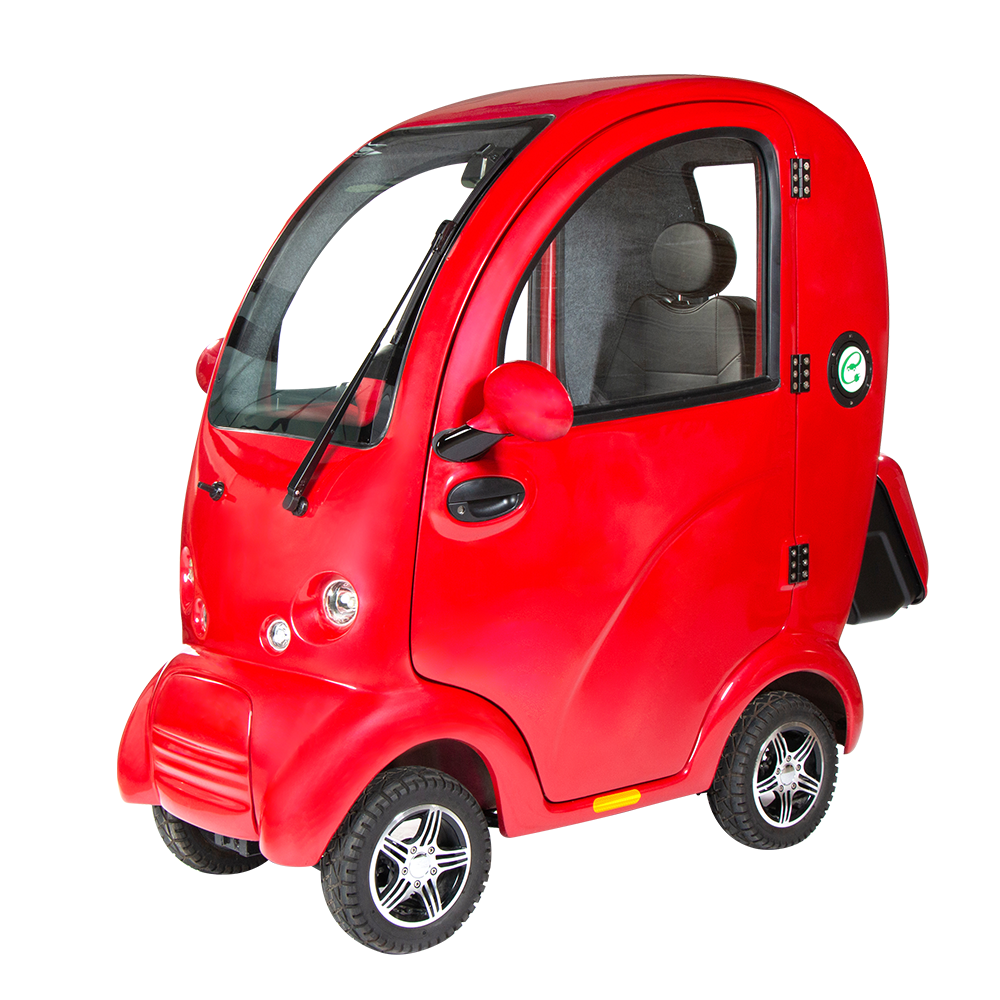
An enclosed mobility scooter is not simply an open scooter fitted with a roof. Once the rider sits inside a defined cabin, the vehicle needs to handle visibility, controls, seating space, entry, and interior movement differently. These details become especially noticeable in a Weatherproof Enclosed Mobility Scooter, where the cabin forms part of the vehicle structure rather than serving as an accessory.
Cabin Space Changes The Driving Layout
A fully enclosed body creates a more defined boundary around the rider. The windshield, side structure, control panel, seat, and entry area have to work together without making the interior feel unnecessarily restricted.
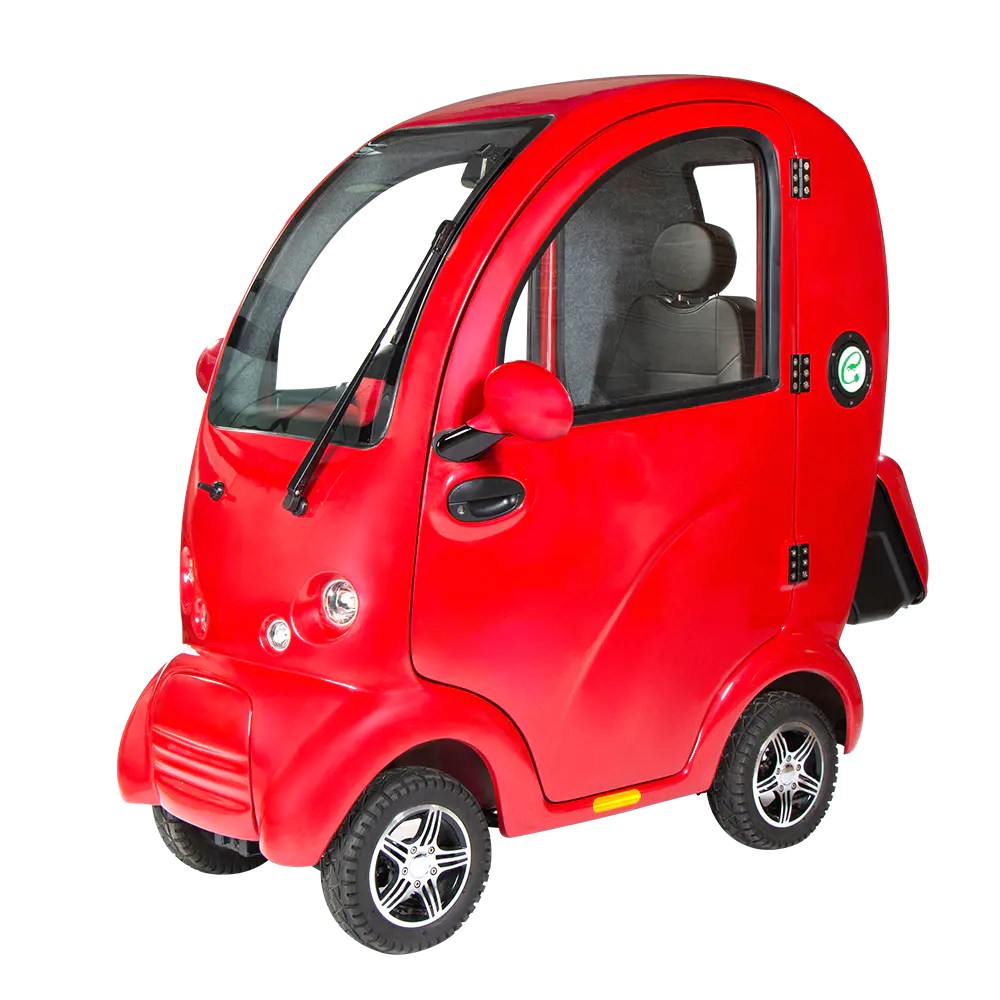
The CABIN X9 uses a single-seat layout within a 162 × 80 × 150 cm body. Its enclosed control panel incorporates a 5.5-inch display, keeping riding information within the driver's normal field of view. The handle design also uses an anti-slip surface shaped around the hand, supporting repeated steering movements.
This arrangement gives the Weatherproof Enclosed Mobility Scooter a different interior design problem from an open-frame model. There is less freedom to position controls anywhere around the rider because the cabin walls and windshield establish fixed boundaries.
Visibility Requires More Than A Large Windshield
Closing the sides and roof around the rider changes the visual environment. An open scooter provides a broad view around the handlebars, whereas a cabin introduces structural elements into the driver's peripheral vision.
The CABIN X9 addresses rear visibility with a high-definition rearview camera connected to an integrated display. The system is intended to improve the view behind the vehicle when reversing, particularly where the cabin structure creates additional visual obstruction.
For a Weatherproof Enclosed Mobility Scooter, rearward visibility is closely connected to parking and low-speed maneuvering. A vehicle with a 230 cm turning radius may still need to make several steering corrections in a confined space. A dedicated rear camera can provide information that is difficult to obtain through the cabin's physical openings alone.
The same principle applies to the front viewing area. Windshield height, seat position, dashboard placement, and the driver's eye level all contribute to what can be seen during ordinary turns and approach movements.
Enclosure Adds Weight To The Vehicle
The cabin structure also changes the physical characteristics of the scooter. Panels, windows, doors, interior fittings, and supporting structures add mass compared with an exposed chassis.
The CABIN X9 has a listed weight of 215 kg without batteries and a maximum loading weight of 210 kg. It uses a 1400W motor, dual 12V 75Ah batteries, 14-inch front and rear tires, and 160 mm ground clearance.
That combination shows why a Weatherproof Enclosed Mobility Scooter needs its propulsion system considered together with the body structure. Motor output does not operate in isolation; vehicle mass, rider weight, road gradient, tire size, and surface conditions all influence actual performance.
The stated maximum climbing grade for the CABIN X9 is 12°, subject to user weight and surrounding conditions. The specification therefore gives a useful reference point without treating climbing performance as an identical result across every operating environment.
Suspension Becomes More Noticeable Inside A Cabin
Road vibration can feel different inside an enclosed body. An open scooter exposes the rider directly to surrounding conditions, whereas a cabin creates an interior space where vibration from the chassis, wheels, and body structure can become more apparent.
The CABIN X9 uses a shock-absorption system designed to filter road bumps and maintain a stable ride. Its 14-inch tires and 160 mm ground clearance also contribute to how the vehicle handles uneven surfaces.
A Weatherproof Enclosed Mobility Scooter therefore needs more than a rigid outer shell. The relationship between chassis, wheels, suspension, seat, and cabin structure affects how movement is transmitted to the person inside.
This becomes relevant on routes that include driveway transitions, uneven pavement, ramps, or lightly damaged roads. A cabin that remains structurally stable while the chassis manages surface irregularities provides a more controlled interior environment.
Electrical Functions Move Into The Cabin
Once the rider is enclosed, vehicle functions naturally become concentrated around the driver's position. Displays, lighting controls, heating options, safety systems, and other electrical features need to be integrated without interfering with basic steering operation.
The CABIN X9 provides optional heated seating and heated handlebars for colder conditions. GPS tracking with SOS and a cornering deceleration system are also available as options. The electromagnetic brake forms part of the standard braking system.
These additions turn the cabin into more than a protective shell. The Weatherproof Enclosed Mobility Scooter becomes an integrated electrical and mechanical platform in which auxiliary functions share space with the primary driving controls.
Battery capacity also becomes relevant because electrical accessories draw from the same energy system. The CABIN X9 uses two 12V 75Ah batteries with an 8.0A charger and lists a 45 km travel range.
Enclosed Design Affects Parking And Storage
A Weatherproof Enclosed Mobility Scooter combines several design requirements that are less pronounced on an open scooter. The cabin protects the rider's space, but it also creates new requirements for visibility, weight distribution, control placement, maneuvering, and interior equipment.
The result is closer to a compact enclosed mobility vehicle than a conventional scooter with an added canopy, and that distinction shapes both the engineering and the way the vehicle is used.

 No.58 Feiyang Road , Jinhua 321025, Zhejiang, China
 +86-13905796145
 +86-579-82268015