English
 中文简体
中文简体 Español
 Deutsch
information to be updated

Sightseeing Scooters
Ruidi Tourist Sightseeing Vehicles are specifically designed to enhance operational efficiency and visitor experience in tourist attractions, large campuses, and various public spaces. We offer models with multiple seating layouts to meet different passenger flow and operational requirements. The vehicle design prioritizes passenger comfort and easy boarding/alighting. We also provide flexible appearance customization options to help your fleet harmonize with the local environment. With a core focus on economic practicality and environmental friendliness, our sightseeing vehicles help operators reduce running costs and create a quiet, comfortable touring atmosphere. The robust construction is designed to meet the demands of daily operations. Our team can provide professional vehicle selection and supporting advice based on your specific operational scenario, assisting you in delivering efficient and enjoyable sightseeing services that create lasting positive memories for your visitors.

ABOUT
Zhejiang Ruidi Vehicle Industry Co., Ltd.
Zhejiang Ruidi Vehicle Industry Co., Ltd. is a professional manufacturer engaged in the research, development, and production of Sightseeing Scooters. Our products are widely applied in elderly mobility, sports and leisure, and recreational fields.
The company’s manufacturing base is located in Jinhua Industrial Park, Zhejiang Province, covering an area of approximately 35,000 square meters. The facility is equipped with over 100 sets of advanced production equipment and four efficient production lines, ensuring stable production capacity and reliable product quality.
At present, our products are exported to the United States, Canada, Europe, and Australia, as well as supplied to the Chinese domestic market. Our main product series include mobility scooters for the elderly, electric walking chairs, foldable electric mobility scooters, and enclosed cabin-type electric mobility scooters.
We consistently adhere to a quality-centered management philosophy and are supported by a professional and efficient team. We are committed to providing electric mobility products that are easy to operate, energy-saving, environmentally friendly, low-noise, and pollution-free. We believe these products bring greater comfort, convenience, and freedom to elderly and mobility-impaired users, helping them enjoy a higher quality of life.
View More
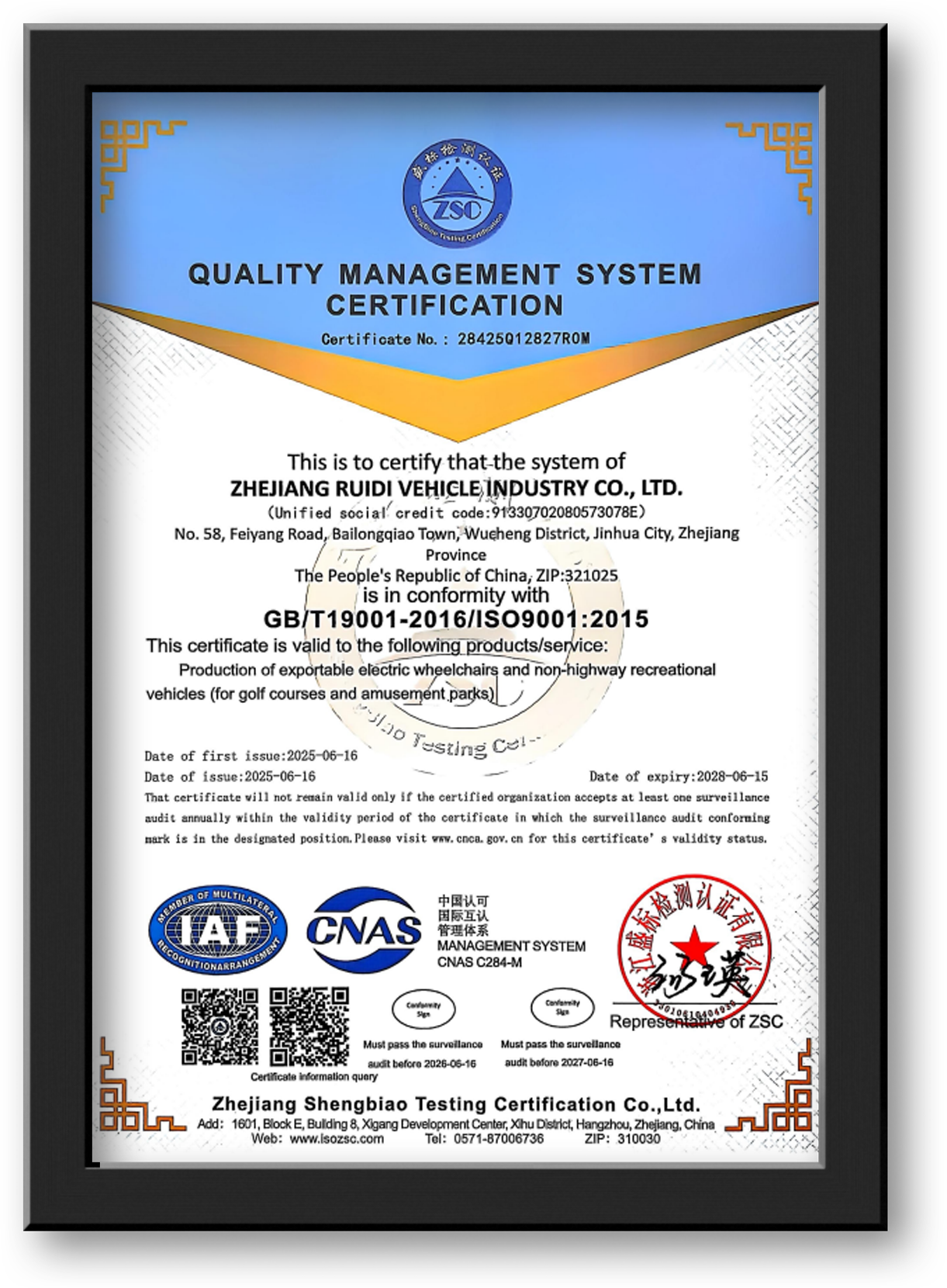
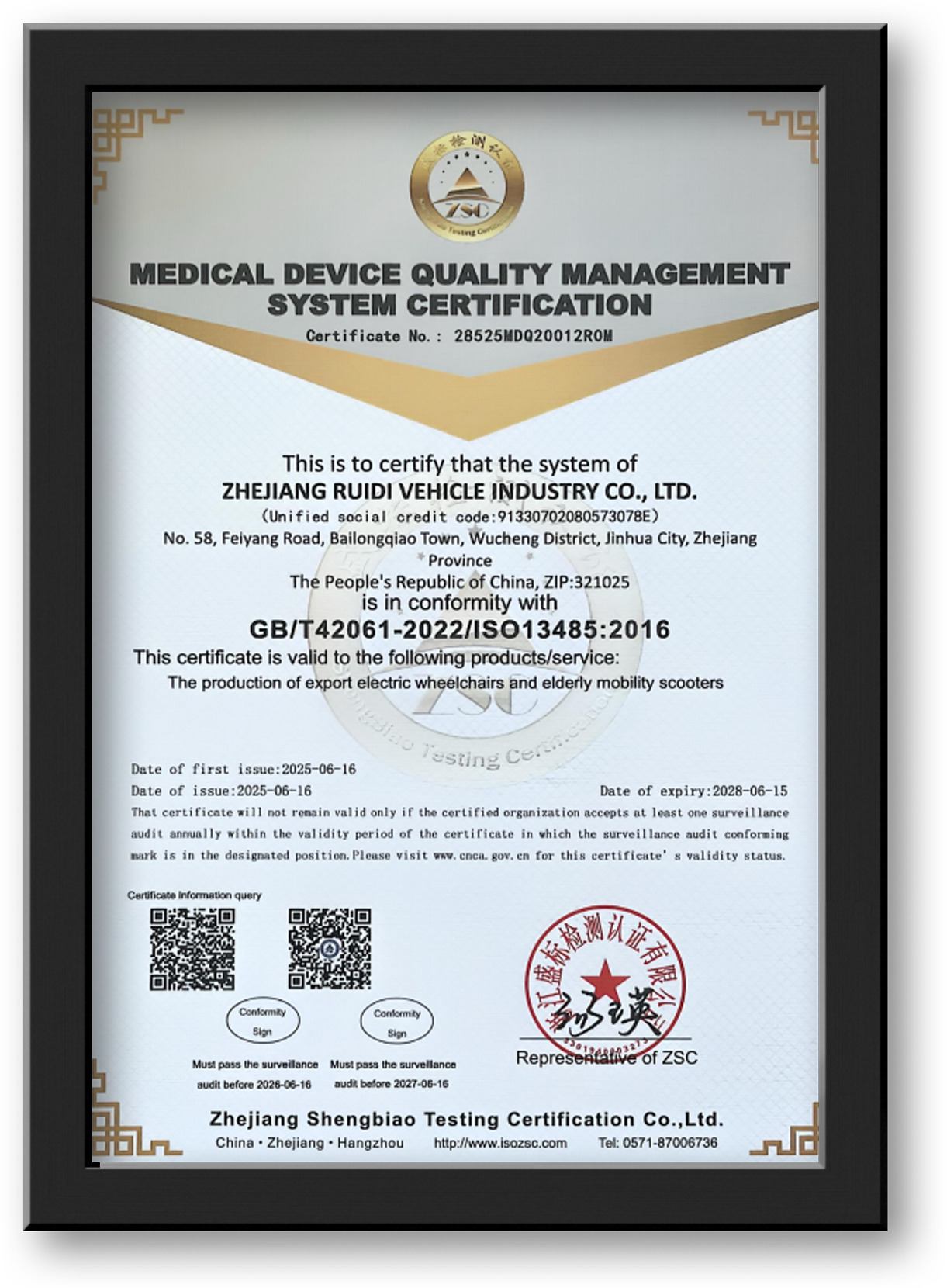
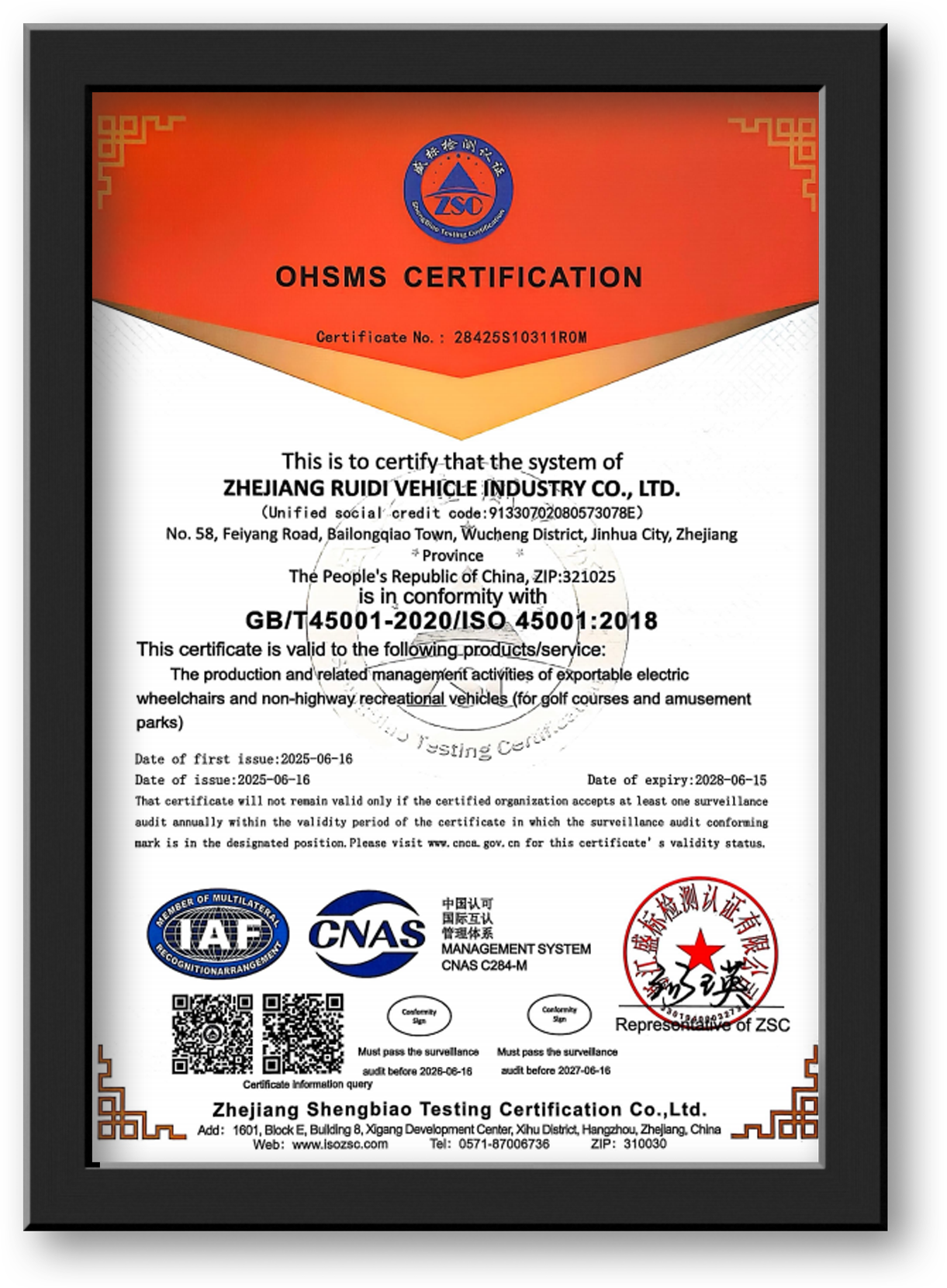
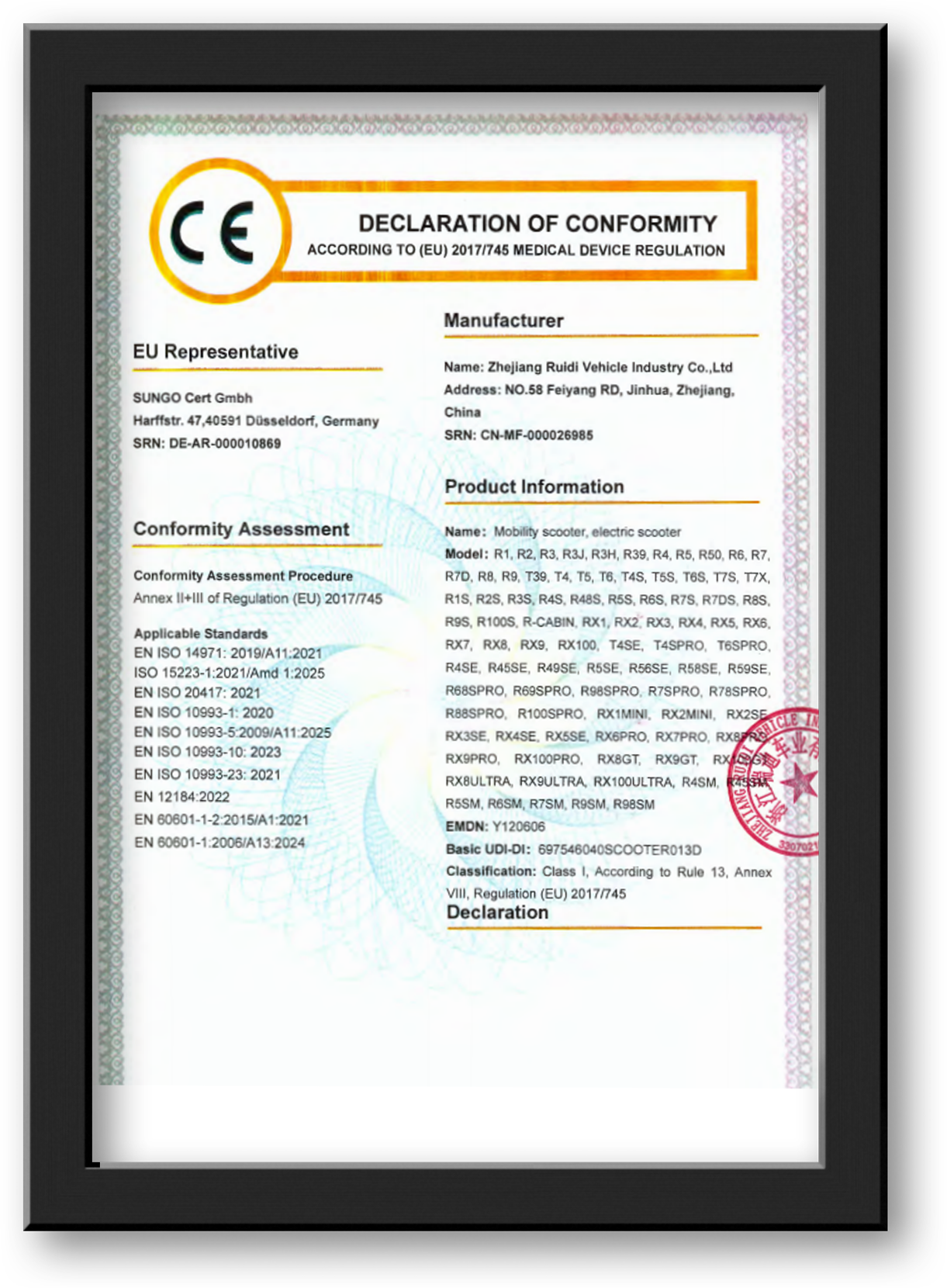
Patent Certificate

Latest Updates
View More-
2026.10.16
Travel Mobility Scooter Design Shifts Toward Outdoor Usability
A Travel Mobility Scooter designed for longer outdoor use faces different requirements from a compact model intended mainly for short local ...Read More -
2026.10.09
Small Lightweight Scooter Balances Portability With Daily Performance
A Small Lightweight Scooter is shaped by a practical balance between easy handling and usable mobility. Reducing dimensions can improve stor...Read More -
2026.10.02
How Do Factories Test Small Portable Mobility Scooters?
Testing Starts With the Folding Frame For small portable mobility scooters, the folding frame is a key part of product design. Users may fol...Read More -
2026.09.25
4 Wheel 2 Seat Mobility Scooter Expands Shared Mobility Options
A second seat changes more than the number of people a mobility scooter can carry. It changes how two people enter, sit, communicate, and mo...Read More
Industry Knowledge
The Sightseeing Scooter is an electric mobility device designed for touring scenic areas, ideal for short-distance travel and low-speed exploration. Easy to operate and offering a smooth ride, it enhances both the efficiency and comfort of visitor movement within a scenic area. Widely adopted in parks, tourist destinations, and leisure venues, it facilitates a more relaxed and enjoyable sightseeing experience.
Background: The Evolving Landscape of Sightseeing Mobility
As the structure of tourism consumption shifts, visitors' expectations regarding the "experiential aspect" of travel are steadily rising. The traditional approach of merely "viewing attractions" is giving way to a new paradigm: "relaxed touring combined with immersive experiences." Amidst this trend, traditional sightseeing models have begun to reveal certain limitations:
- Scenic areas are expanding in size, resulting in longer walking distances.
- Visitors expend significant physical energy, which can disrupt the continuity of their experience.
- Attractions are often geographically dispersed, an increased proportion of time spent in transit.
- The demographic share of family groups and elderly visitors is on the rise.
Driven by these factors, compact electric mobility devices have begun to integrate into scenic area management systems, gradually establishing standardized applications and operational protocols.
Core Positioning of the Electric Sightseeing Scooter
The Electric Sightseeing Scooter is primarily designed for short-distance, low-speed travel scenarios; it is a mobility device that prioritizes convenience and fundamental transportation functionality.
Key Features:
- Electric propulsion system, reducing physical exertion required from the user.
- Relatively simple structural design, facilitating easy maintenance.
- Low-speed operation, making it highly suitable for areas with heavy pedestrian traffic.
- Simple controls with a low learning curve, allowing for easy adoption by visitors.
- Suitable for use on level paths or gentle inclines.
Common Use Cases:
- Short-distance transit from scenic area entrances to major attractions.
- Connecting different zones or areas within a park or complex.
- Addressing visitors' temporary mobility needs during their visit.
This category of device leans more toward being a "basic mobility tool," emphasizing pure utility and practicality.
Functional Extensions: The Scenic Tour Mobility Scooter
In contrast, the Scenic Tour Mobility Scooter places greater emphasis on the synergy between the "sightseeing experience" and the act of "mobility." Its design typically incorporates enhanced features for comfort and adaptability.
Core Characteristics:
- Greater focus on passenger comfort during the ride.
- Adaptability to a wider variety of terrain environments.
- Capable of covering longer distances for extended tours.
- Supports more stable and precise driving control.
- Suitable for use by multiple passengers or family groups.
Usage Profile:
- Ideal for use on circular touring routes or loops.
- Enables seamless, continuous travel between multiple distinct attractions.
- Better suited for extended sightseeing sessions.
This type of device leans more toward being an "experiential mobility tool"—serving not merely as a means of transportation, but as an integral component of the visitor's overall touring journey.
Comparative Analysis of Two Equipment Categories
| Comparison Dimension | Electric Sightseeing Scooter | Scenic Tour Mobility Scooter |
| Core Positioning | Basic Transportation | Sightseeing Experience |
| Travel Distance | Short Distance | Medium-to-Long Distance |
| Operational Complexity | Low | Moderate |
| Comfort Level | Basic | High |
| Target Users | General Tourists | Families & Group Tourists |
| Terrain Adaptability | Flat Areas | Multi-Scenario Adaptability |
| Functional Expandability | Limited | Extensive |
Structural Design and Technical Components
1. Power System
The electric drive system is the core component; its key features include:
- Stable power output
- Optimization for low-speed operation
- Adaptability to environments involving frequent starts and stops
2. Body Structure
- Lightweight frame design
- Application of corrosion-resistant materials
- Modular structure for ease of maintenance
3. Seating System
- Ergonomically designed seating posture
- Incorporation of shock-absorbing cushioning structures
- Enhanced comfort for prolonged rides
4. Control System
- Simplified control panel
- Graded speed adjustment
- Safety braking system
5. Safety Features
- Anti-slip tire design
- Stable center-of-gravity structure
- Automatic speed-limiting function
Further Refinement of Application Scenarios
- 1. Large-Scale Comprehensive Scenic Areas
Used to connect multiple dispersed attractions, thereby improving sightseeing efficiency.
- 2. Mountainous and Natural Landscape Areas
Adapted for environments involving gentle slopes and natural terrain paths.
- 3. Urban Cultural Tourism Districts
Suitable for street-based sightseeing routes.
- 4. Leisure and Vacation Parks
Used for internal transportation and leisurely cruising.
- 5. Waterfronts and Open Spaces
Suitable for long-distance, low-speed sightseeing.
Directions for Enhancing User Experience
1. Comfort Optimization
- Enhanced seat support
- Improved shock absorption system
- Increased ride smoothness
2. Operational Convenience
- Simplified startup procedure
- Automatic speed control
- Intuitive user interface
3. Enhanced Sightseeing Experience
- Open-view design
- Low-noise operation structure
- Greater ride stability
4. Safety Assurance
- Multiple braking systems
- Ride stability control
- Emergency stop mechanism
Perspectives on Scenic Area Operations and Management
From an operational standpoint, the introduction of this type of equipment represents not merely an upgrade in transportation tools, but also involves the optimization of the overall management system:
- Vehicle dispatch and distribution management
- Establishment of charging and maintenance systems
- Formulation of visitor usage regulations
- Traffic flow allocation during peak periods
- Route planning and node configuration
Rational operational strategies can significantly increase equipment utilization rates while simultaneously reducing congestion and visitor waiting times.
We'd love to hear from you!

QUICK LINKS
PRODUCTS
CONTACT INFORMATION
 No.58 Feiyang Road , Jinhua 321025, Zhejiang, China
 +86-13905796145
 [email protected]
  +86-579-82268015
Electric Sightseeing Scooter Factory
Copyright © Zhejiang Ruidi Vehicle Industry Co., Ltd. Rights Reserved.