

 English
 中文简体
 Español
 Deutsch
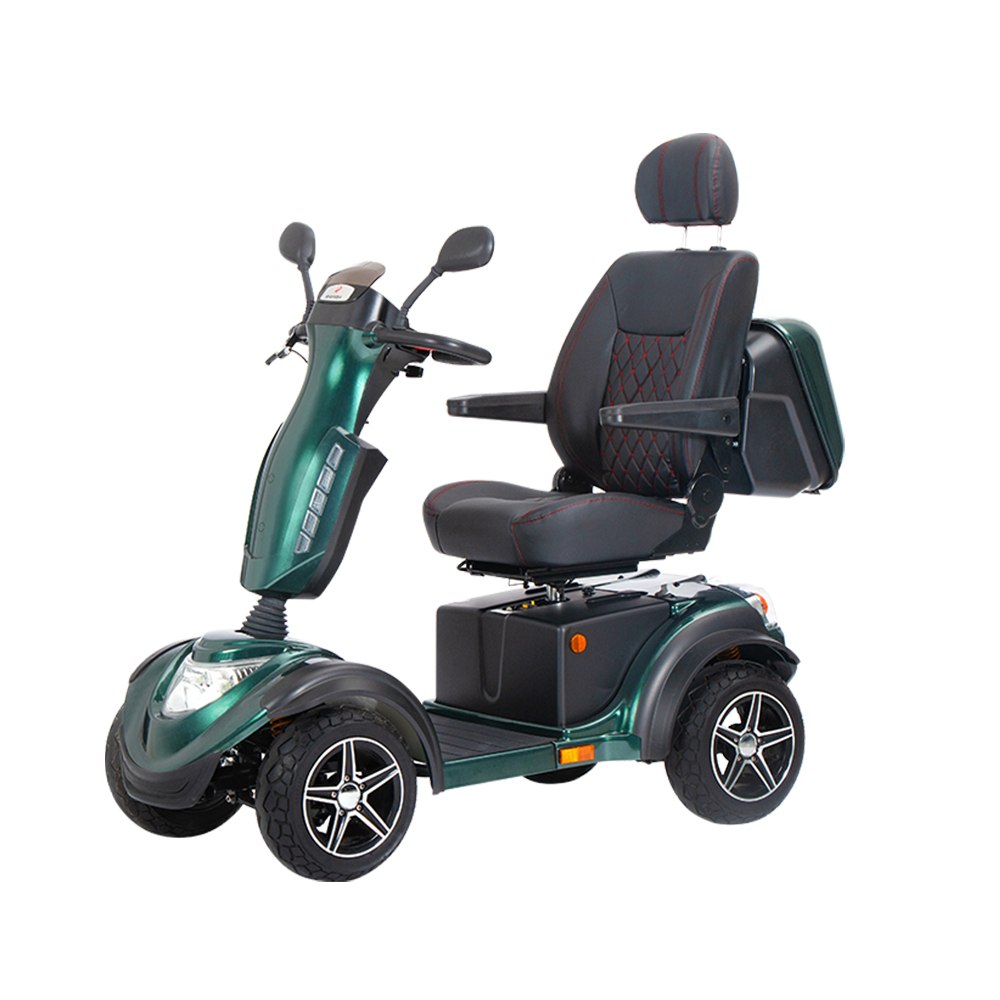
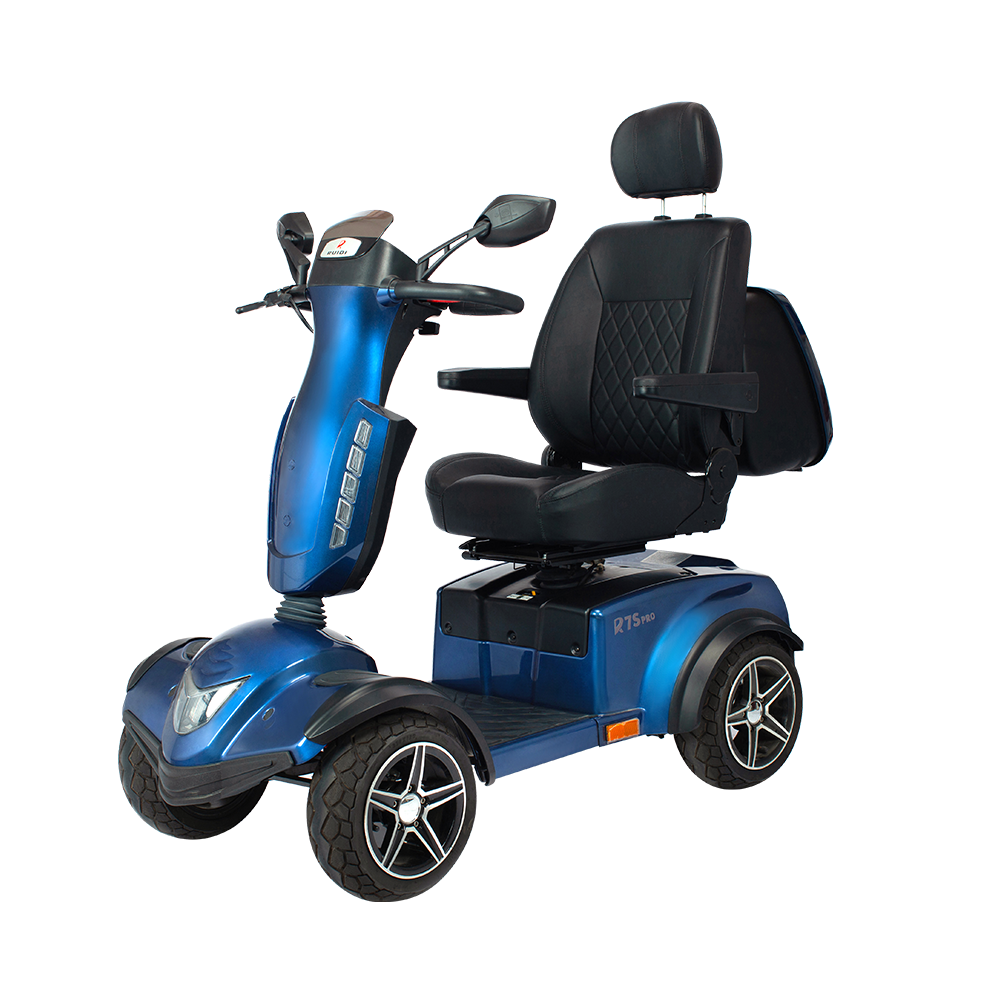
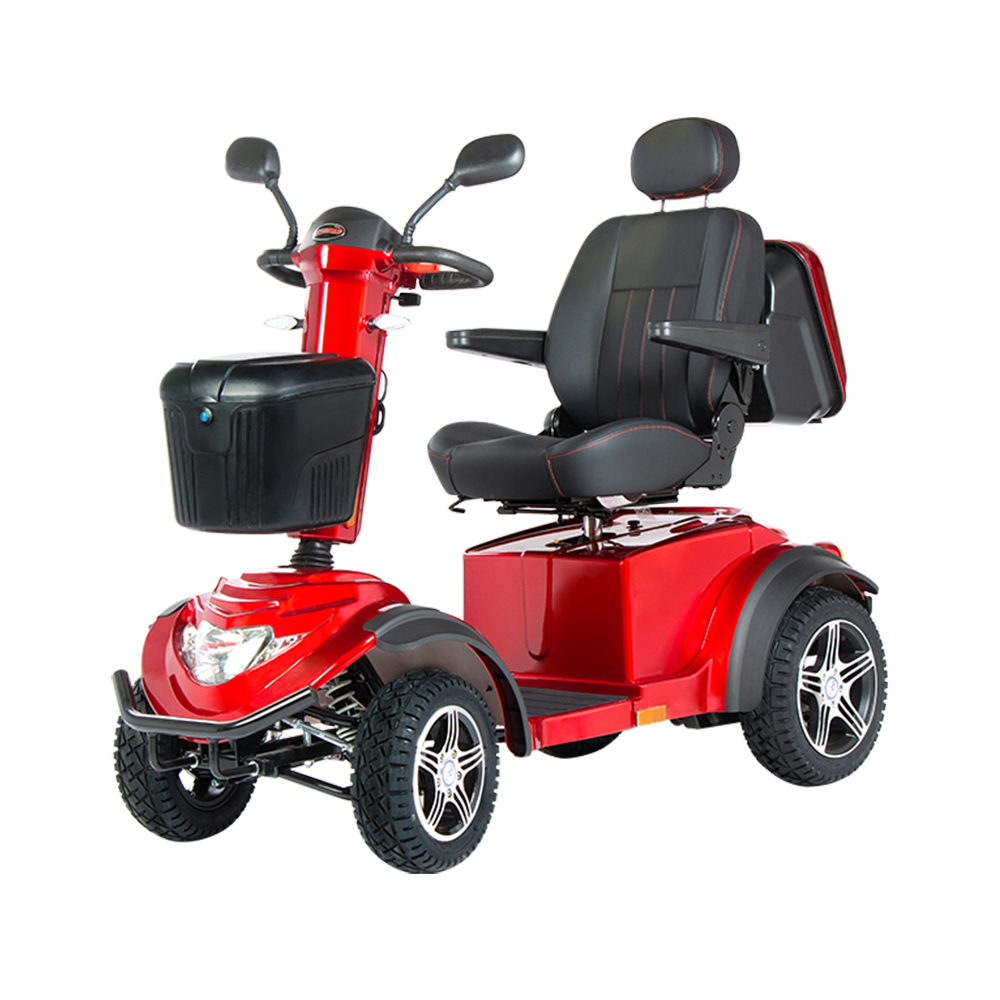
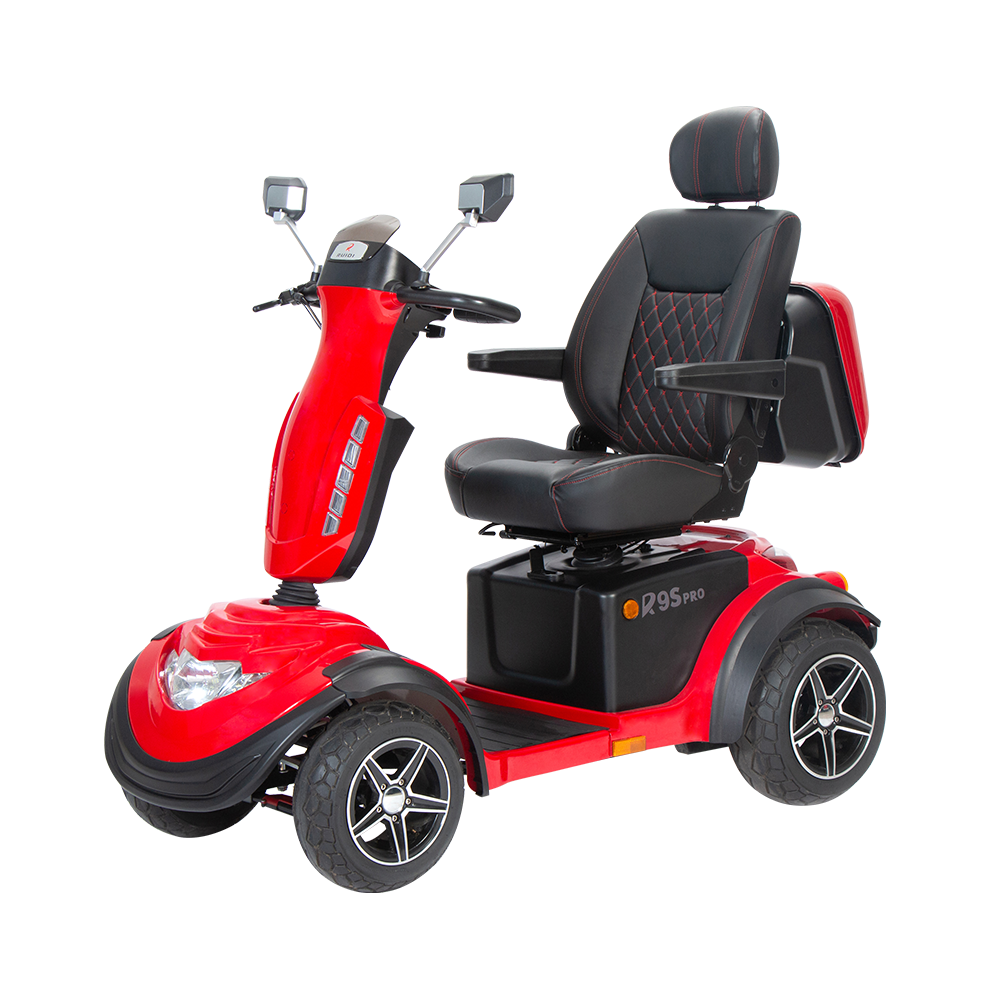
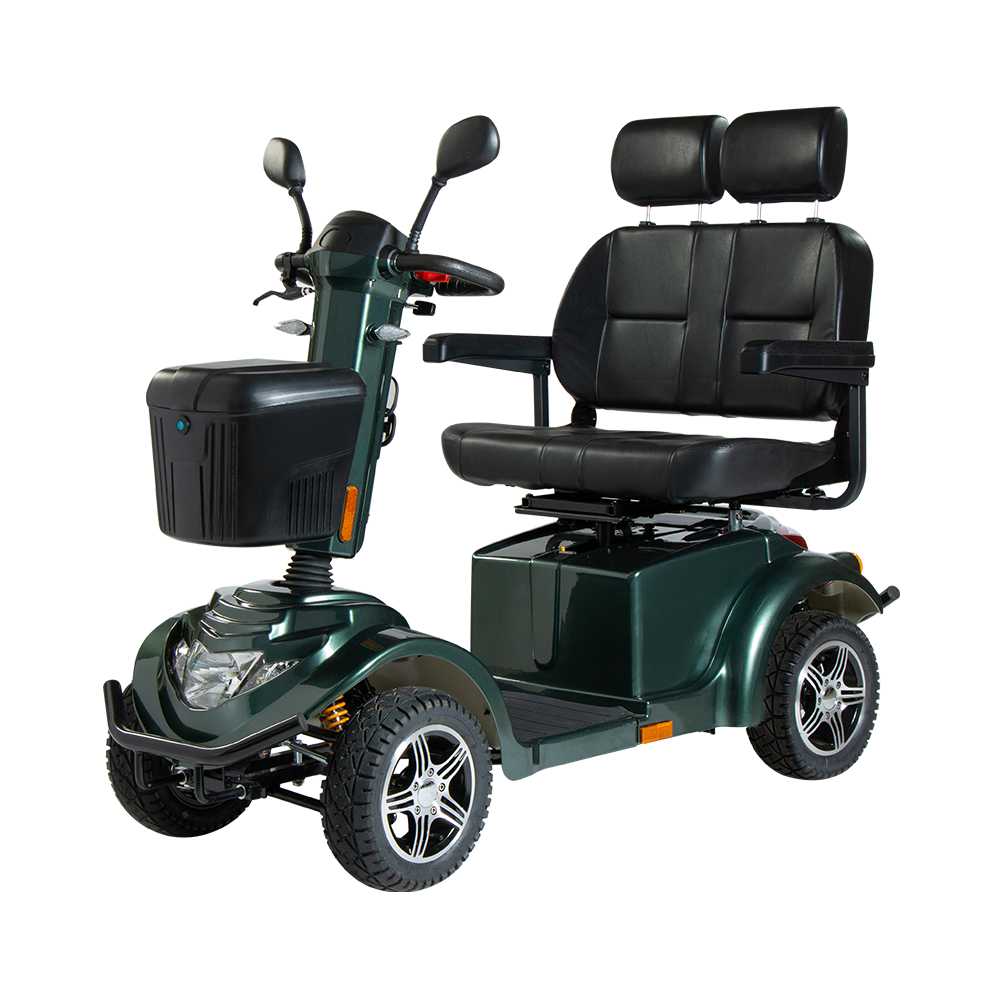
A Travel Mobility Scooter designed for longer outdoor use faces different requirements from a compact model intended mainly for short local trips. Longer journeys place greater emphasis on battery capacity, motor output, wheels, suspension, ground clearance, seating, and load capacity. Ruidi's large mobility scooter category is positioned around long-distance travel and comfort, with high-power motors, dual-battery systems, suspension, and larger wheel configurations.
Longer Routes Change Vehicle Priorities
A short trip and an extended outdoor journey place different demands on the vehicle. Once riding time increases, the relationship between the rider and the scooter becomes more important.
A Travel Mobility Scooter therefore needs more than sufficient propulsion. Seat support, steering position, suspension response, battery capacity, and ground clearance all influence the complete travel experience. Ruidi's large models include high-back seats, adjustable armrests, suspension, and other comfort-oriented configurations.
Battery Capacity Supports Extended Travel
Battery capacity becomes more relevant as route length increases. More stored energy can support longer travel, but additional batteries also add weight and require space.
For a Travel Mobility Scooter, battery selection has to be coordinated with motor output and vehicle mass. Ruidi's R98SPRO uses two 12V 110Ah batteries and lists a maximum range of 70 km, while its large-scooter range includes other configurations with different battery capacities and travel ranges.
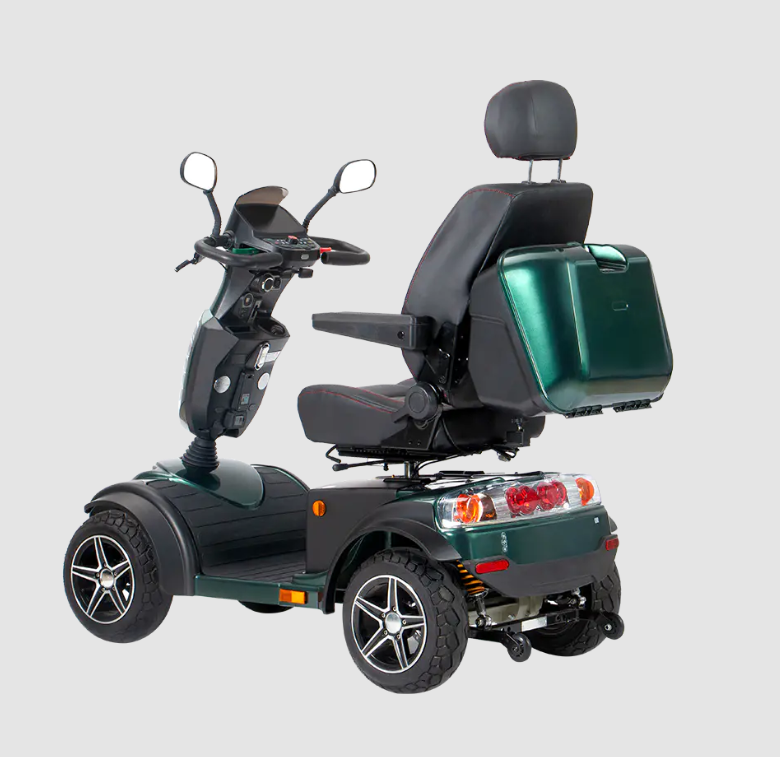
For B2B buyers comparing long range mobility scooters, battery capacity should therefore be considered together with charging requirements, vehicle weight, and expected operating conditions.
Suspension Becomes More Relevant Outdoors
Outdoor routes may include paving joints, uneven paths, gravel, grass, or changes in elevation, increasing the importance of the chassis, wheels, and suspension.
A Travel Mobility Scooter intended for outdoor routes can use suspension and additional ground clearance to adapt to varied surfaces. Ruidi's large category identifies full suspension, higher ground clearance, and larger tires as part of its outdoor-oriented configurations.
The R98SPRO, for example, has 150 mm of ground clearance and 14- and 15-inch tires.
Wheel Size Influences Chassis Design
Larger wheels require more room within the frame, but they also affect ground clearance, seat height, steering geometry, and the way the vehicle interacts with the surface.
For a Travel Mobility Scooter, wheel diameter therefore needs to be matched with suspension and chassis dimensions. Ruidi's large models use different front and rear wheel combinations, indicating different approaches to chassis and terrain requirements.
B2B developers should consequently evaluate wheel size as part of the complete chassis rather than as an isolated specification.
Motor Output Must Match Vehicle Mass
Longer outdoor routes can include slopes and uneven surfaces, so the motor needs to provide suitable output for the vehicle's total operating load. Motor rating, controller, battery voltage, wheel arrangement, and rider weight all interact.
Ruidi's R98SPRO uses a 1400W motor and PG200A controller, with a maximum climbing grade listed at 12° subject to user weight and surrounding conditions.
This shows why a Travel Mobility Scooter should not be compared only by motor wattage. The same output can produce different results when vehicle mass, battery configuration, or terrain requirements change.
Comfort Becomes More Important Over Time
A longer journey also changes the importance of rider contact points. Seat height, back support, armrests, handlebar position, and suspension all become part of the vehicle's usability when the rider remains seated for an extended period.
The Travel Mobility Scooter configurations in Ruidi's large category include high-back seating, adjustable armrests, heated seats, and heated grips on selected models.
These features show that long-distance models are designed around more than propulsion. Rider position and chassis interaction also matter.
Load Capacity Affects the Complete System
Travel can also involve personal belongings or items carried on the scooter. Increasing payload changes the load placed on the frame, tires, motor, brakes, and suspension.
Ruidi's R98SPRO lists a maximum load of 240 kg and an 8 kg safe working load for its rear box.
Buyers should therefore consider rider weight and payload alongside range and motor specifications.
Outdoor Protection Enters the Design
Longer outdoor use can expose electrical and mechanical components to more varied environmental conditions. Dust, moisture, temperature changes, and outdoor storage requirements may all affect equipment selection.
Ruidi's large mobility scooter category highlights water and dust resistance among its technologies for outdoor adaptability.
This protection needs to cover the battery area, wiring, connectors, controls, and other exposed components rather than function as a single isolated feature.
Travel Design Is a System-Level Decision
The development of a Travel Mobility Scooter brings several engineering factors together: battery capacity, motor output, suspension, wheels, ground clearance, seating, load capacity, and environmental protection.
For manufacturers and B2B buyers, range figures alone do not describe whether a configuration fits a particular travel requirement. The vehicle needs to correspond with route conditions, payload, charging, and the rider's operating environment.
As the category develops, a Travel Mobility Scooter is increasingly treated as an outdoor mobility platform built around coordinated energy, chassis, and comfort requirements rather than simply a scooter equipped with a larger battery.

 No.58 Feiyang Road , Jinhua 321025, Zhejiang, China
 +86-13905796145

 +86-579-82268015