English
 中文简体
中文简体 Español
 Deutsch
-
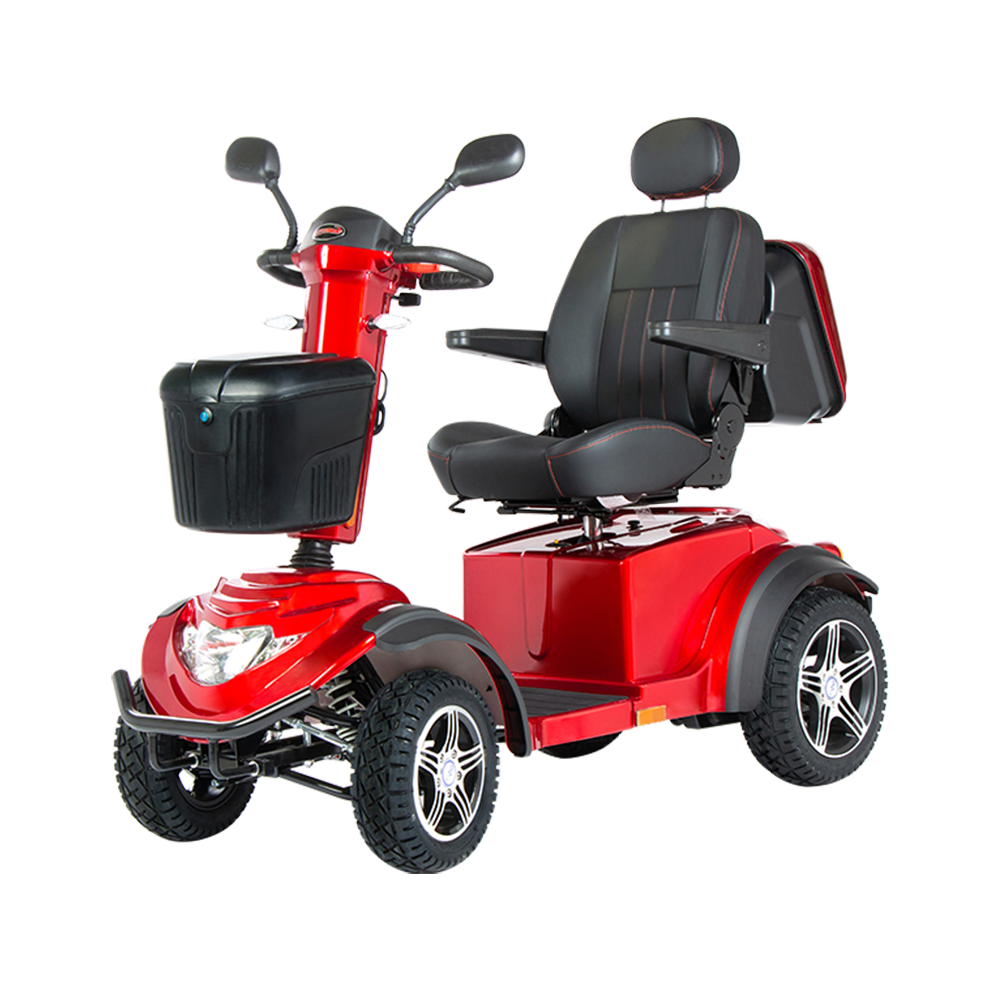 1400W Smart Off-Road Mobility Scooter R9S SMART: 210kg Capacity, All-Terrain
R9S SMART
While ordinary scooters stick to paved roads, the R9S SMART opens new horizons for of... -
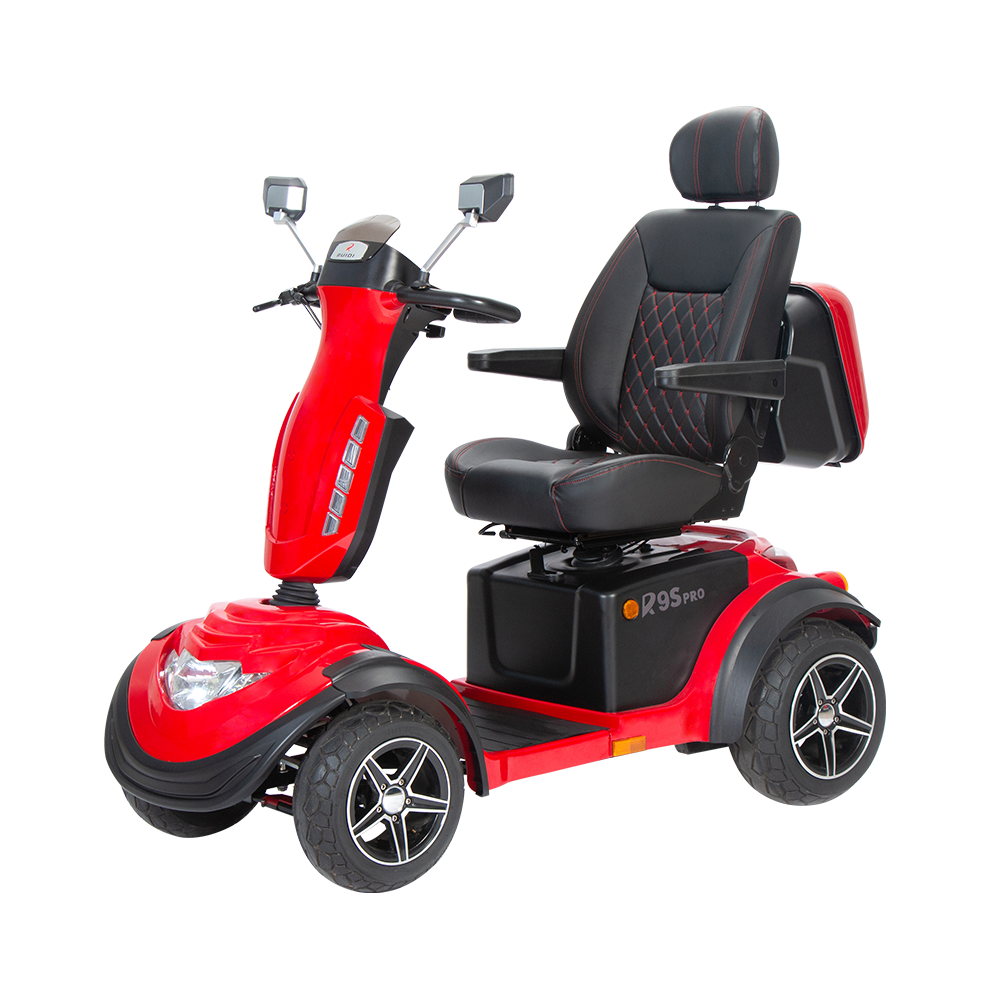 Peak Performance Mobility Scooter R98SPRO: 1400W Power, 70km Max Range
R98SPRO
The R98SPRO, as Ruidi's flagship all-terrain mobility scooter, redefines outdoor trav...

Large Mobility Scooters
Designed for users who seek long-distance exploration and superior comfort. The core of Ruidi's Large Mobility Scooter lies in its high-power imported motor and dual-battery system for extended range, easily tackling steep slopes and uneven paths. The deluxe high-back seat, full suspension system, adjustable armrests, heated seat and grips, and GPS combine to deliver an automobile-like comfort. Integrated water and dust resistance technology enhances its adaptability.

ABOUT
Zhejiang Ruidi Vehicle Industry Co., Ltd.
Zhejiang Ruidi Vehicle Industry Co., Ltd. is a professional manufacturer engaged in the research, development, and production of Large Mobility Scooters. Our products are widely applied in elderly mobility, sports and leisure, and recreational fields.
The company’s manufacturing base is located in Jinhua Industrial Park, Zhejiang Province, covering an area of approximately 35,000 square meters. The facility is equipped with over 100 sets of advanced production equipment and four efficient production lines, ensuring stable production capacity and reliable product quality.
At present, our products are exported to the United States, Canada, Europe, and Australia, as well as supplied to the Chinese domestic market. Our main product series include mobility scooters for the elderly, electric walking chairs, foldable electric mobility scooters, and enclosed cabin-type electric mobility scooters.
We consistently adhere to a quality-centered management philosophy and are supported by a professional and efficient team. We are committed to providing electric mobility products that are easy to operate, energy-saving, environmentally friendly, low-noise, and pollution-free. We believe these products bring greater comfort, convenience, and freedom to elderly and mobility-impaired users, helping them enjoy a higher quality of life.
View More
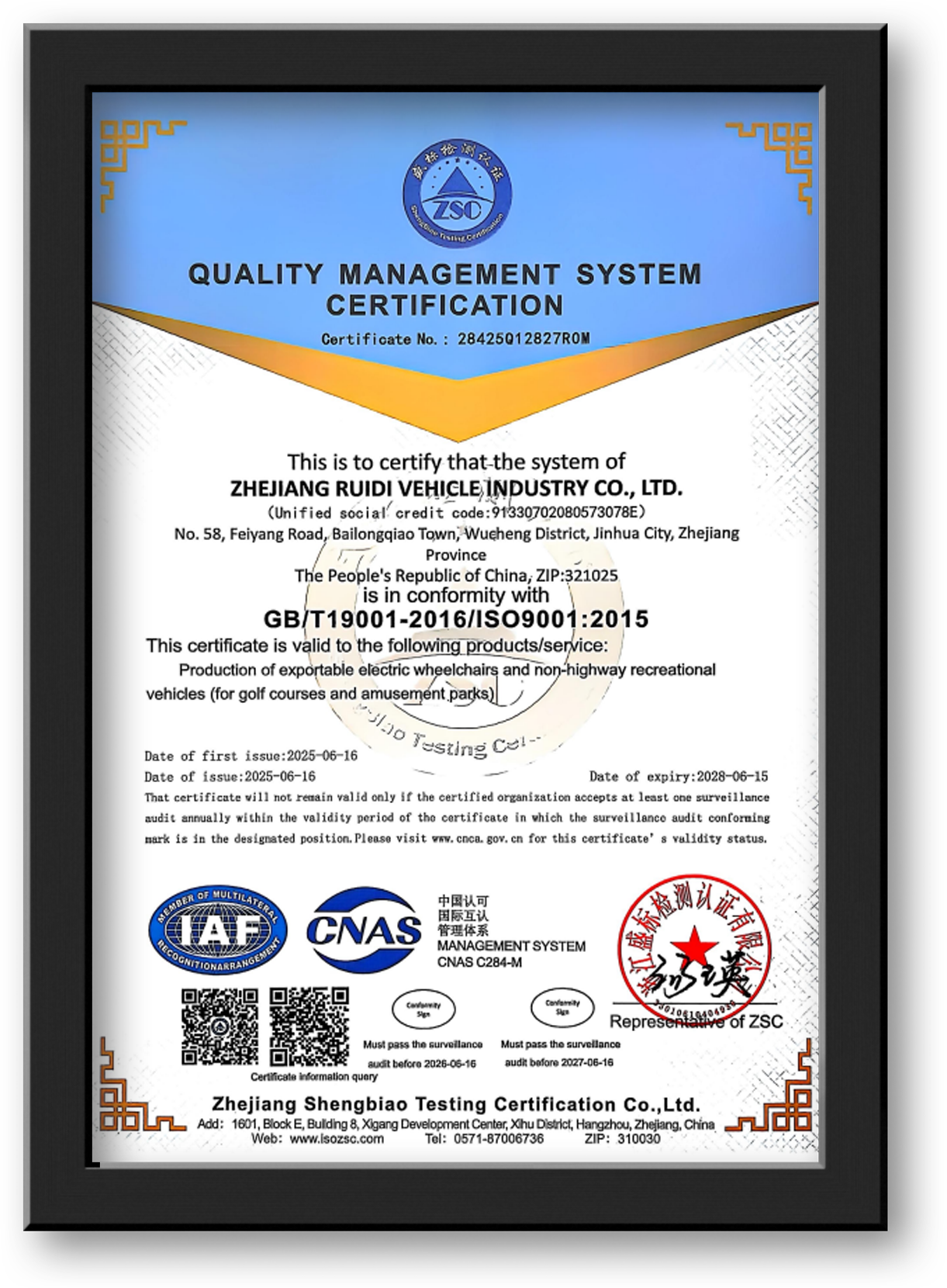
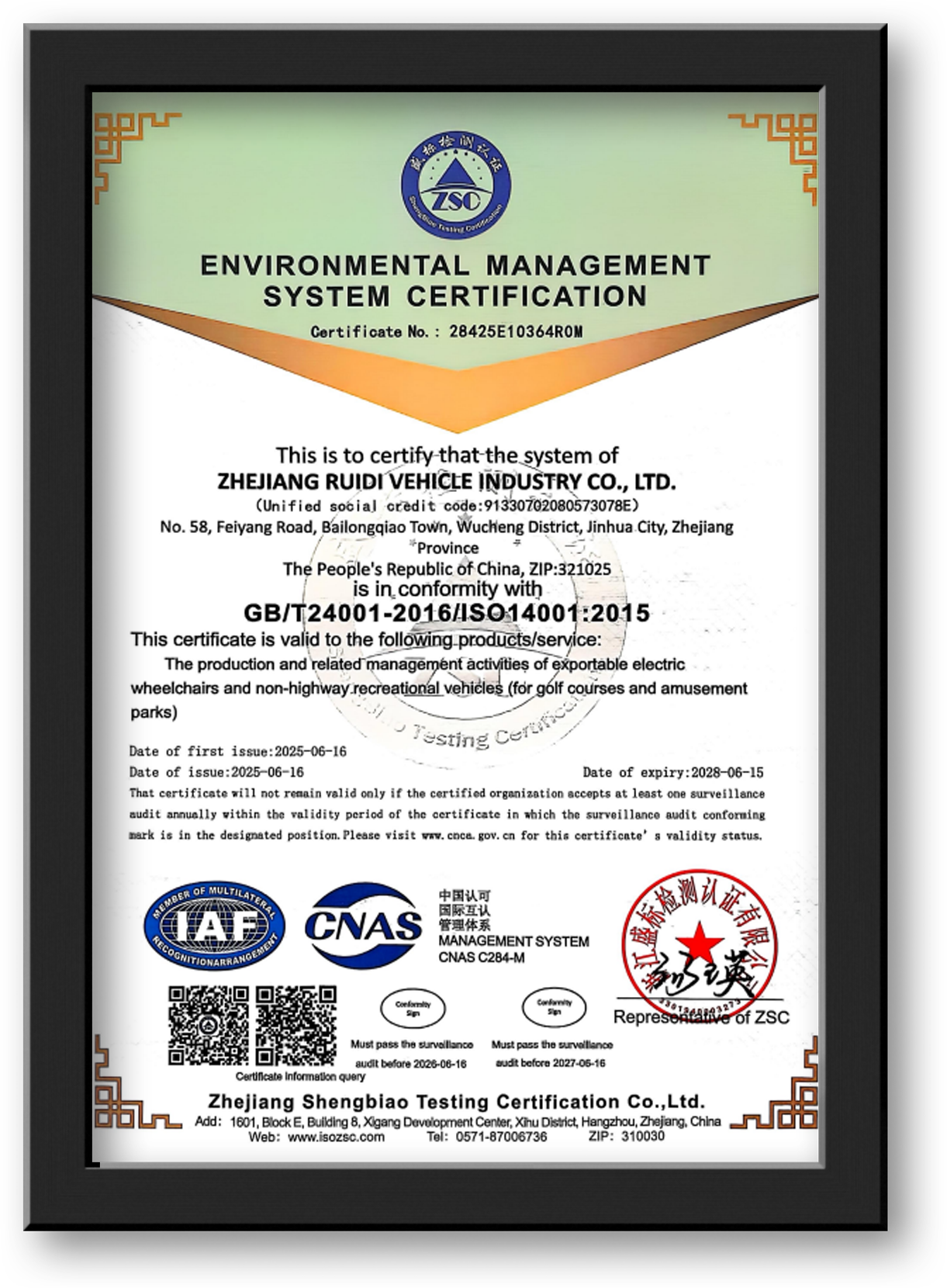
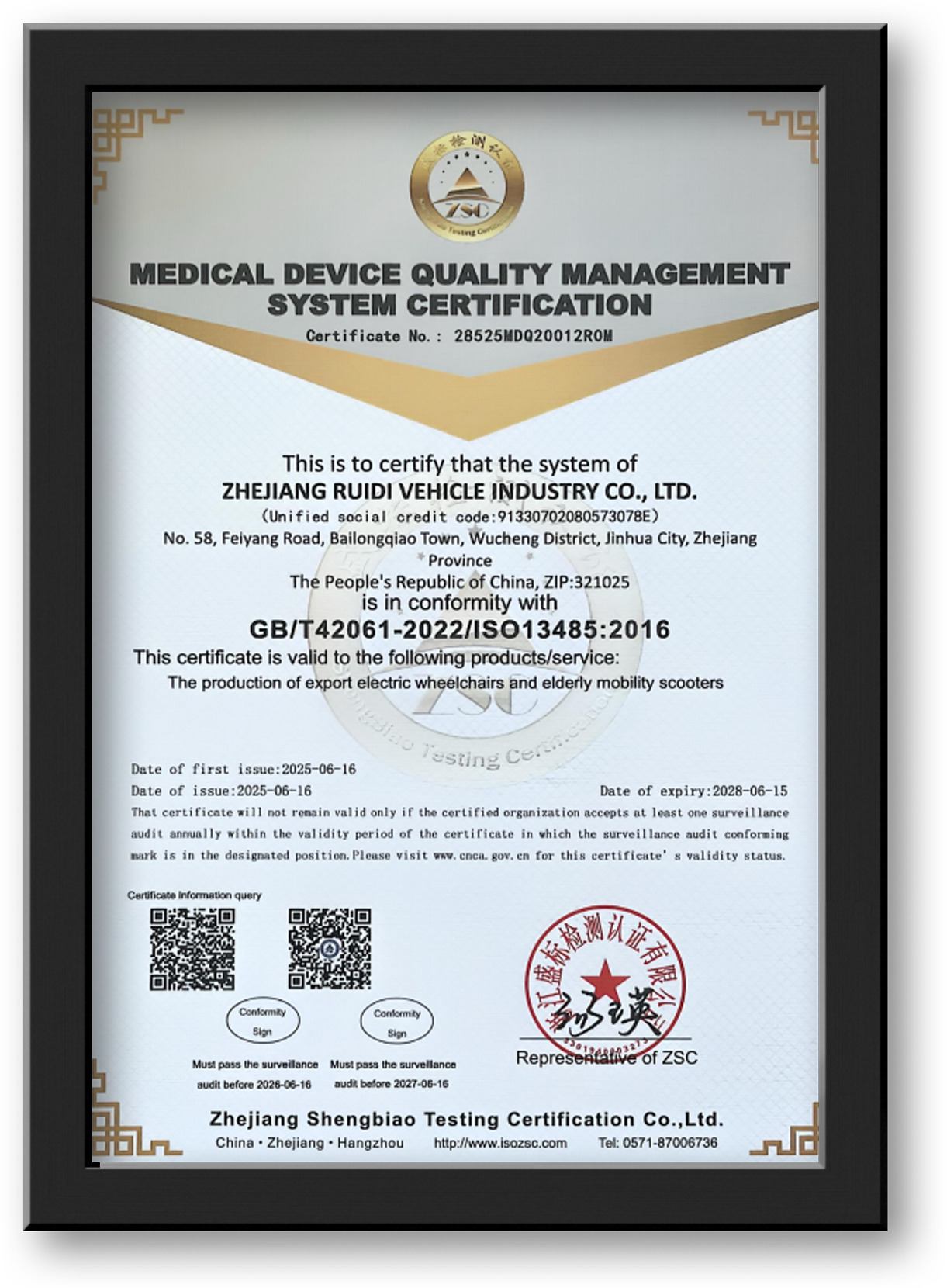
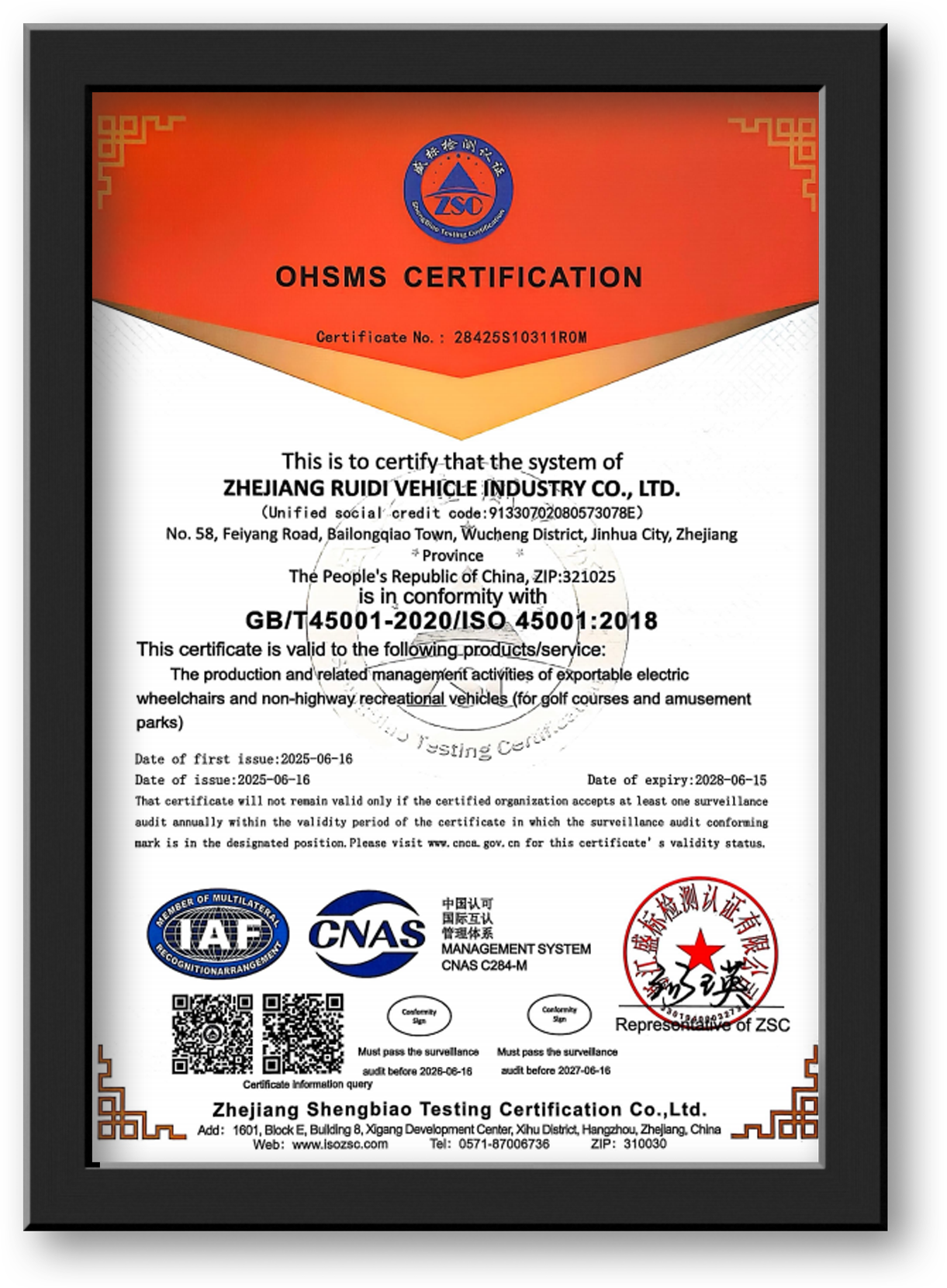
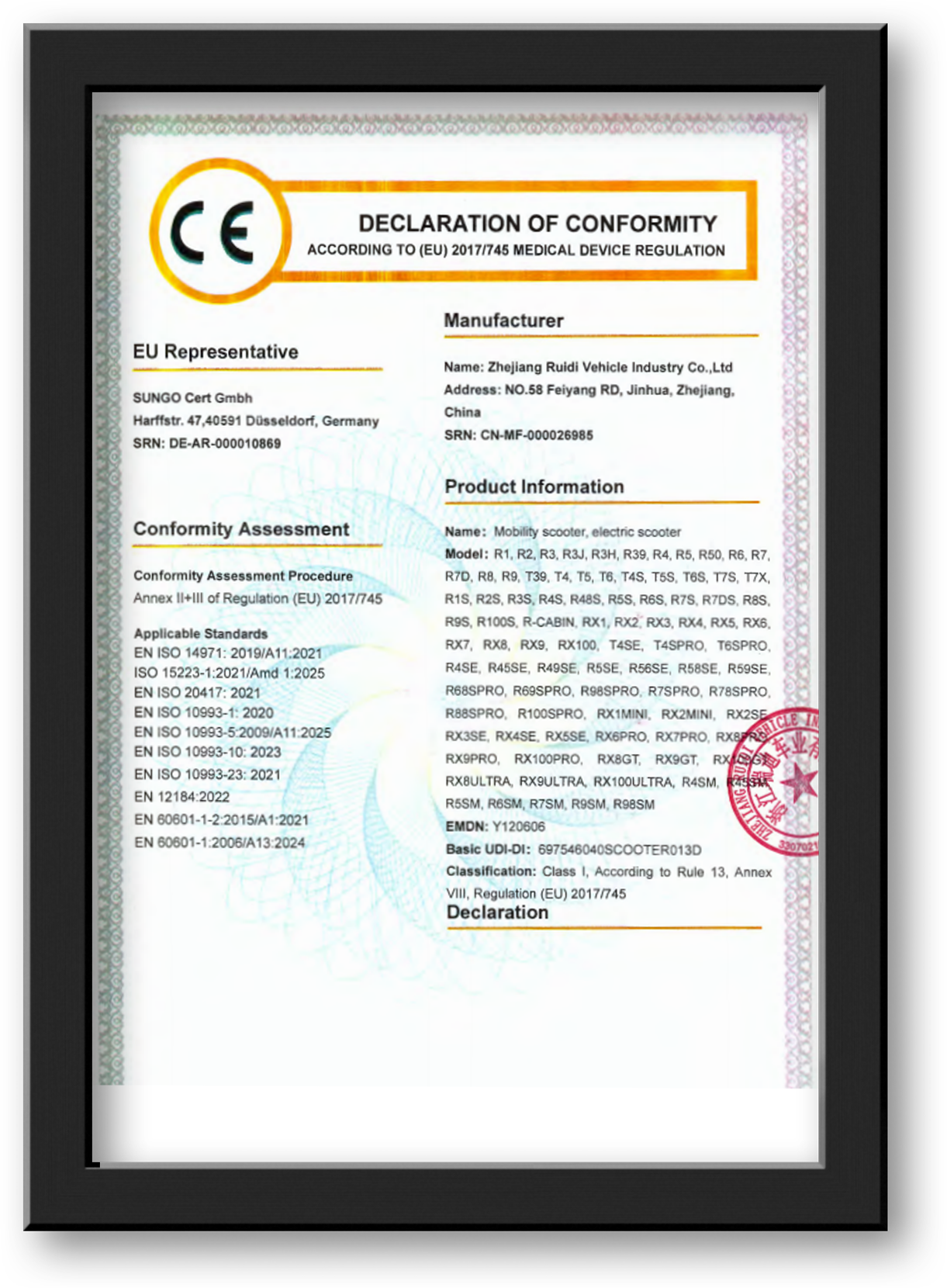
Patent Certificate
Latest Updates
View More-
2026.10.16
Travel Mobility Scooter Design Shifts Toward Outdoor Usability
A Travel Mobility Scooter designed for longer outdoor use faces different requirements from a compact model intended mainly for short local ...Read More -
2026.10.09
Small Lightweight Scooter Balances Portability With Daily Performance
A Small Lightweight Scooter is shaped by a practical balance between easy handling and usable mobility. Reducing dimensions can improve stor...Read More -
2026.10.02
How Do Factories Test Small Portable Mobility Scooters?
Testing Starts With the Folding Frame For small portable mobility scooters, the folding frame is a key part of product design. Users may fol...Read More -
2026.09.25
4 Wheel 2 Seat Mobility Scooter Expands Shared Mobility Options
A second seat changes more than the number of people a mobility scooter can carry. It changes how two people enter, sit, communicate, and mo...Read More
Industry Knowledge
Large mobility scooters are, in essence, engineered systems that have undergone a comprehensive reconstruction across four key dimensions: unstructured terrain, high load capacity, extended range, and adaptability to complex environments.
The Systems Engineering Positioning of Large Mobility Scooters
The design objective of a Large Mobility Scooter is not merely to increase speed or comfort, but rather to construct a personal mobility platform endowed with quasi-off-road capabilities. Its engineering essence aligns more closely with that of "light special-purpose mobility equipment" than with mobility aids in the traditional sense.
Its core design constraints typically include:
- High Load-Bearing Capacity: The ability to stably support a wider range of user weights as well as additional payloads (such as shopping items, medical equipment, or assistive devices).
- Unpaved Terrain Capability: The capacity for sustained operation across gravel paths, muddy ground, grassy areas, and even moderately sloped terrain.
- Structural Impact Resistance: The frame and suspension systems must withstand high-frequency shock loads generated by irregular terrain.
- Long-Distance Energy Management: The battery system must support prolonged, high-torque output rather than being optimized solely for peak speed.
- System-Level Stability Control: The ability to maintain a low risk of tipping and ensure directional controllability within complex terrain.
Engineering Characteristics of Heavy-Duty Off-Road Mobility Scooters
"Heavy-Duty Off-Road Mobility Scooters" are typically designed for good or semi-extreme terrain environments; their design philosophy prioritizes "terrain traversability over comfort."
Power and Drive System Design
These devices typically feature high-torque motor configurations to ensure that propulsion capability is maintained even in low-speed, high-resistance environments. Unlike urban-oriented mobility scooters, their power output curves are tuned to prioritize low-speed performance, enabling them to tackle:
- Loose sand
- Muddy surfaces
- Grassy slopes and gravel inclines
- Unpaved woodland trails
Certain high-end models even employ a dual-motor independent drive architecture to enhance traction recovery capabilities in situations where one side of the vehicle experiences wheel slippage.
Suspension and Terrain Clearance Structure
One of the core technologies of off-road mobility scooters is the extended-travel design of the suspension system:
- Long-travel independent suspension system: Designed to absorb the impact of significant terrain undulations.
- High ground clearance structure: Prevents the chassis from scraping against obstacles in complex terrain.
- Reinforced anti-rollover geometry: Expands the wheelbase and optimizes the center of gravity for enhanced stability.
This structural configuration enables the equipment to maintain a high degree of postural stability even when traversing uneven terrain.
Tires and Ground Contact System
"Off-Road" variants typically utilize large-diameter tires with deep tread patterns. Their design objective is not to minimize rolling resistance, but rather to maximize traction:
- Deep tread patterns enhance mud-clearing capabilities.
- Wide tire treads improve load-bearing support on soft ground.
- Low-pressure adaptive structures enhance ground conformity and contact area.
The Engineering Logic Behind Heavy-Duty All-Terrain Mobility Scooters
Unlike the "Off-Road" variants—which are geared toward off-road conditions—the Heavy-Duty All-Terrain Mobility Scooter emphasizes "environmental versatility." This refers to the ability to transition smoothly between various types of terrain, rather than being optimized for a single, good environment.
Multi-Terrain Adaptability Design
The core of the "All-Terrain" structure lies in "optimized performance compromise":
- Maintaining stability and comfort on urban paved surfaces.
- Retaining traversability on light grass or gravel paths.
- Sustaining stable power output when navigating inclines.
- Consequently, their suspension systems typically feature:
- Medium-travel independent suspension.
- Damping structures that are either adjustable or adaptive.
- Spring settings calibrated to strike a balance between comfort and stability.
Control Systems and Stability Management
"All-Terrain" equipment places greater emphasis on the intervention of electronic control systems:
- Traction Control.
- Hill Hold Function (anti-rollback control on inclines).
- Dynamic power distribution algorithms.
The objective of these control logics is to reduce the operational burden on the user, ensuring a consistent handling experience as the vehicle transitions between different types of terrain.
Energy System Strategy
Given the complex and variable nature of their usage scenarios, "All-Terrain" variants typically employ more intelligent energy management strategies:
- Automatically adjusting power output based on the terrain.
- Optimizing current distribution during uphill climbs.
- Switching to an energy-saving operational mode on flat ground.
This strategy enables the vehicle to achieve a dynamic balance between driving range and performance.
System Comparison: Off-Road vs. All-Terrain
| Dimension | Heavy-Duty Off-Road | Heavy-Duty All-Terrain |
| Design Objective | Extreme Terrain Traversing Capability | Multi-Scenario Adaptability |
| Suspension System | Long Travel, High Articulation | Moderate Travel, Balanced Comfort |
| Control Strategy | Prioritization of Mechanical Performance | Prioritization of Electronic Control |
| Tire Design | Deep-Tread Off-Road Tires | Hybrid Multi-Purpose Tires |
| Energy Management | Sustained High-Torque Output | Adaptive Power Distribution |
| Typical Scenarios | Woodlands, Muddy Terrain, Unpaved Mountain Paths | Urban + Suburban + Light Off-Road Use |
Structural Engineering Trends in Large Mobility Scooters
Viewed from the perspective of overall development trends, large mobility scooters are evolving from "purely mechanically reinforced structures" into "mechatronic, intelligent mobility platforms." This core transformation is manifested in three key areas:
Modular Chassis Design
Future large mobility scooters will increasingly adopt modular structures, allowing users to swap components based on specific usage scenarios:
- Wheel Systems
- Suspension Modules
- Battery Pack Configurations
Intelligent Terrain Recognition Systems
Through sensor fusion technology, vehicles will be able to identify the current terrain and automatically adjust:
- Power Output Curves
- Suspension Damping
- Traction Control Parameters
Enhanced Safety Redundancy Mechanisms
Given the increasingly complex operating environments, large mobility scooters are reinforcing their multi-layered safety architectures:
- Automatic Speed Limiting for Anti-Rollover Protection
- Emergency Brake Locking for Inclines
- Battery Thermal Runaway Protection
The core value of the large mobility scooter ecosystem lies not merely in being "faster or more comfortable," but rather in establishing a personal mobility platform capable of stable operation across diverse terrains. Within this context, the Heavy-Duty Off-Road Mobility Scooter represents the ultimate limit of traversing capability in environments, while the Heavy-Duty All-Terrain Mobility Scooter represents the optimized systemic approach to multi-environment adaptability.
We'd love to hear from you!

QUICK LINKS
PRODUCTS
CONTACT INFORMATION
 No.58 Feiyang Road , Jinhua 321025, Zhejiang, China
 +86-13905796145
 [email protected]
  +86-579-82268015
Heavy Duty Off Road Mobility Scooter Supplier
Copyright © Zhejiang Ruidi Vehicle Industry Co., Ltd. Rights Reserved.