English
 中文简体
中文简体 Español
 Deutsch
information to be updated

Foldable Electric Wheelchairs

ABOUT
Zhejiang Ruidi Vehicle Industry Co., Ltd.
Zhejiang Ruidi Vehicle Industry Co., Ltd. is a professional manufacturer engaged in the research, development, and production of Foldable Electric Wheelchairs. Our products are widely applied in elderly mobility, sports and leisure, and recreational fields.
The company’s manufacturing base is located in Jinhua Industrial Park, Zhejiang Province, covering an area of approximately 35,000 square meters. The facility is equipped with over 100 sets of advanced production equipment and four efficient production lines, ensuring stable production capacity and reliable product quality.
At present, our products are exported to the United States, Canada, Europe, and Australia, as well as supplied to the Chinese domestic market. Our main product series include mobility scooters for the elderly, electric walking chairs, foldable electric mobility scooters, and enclosed cabin-type electric mobility scooters.
We consistently adhere to a quality-centered management philosophy and are supported by a professional and efficient team. We are committed to providing electric mobility products that are easy to operate, energy-saving, environmentally friendly, low-noise, and pollution-free. We believe these products bring greater comfort, convenience, and freedom to elderly and mobility-impaired users, helping them enjoy a higher quality of life.
View More
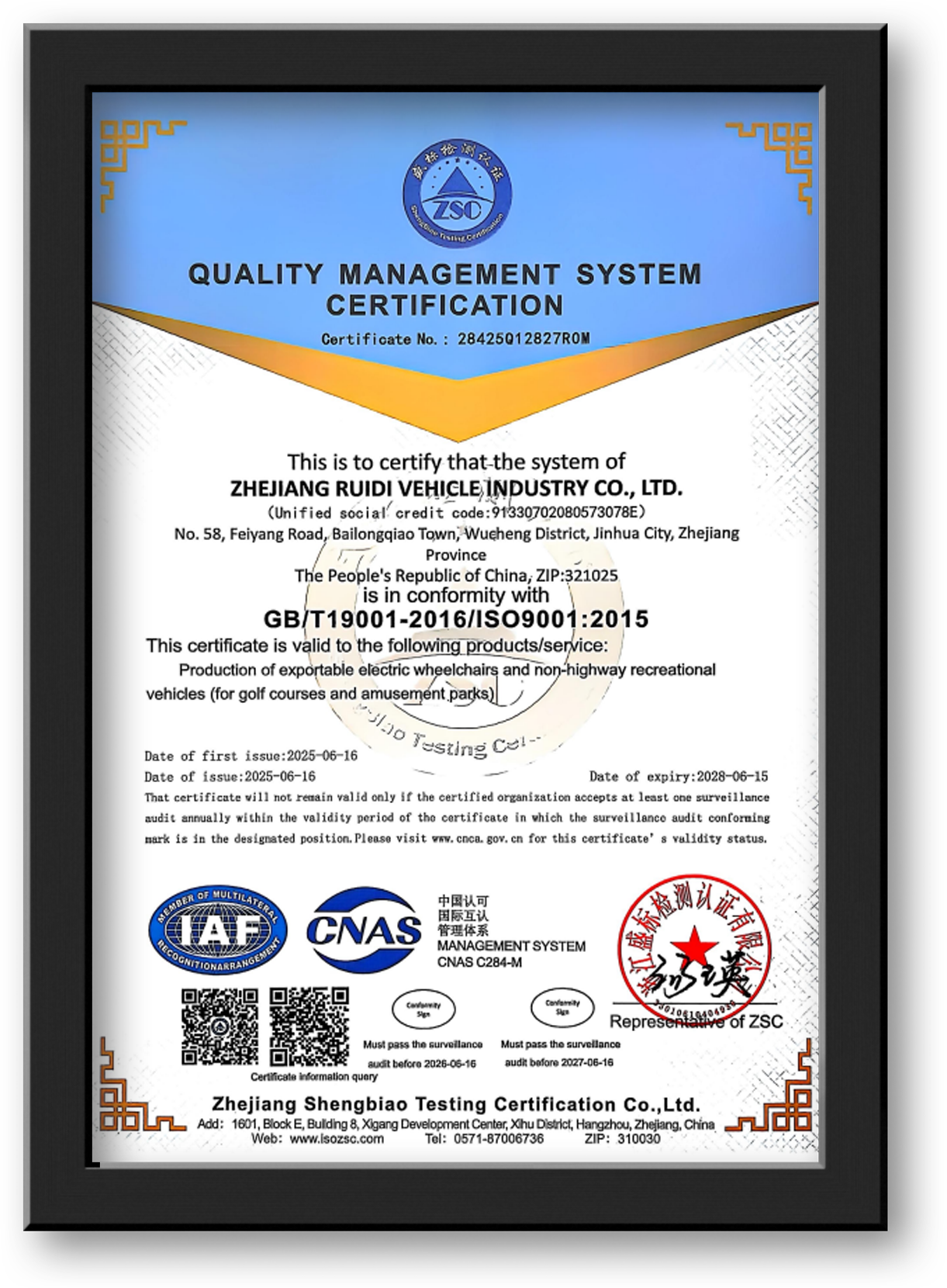
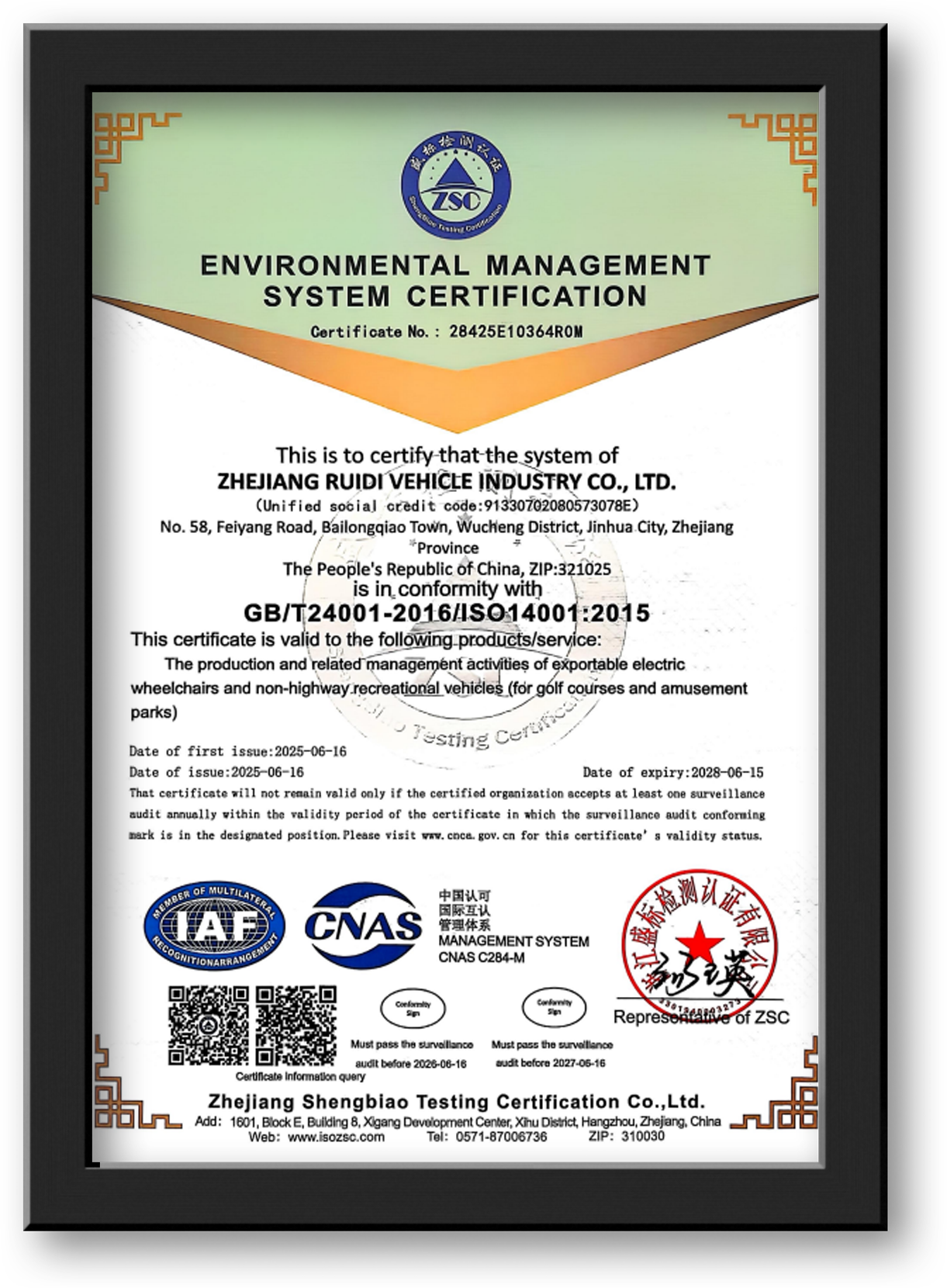
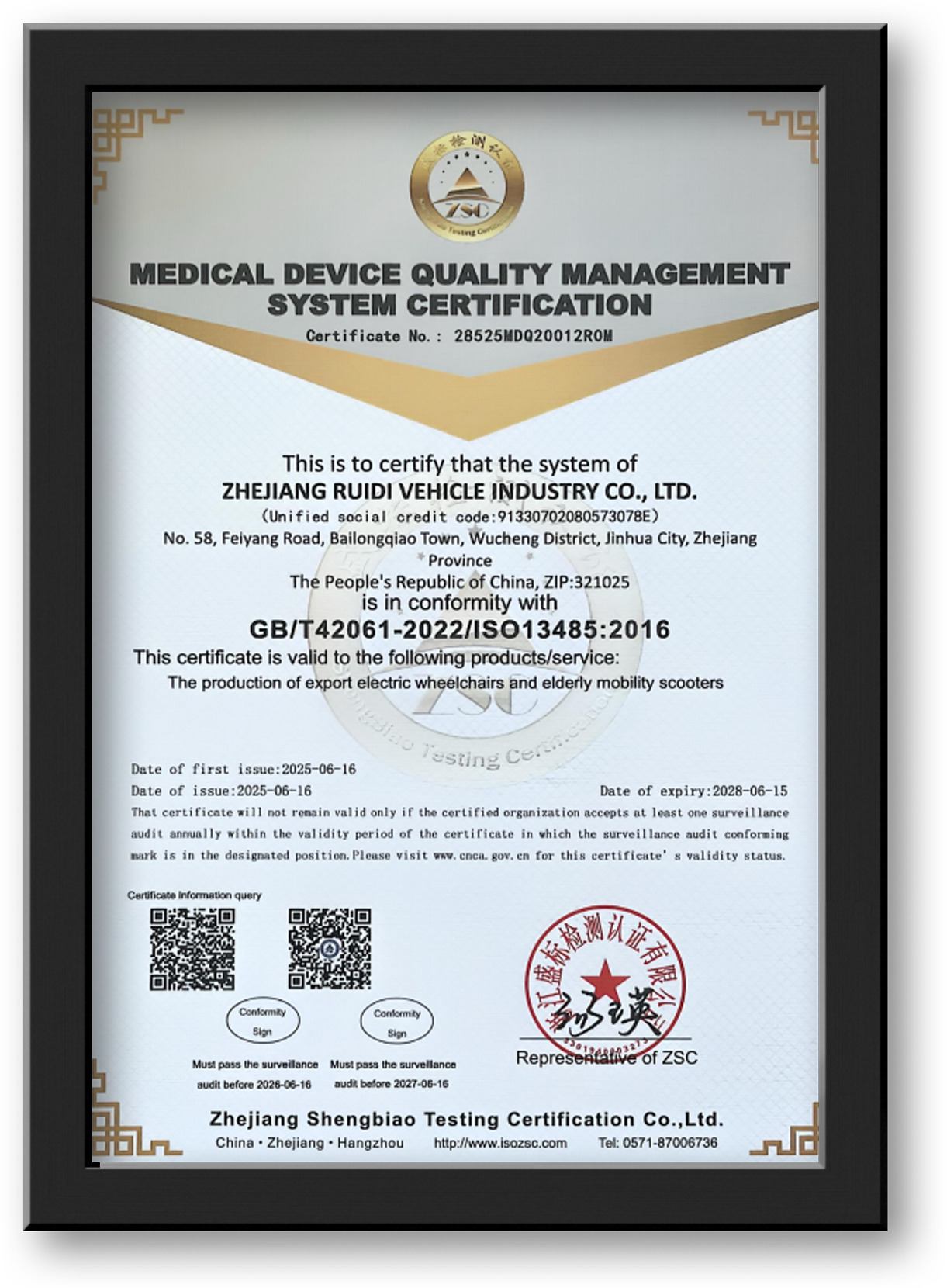
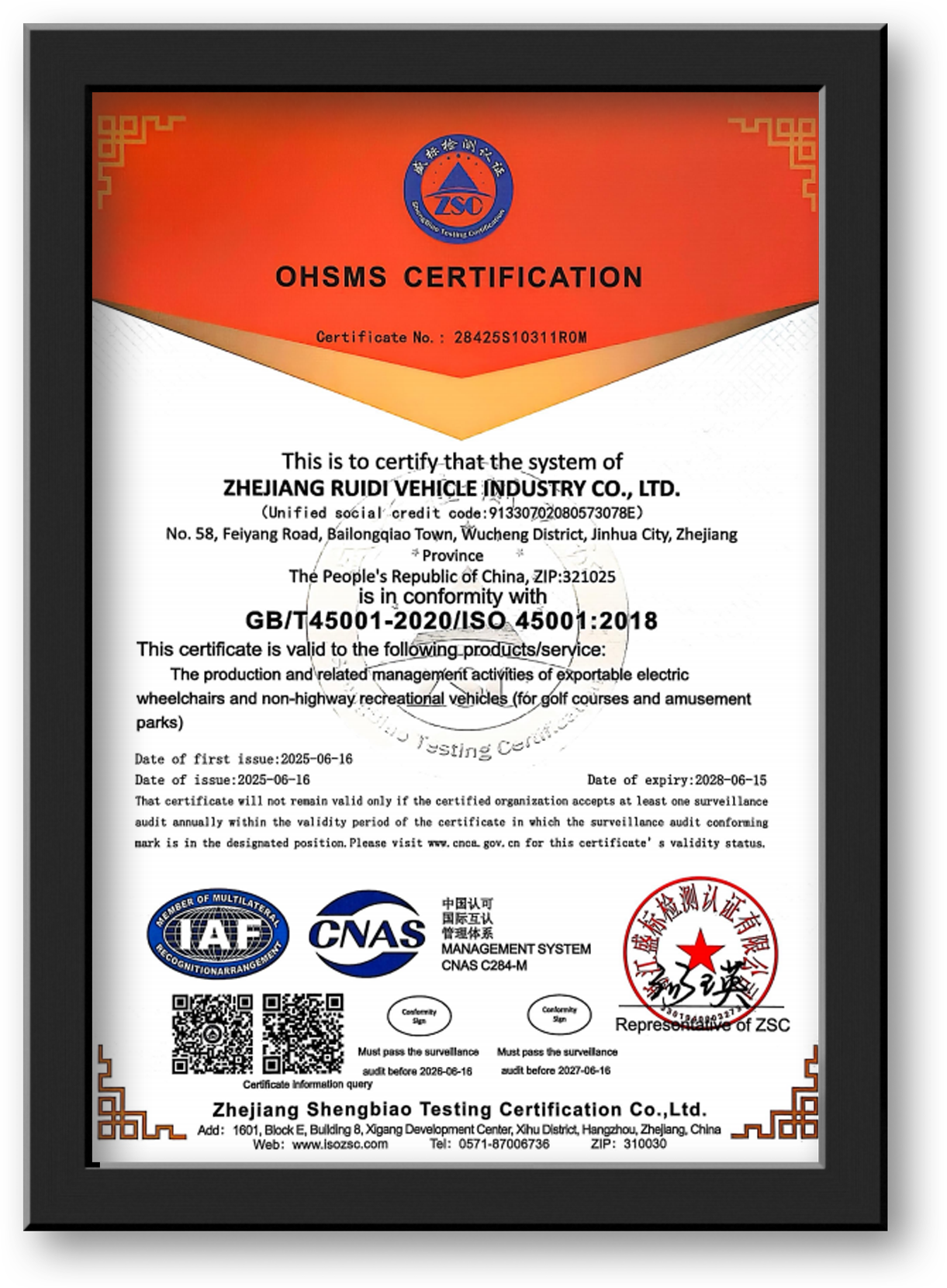
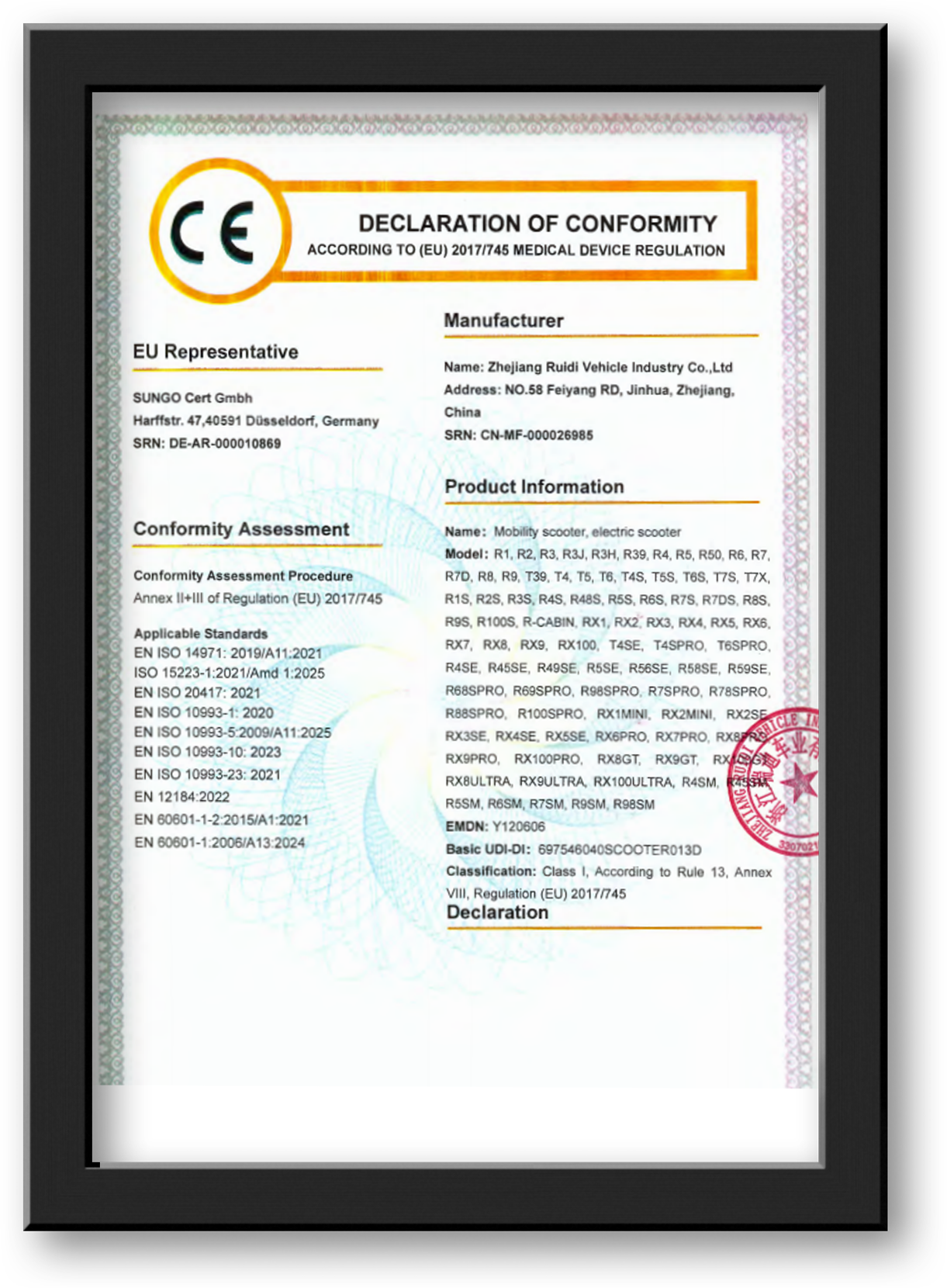
Patent Certificate
Latest Updates
View More-
2026.10.27
Showroom Ramps Reveal 4 Wheel Mobility Scooter Stability
A 4 Wheel Mobility Scooter on a showroom ramp tells a customer more than a specification sheet does. The dealer drives it up, stops halfway,...Read More -
2026.10.23
Twin-Seat Mobility Scooter Options Shape Distributor Product Planning
A Twin-Seat Mobility Scooter gives mobility product distributors a different configuration to consider when building a range for accompanied...Read More -
2026.10.16
Travel Mobility Scooter Design Shifts Toward Outdoor Usability
A Travel Mobility Scooter designed for longer outdoor use faces different requirements from a compact model intended mainly for short local ...Read More -
2026.10.09
Small Lightweight Scooter Balances Portability With Daily Performance
A Small Lightweight Scooter is shaped by a practical balance between easy handling and usable mobility. Reducing dimensions can improve stor...Read More
Industry Knowledge
A Foldable Electric Wheelchair is a type of motorized wheelchair designed for easy storage and portability, making it suitable for a wide range of indoor and outdoor settings. Typically featuring a lightweight structural design and equipped with an electric drive system, it enhances mobility convenience and independence for individuals with mobility impairments while prioritizing both user comfort and operational ease.
Drivers of Growing Industry Demand
In recent years, demand within the electric wheelchair market has been on a steady rise, driven primarily by the following key factors:
- Accelerating Population Aging
The elderly population's reliance on mobility aids has increased, particularly for short-distance travel and daily living activities.
- Rising Incidence of Chronic Diseases and Mobility Impairments
There is a growing and distinct need for stable and safe mobility tools among individuals with limited lower-limb function.
- The Fast-Paced Nature of Urban Living
Users increasingly seek devices that offer portability and can seamlessly adapt to various environments—such as public transit (subways), private vehicles, and travel scenarios.
- Shifting Family Care Models
Family-based care is gradually transitioning from traditional long-term care models toward more flexible care approaches, thereby driving up demand for lightweight, easy-to-handle equipment.
Against this backdrop, foldable structural designs have gradually emerged as the dominant trend in product development.
Core Features of Portable Folding Electric Wheelchairs
The design philosophy behind a Portable Folding Electric Wheelchair centers on the triad of "Lightweight + Foldable + Easy to Carry." Its key features include:
- Compact Structure: Can be folded rapidly, facilitating easy storage and transportation.
- Optimized Weight: Overall weight is minimized through the use of materials such as aluminum alloys or composite materials.
- Detachable Battery Design: Allows for convenient charging and easy replacement.
- Versatile Application: Suitable for use in both indoor and outdoor environments.
These products are particularly well-suited for users who travel frequently or require the ability to load and unload the device into a vehicle on a regular basis.
Structural Evolution Trends in Foldable Electric Wheelchairs
The structural design of Collapsible Electric Wheelchairs has evolved through several distinct stages:
- 1. Traditional Fixed-Frame Stage
Early products prioritized stability above all else; consequently, they were relatively heavy and cumbersome to transport.
- 2. Semi-Folding Structure Stage
Folding capabilities were gradually introduced, though the folding process remained relatively complex and the efficiency of folding was limited.
- 3. Rapid-Folding Structure Stage
Designs adopted "one-touch" folding mechanisms or simplified latching systems to significantly enhance user convenience and ease of operation.
- 4. Lightweight Modular Structure Stage
Designs shifted toward a modular approach, allowing key components—such as the battery, wheel assemblies, and control system—to be easily detached or separated.
This evolutionary trajectory indicates that these products are currently undergoing a transformation: shifting from the realm of "medical devices" toward the characteristics and attributes of "consumer electronics."
Comparative Analysis: Portable Folding Electric Wheelchairs vs. Collapsible Electric Wheelchairs
| Comparison Dimension | Portable Folding Electric Wheelchair | Collapsible Electric Wheelchair |
| Design Focus | Lightweight & Portability | Structural Folding & Stability |
| Weight Range | Lighter | Moderate |
| Folding Mechanism | Quick-fold | Multi-step folding |
| Applicable Scenarios | Travel, Short-distance outings | Daily home use |
| Storage Convenience | High | Moderate |
| Structural Complexity | Low | High |
Overall, portable models are geared more toward outdoor and travel use, whereas collapsible models prioritize stability for daily use.
Key Materials and Technological Advancements
1. Application of Lightweight Materials
Current industry standards commonly utilize:
- Aluminum alloy frames
- Carbon fiber composites
- High-strength engineering plastics
These materials effectively reduce weight while ensuring structural integrity.
2. Battery Technology Optimization
Lithium-ion batteries have become the mainstream solution, featuring the following characteristics:
- High energy density
- Short charging times
- Detachable designs for enhanced convenience
3. Control System Upgrades
Intelligent control systems are becoming increasingly widespread, including features such as:
- Speed adjustment
- Slope-assist control
- Smart battery level display
4. Safety Structure Design
Safety has become a primary design focus, incorporating elements such as:
- Anti-slip tire treads
- Automatic braking systems
- Anti-tipping mechanisms
Analysis of Key Application Scenarios
1. Daily Home Use
Suitable for indoor mobility and short-distance assistance within the home environment.
2. Medical and Rehabilitation Facilities
Used for post-operative recovery support and long-term care.
3. Travel and Outdoor Activities
The portable design is ideally suited for environments such as airports, tourist attractions, and outdoor excursions.
4. Urban Commuting Assistance
Suitable for users who require frequent transfers between different modes of transportation.
Key Considerations for Users
When purchasing these products, users typically focus on the following aspects:
- Ease of folding and unfolding
- Overall weight and ease of handling
- Battery life/range
- Cushion comfort
- Turning radius and maneuverability
- Adaptability to various terrain conditions
These factors directly impact the user experience and long-term comfort.
We'd love to hear from you!

QUICK LINKS
PRODUCTS
CONTACT INFORMATION
 No.58 Feiyang Road , Jinhua 321025, Zhejiang, China
 +86-13905796145
 [email protected]
  +86-579-82268015
Collapsible Electric Wheelchair Supplier
Copyright © Zhejiang Ruidi Vehicle Industry Co., Ltd. Rights Reserved.