

 English
 中文简体
 Español
 Deutsch
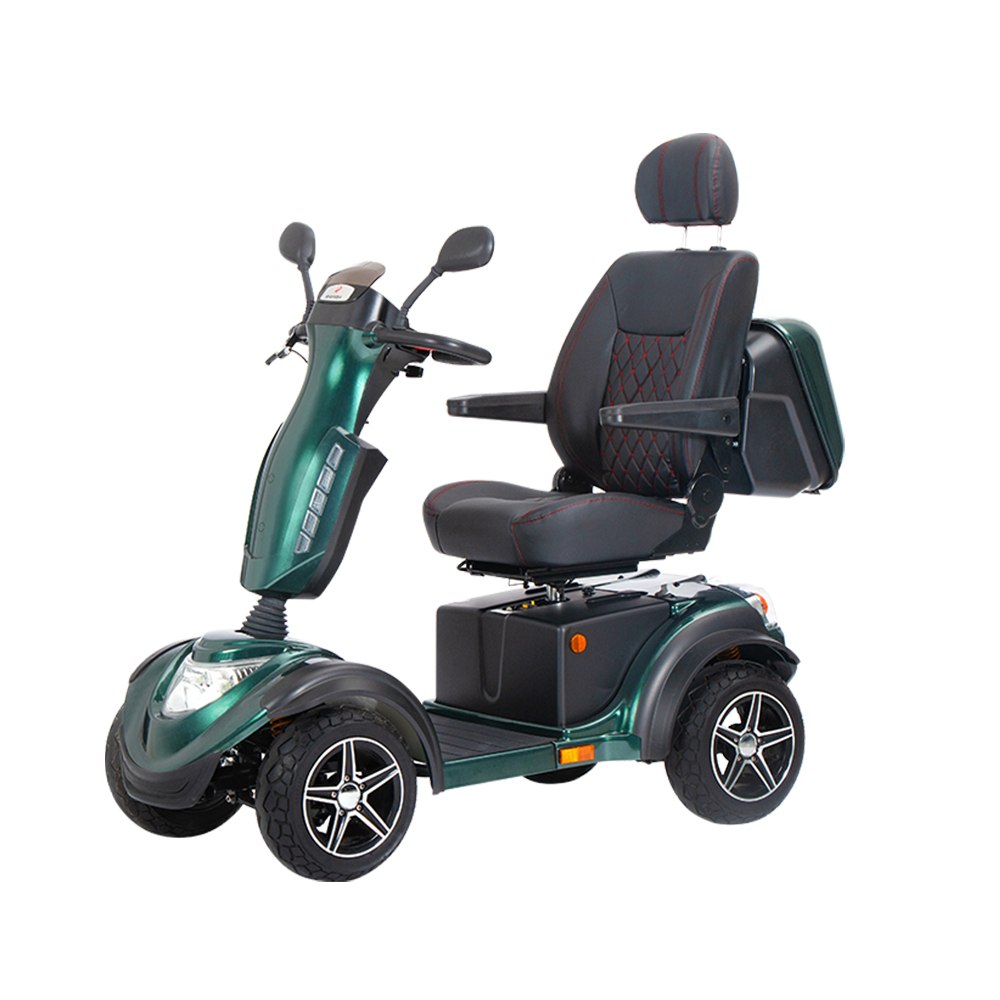
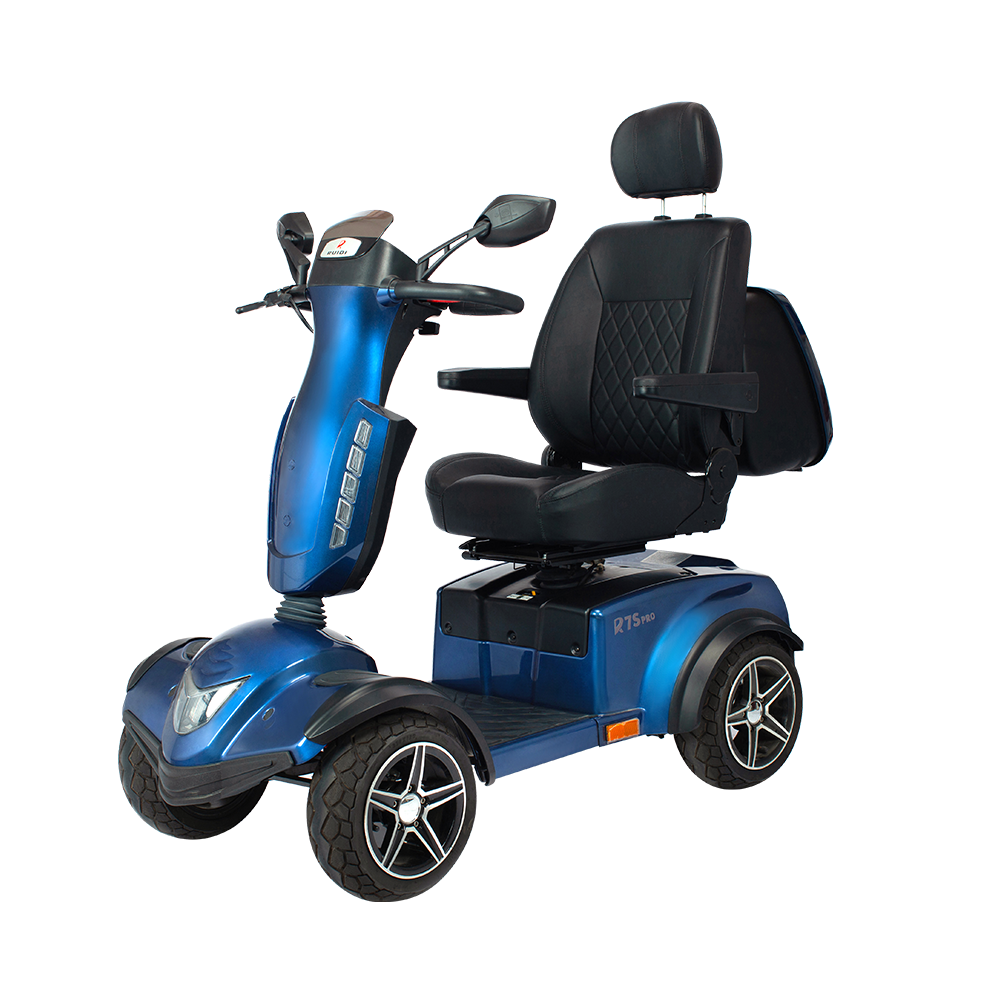
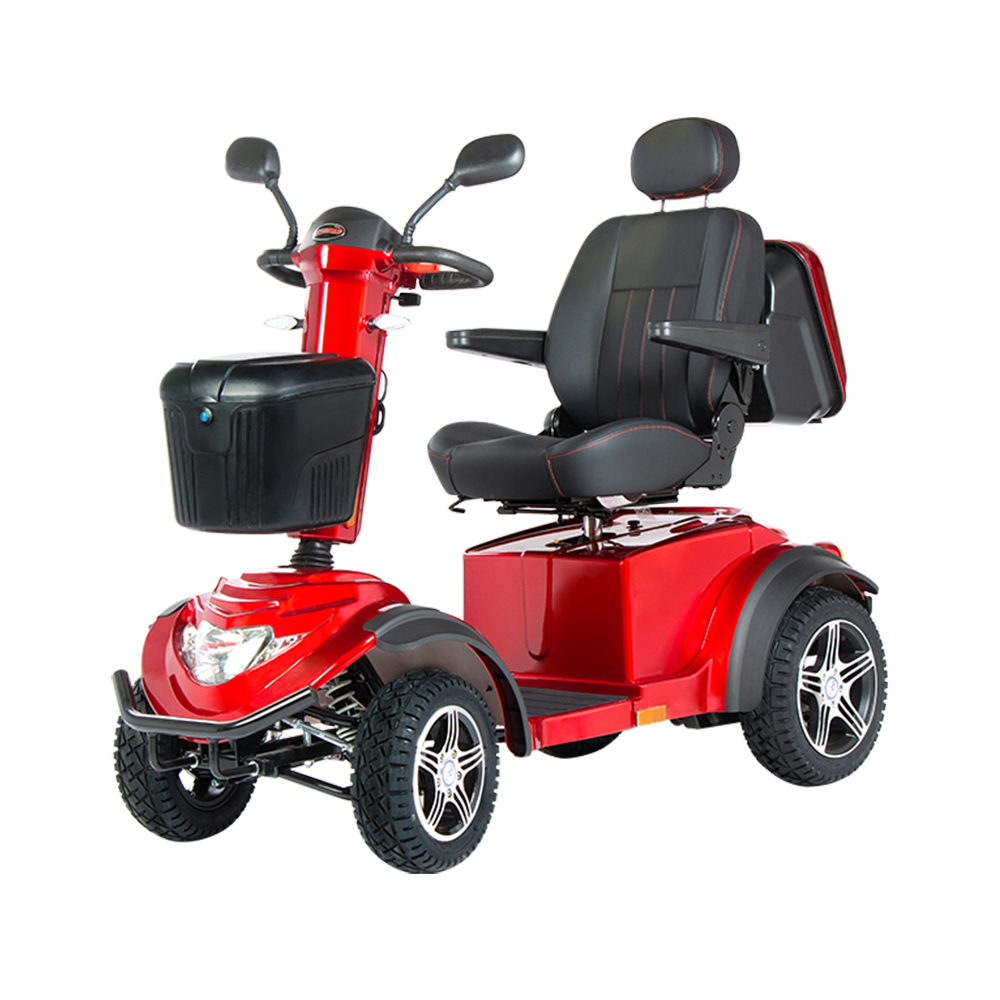
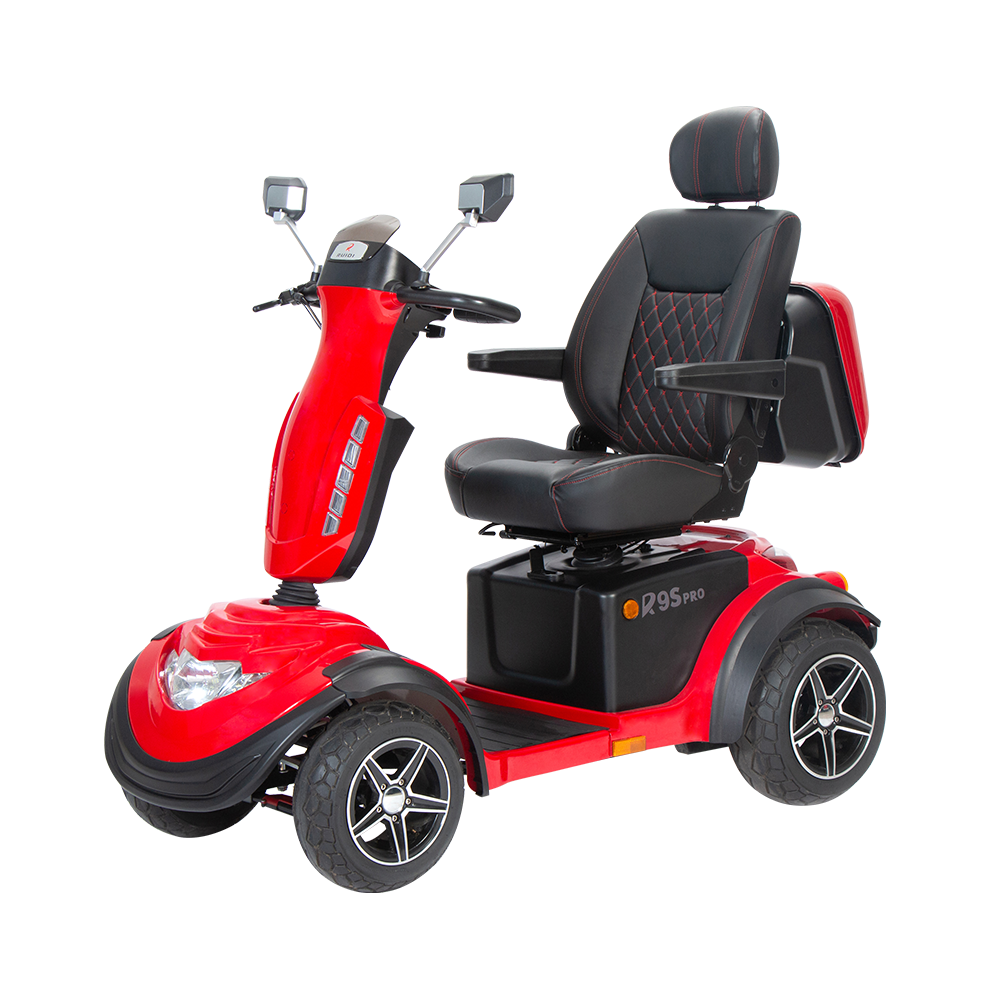
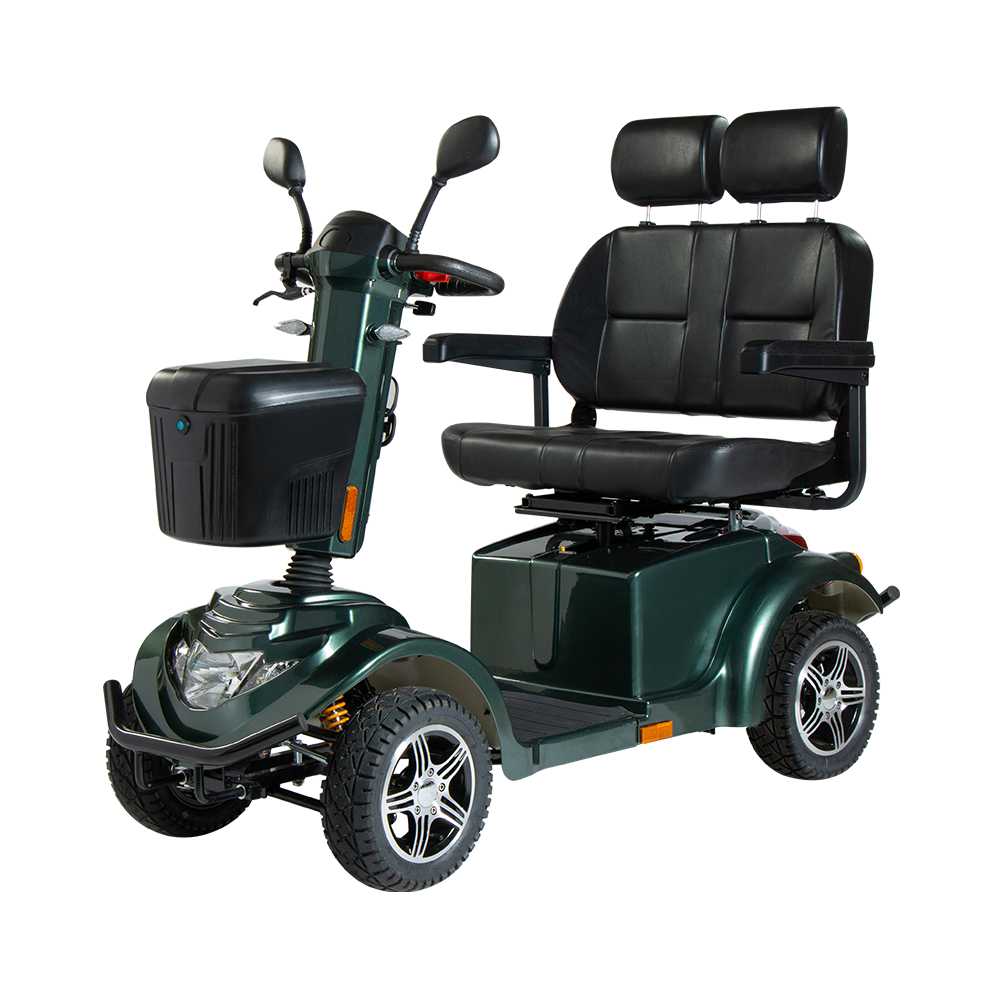
A 4 Wheel Mobility Scooter on a showroom ramp tells a customer more than a specification sheet does. The dealer drives it up, stops halfway, turns the handlebar, and lets the customer feel how little the seat moves. That small test explains why four-wheel layouts come up so often when dealers serve older riders, and why stability questions take more of their time than speed figures.
Four Contact Points Change Kerb and Slope Behaviour
With a wheel at each corner, the load of rider and battery is carried across a wider rectangle than a three-wheel layout gives. On a side slope, or when one wheel meets a kerb edge, the vehicle has a broader footprint to support its balance, although stability still depends on the slope, wheelbase, centre of gravity and loading. The design balance sits in the turning circle: a longer wheelbase and wider rear track can add stability but ask for more room at tight corners, so makers tune steering geometry and seat position together. Dealers in city areas usually test a 4 Wheel Mobility Scooter in a corridor or lift lobby before taking it outdoors, because that is where a customer's daily route often begins.
Three Size Tiers for Different Uses
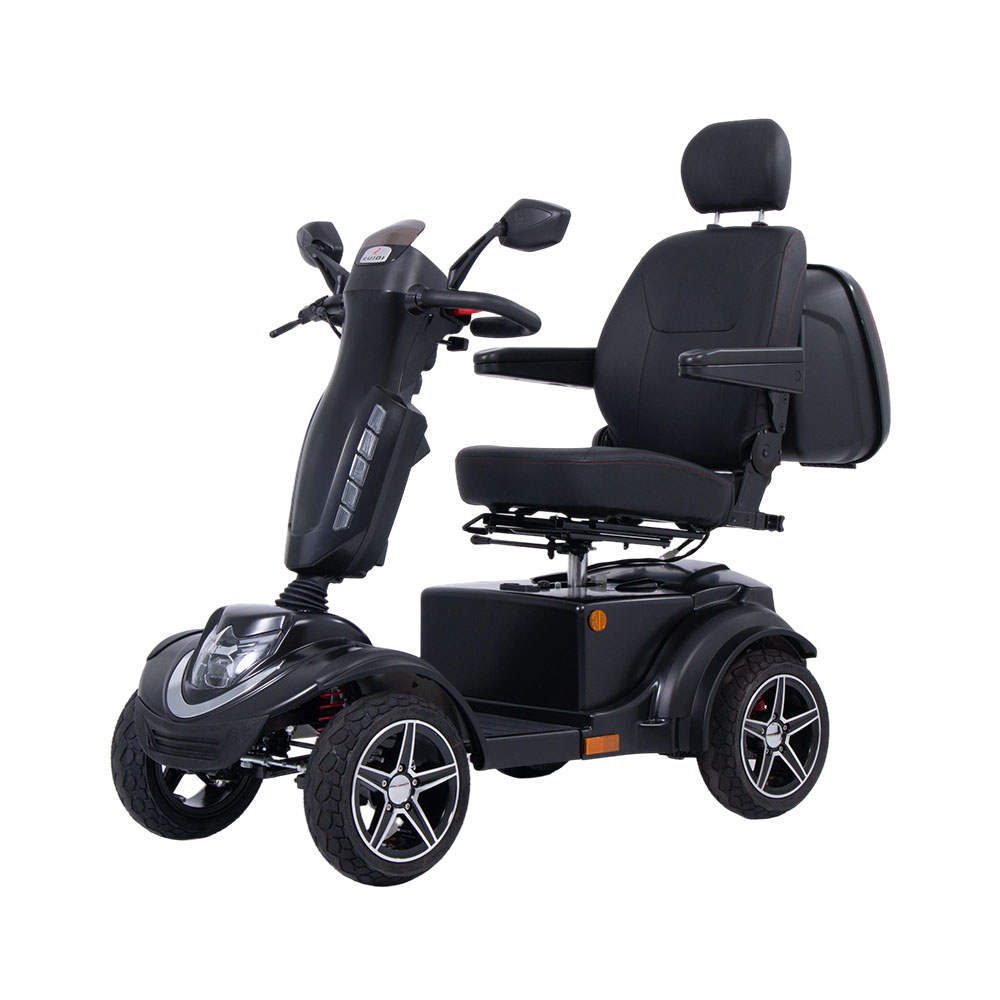
Small models, built around lighter frames, suit flats, short errands and car-boot transport. Medium models add a thicker seat, a larger battery and better suspension for daily outdoor use, including all-weather versions. Large models carry higher load ratings and stronger motors for gravel, grass and gradients; listed examples reach 1400 W and 210 kg capacity. Range claims across these tiers sit roughly between 45 and 70 km, depending on the model and test conditions. A dealer who stocks one 4 Wheel Mobility Scooter from each tier can address different customer requirements without carrying an overly broad catalogue.
Range Figures Need Testing Conditions
Range numbers are measured under set conditions, which may include a flat surface, a specified rider weight and steady speed. Daily use adds slopes, stop-start driving, cold weather and heavier loads, all of which can shorten the distance. Customers compare these figures between brands, so dealers benefit from knowing the test conditions behind each claim. Many sellers advise customers to measure their usual route and compare it with the stated range, leaving a margin for variation. When that margin is explained at the point of sale, a 4 Wheel Mobility Scooter is judged against the customer's actual travel needs rather than a headline number.
Storage and Transport Affect Model Selection
A scooter that cannot be stored or moved is rarely used, however capable it is. A compact 4 Wheel Mobility Scooter may split into pieces that fit a car boot, and the question that matters is the weight of the heaviest single piece, since that is what the customer or a family member must lift. Apartment buildings add another test: lift size, door width, and hallway turns. A 4 Wheel Mobility Scooter with a long wheelbase may suit a house garage better than a flat, and sales staff who ask about the home layout can reduce the risk of a poor match.
Documents Dealers Request Before Ordering
Cross-border dealers usually ask for paperwork alongside the vehicle. CE marking and the applicable declaration of conformity are relevant for the European market, while quality management certificates can support supplier assessments by care providers and larger retailers. Battery transport documentation may also determine how a shipment is prepared and handled. A user manual in the destination language and a parts list for common replacement items, such as tyres, brake pads and chargers, complete the document pack. A 4 Wheel Mobility Scooter supplied with the required documents and parts information is easier for a distributor to prepare for showroom sales and after-sales support.
Dealers tend to remember the model that answers a customer's question without a long explanation. A 4 Wheel Mobility Scooter is easier to evaluate when stability, range conditions, storage requirements, and documentation are clear from the conversation. These factors help dealers match models to customer needs and make more informed repeat-order decisions.

 No.58 Feiyang Road , Jinhua 321025, Zhejiang, China
 +86-13905796145

 +86-579-82268015