

 English
 中文简体
 Español
 Deutsch
A Twin-Seat Mobility Scooter gives mobility product distributors a different configuration to consider when building a range for accompanied travel. Rather than treating the second seat as a minor variation of a single-rider model, product planning needs to account for the vehicle’s dimensions, seating arrangement, controls, and available options as a complete package.
This distinction matters when distributors serve different customer groups. Some customers need a scooter for individual daily trips, while others may be looking for a vehicle that accommodates a companion during outings or local travel. A dual-seat model creates another product position within a mobility scooter range, with specifications that should be presented clearly to retailers and end users.
Model Dimensions Help Define Its Intended Setting
The R9SM-DOUBLE listed by Zhejiang Ruidi Vehicle Industry Co., Ltd. has overall dimensions of 165 × 80 × 145 cm, a 2.4 m turning radius, and a maximum speed of 16 km/h. These figures help describe the physical scale of the vehicle and provide a starting point for evaluating where it may be used.
For distributors, dimensions are relevant to more than product comparison. They affect storage, delivery arrangements, display space, and the routes available to users. A Twin-Seat Mobility Scooter may suit open paths and larger travel areas differently from a compact model designed for tighter indoor movement.
Product listings should keep these measurements connected to the specific model. A category name alone does not establish the scooter’s width, turning radius, or operating limits, and specifications can vary across the manufacturer’s range.
Seating Configuration Influences Product Positioning
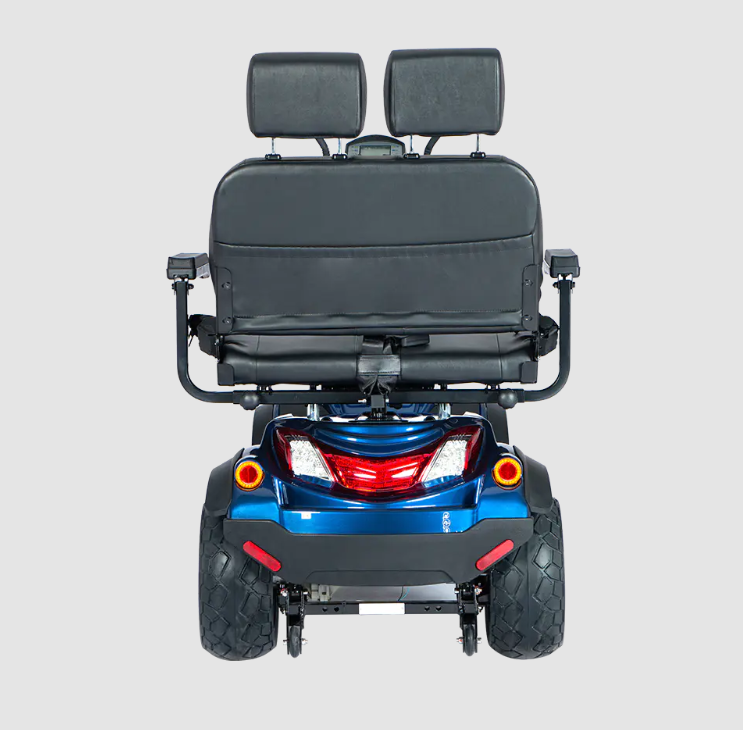
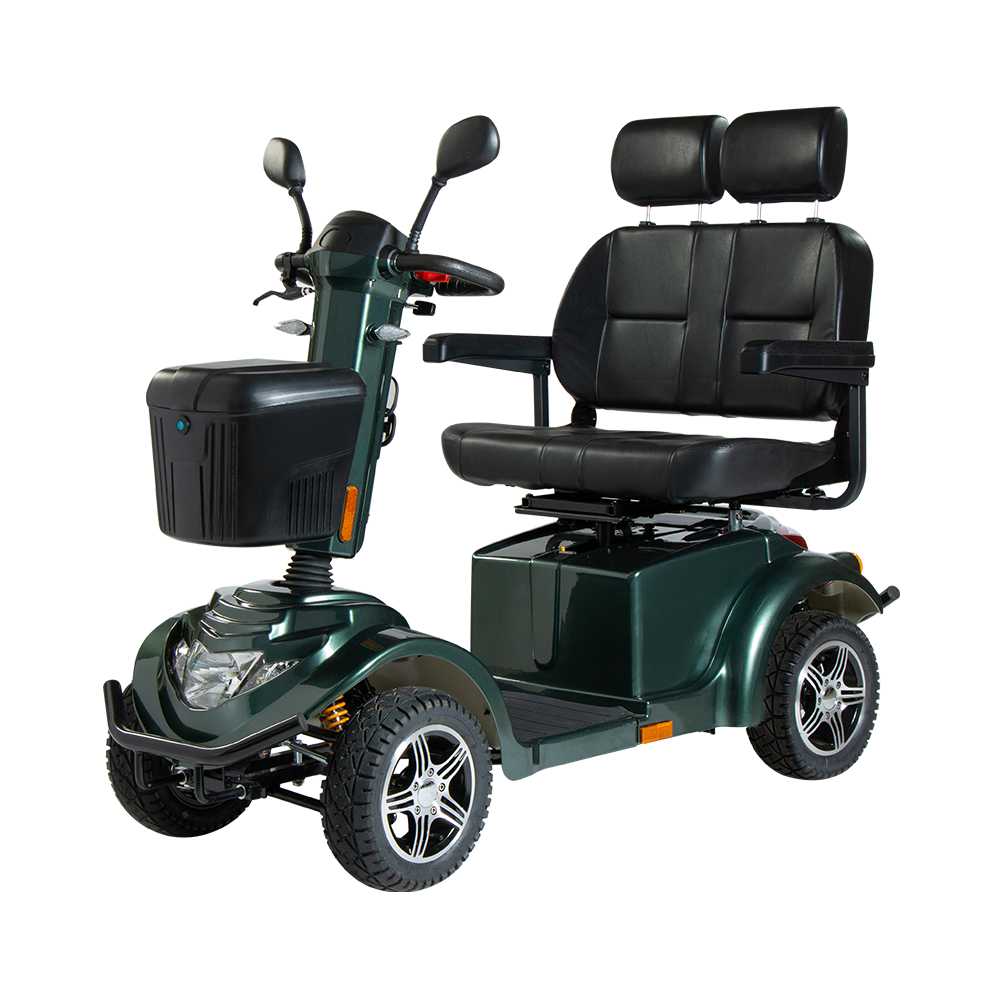
The R9SM-DOUBLE uses a dual-seat layout and has a stated maximum loading weight of 210 kg. These details help distributors explain the model’s intended passenger arrangement without relying on general descriptions such as “larger scooter” or “extra seating.”
A Twin-Seat Mobility Scooter also needs to be presented with clear information about the driver’s position and passenger seating. Retailers can use model photographs, dimensions, and product documentation to explain how the two seats are arranged and what space the vehicle requires.
For product-range planning, this makes seating configuration a useful category distinction. It separates dual-seat models from single-seat scooters while allowing distributors to compare other specifications—such as motor rating, battery configuration, and wheel size—within the same product family.
Optional Features Create Different Order Configurations
The R9SM-DOUBLE product information lists optional heated seats, heated handlebars, a cornering deceleration system, and GPS with SOS functionality. These options provide distributors with specific configuration details to discuss when preparing product assortments or customer quotations.
Options should be identified as optional rather than presented as standard equipment. This is particularly important when product information is reused across catalogs, online listings, and quotation documents. A clear configuration record helps keep the advertised specification aligned with the model being ordered.
For a Twin-Seat Mobility Scooter, optional equipment can also affect how a distributor organizes stock. A standard configuration and a model with selected options may need separate item references or clear order descriptions, especially when the product is supplied to different markets.
Power and Battery Data Support Model Comparison
The R9SM-DOUBLE product page describes a 1400 W motor and two 12 V 75 Ah batteries. Its specification table also lists a 45 km travel range, while the product description refers to a 50 km range. Since the published figures differ, distributors should confirm the applicable range for the exact configuration before using it in customer-facing materials.
This example shows why a Twin-Seat Mobility Scooter should be compared through its model-specific technical information. Motor rating and battery capacity describe important parts of the power system, but they do not independently establish the distance a scooter will travel under every operating condition.
When preparing product documentation, distributors can keep the confirmed motor, battery, speed, load, and range information together. This gives retailers a more consistent basis for comparing models and explaining differences between configurations.
Product Information Helps Build a Clearer Range
Zhejiang Ruidi Vehicle Industry Co., Ltd. manufactures mobility scooters for elderly mobility, sports, and recreational use. Its product range includes single-seat and dual-seat configurations, as well as other mobility vehicle categories.
For distributors, a Twin-Seat Mobility Scooter can be organized as a distinct model group with its own dimensions, seating details, power specifications, and option list. That information supports catalog organization and helps retailers distinguish the product from compact single-rider models.
A clear product presentation also makes it easier to update listings when a model’s configuration changes. Keeping standard equipment, optional features, and confirmed technical specifications separate reduces ambiguity across sales materials and order records.
Configuration Details Matter Across the Supply Chain
The dual-seat category brings together several pieces of information that distributors need to manage: passenger layout, vehicle dimensions, rated load, power system, and available options. Each item describes a different aspect of the product, so presenting them together gives a more complete picture than relying on the seat count alone.
As mobility scooter ranges expand, the Twin-Seat Mobility Scooter provides distributors with another configuration for customers who travel with a companion. Accurate model data and clear option descriptions help connect product selection with catalog management, quotation preparation, and order fulfillment.

 No.58 Feiyang Road , Jinhua 321025, Zhejiang, China
 +86-13905796145

 +86-579-82268015