English
 中文简体
中文简体 Español
 Deutsch
-
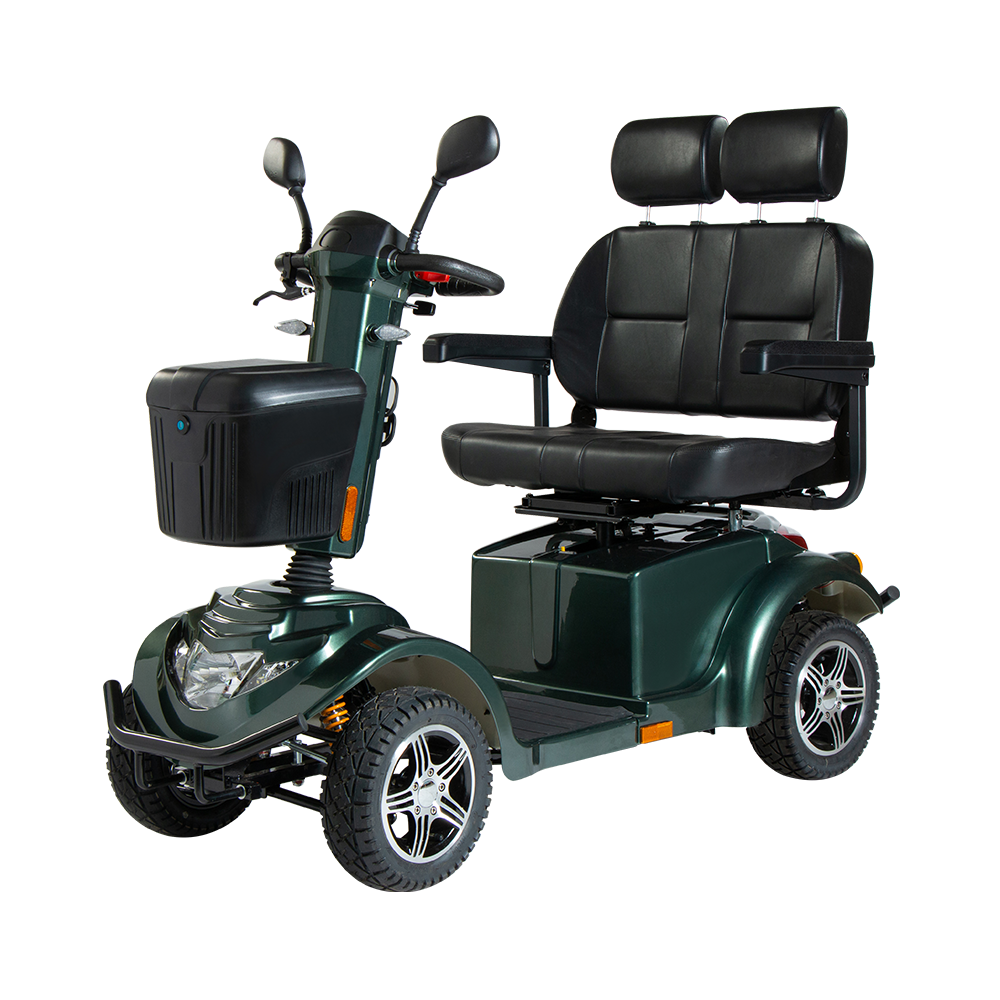 Comfort Dual-Seat Mobility Scooter R9SM-DOUBLE :Share the Ride, Enhanced Comfort
R9SM-DOUBL
The R9SM-DOUBLE is a dual-seat all-terrain mobility scooter designed for shared journ...

Dual Seat Mobility Scooters
Redefining shared travel experiences. Ruidi's Dual Seat Mobility Scooter features an innovative side-by-side or front-rear seating configuration, offering ample shared space for you, your partner, family, or caregiver to ride together and enjoy the pleasure of social mobility. Its reinforced frame structure and upgraded drive system ensure sufficient power and stable performance even with two riders. Independent suspension and elongated, comfortable seating provide a pleasant experience for both passengers. It is the ideal solution for enhancing companionship and achieving worry-free shared journeys.

ABOUT
Zhejiang Ruidi Vehicle Industry Co., Ltd.
Zhejiang Ruidi Vehicle Industry Co., Ltd. is a professional manufacturer engaged in the research, development, and production of Dual Seat Mobility Scooters. Our products are widely applied in elderly mobility, sports and leisure, and recreational fields.
The company’s manufacturing base is located in Jinhua Industrial Park, Zhejiang Province, covering an area of approximately 35,000 square meters. The facility is equipped with over 100 sets of advanced production equipment and four efficient production lines, ensuring stable production capacity and reliable product quality.
At present, our products are exported to the United States, Canada, Europe, and Australia, as well as supplied to the Chinese domestic market. Our main product series include mobility scooters for the elderly, electric walking chairs, foldable electric mobility scooters, and enclosed cabin-type electric mobility scooters.
We consistently adhere to a quality-centered management philosophy and are supported by a professional and efficient team. We are committed to providing electric mobility products that are easy to operate, energy-saving, environmentally friendly, low-noise, and pollution-free. We believe these products bring greater comfort, convenience, and freedom to elderly and mobility-impaired users, helping them enjoy a higher quality of life.
View More
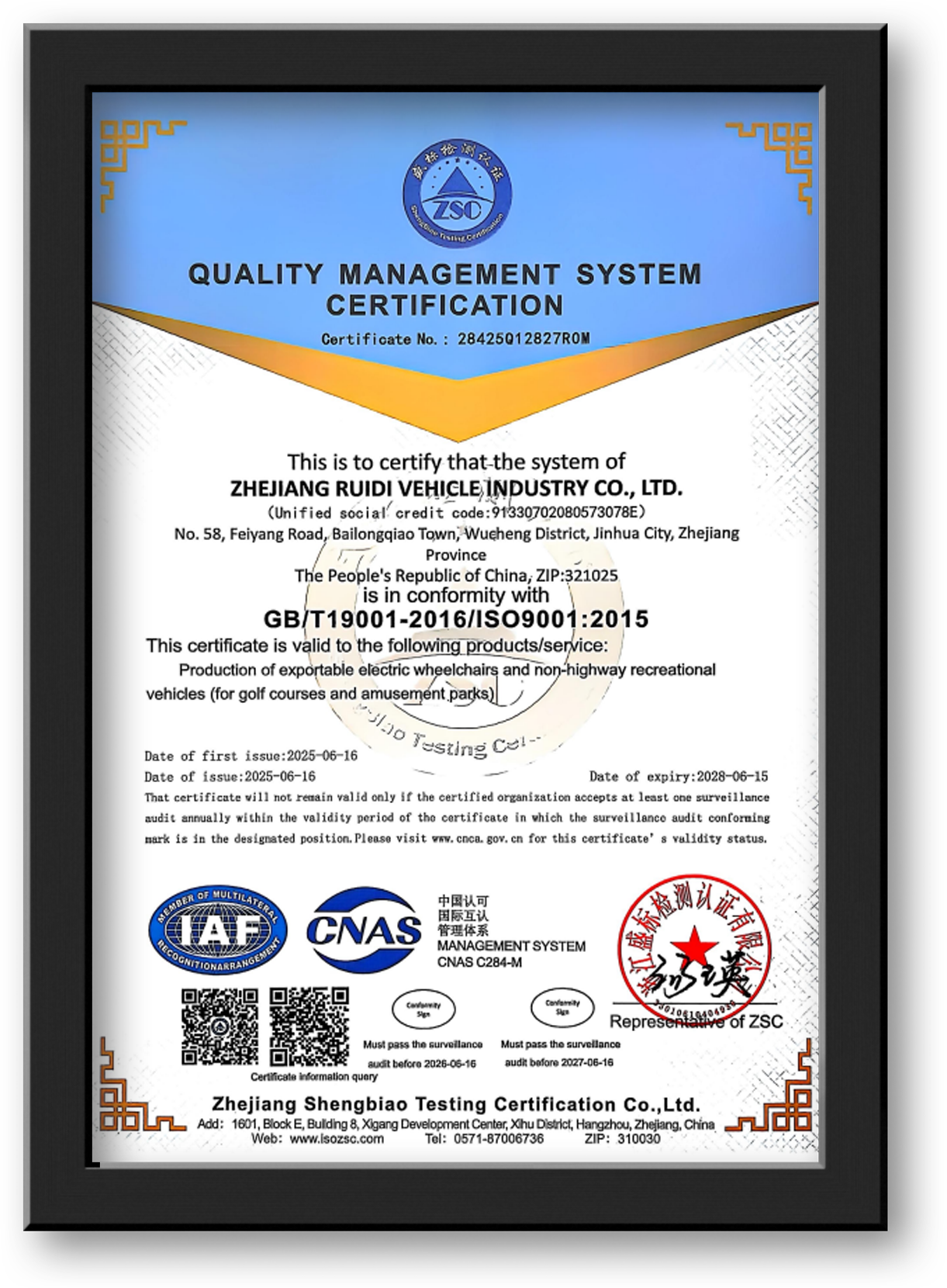
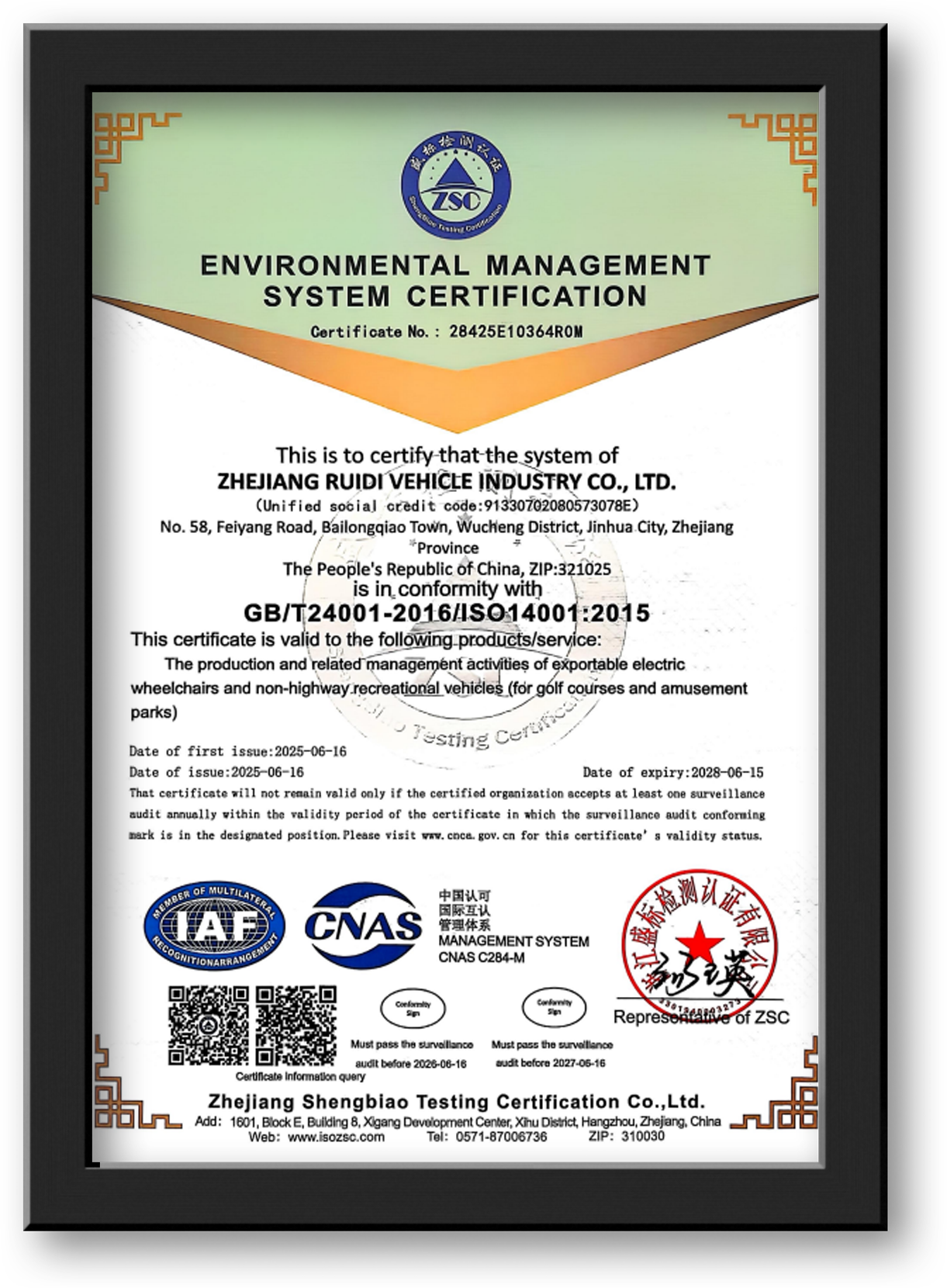
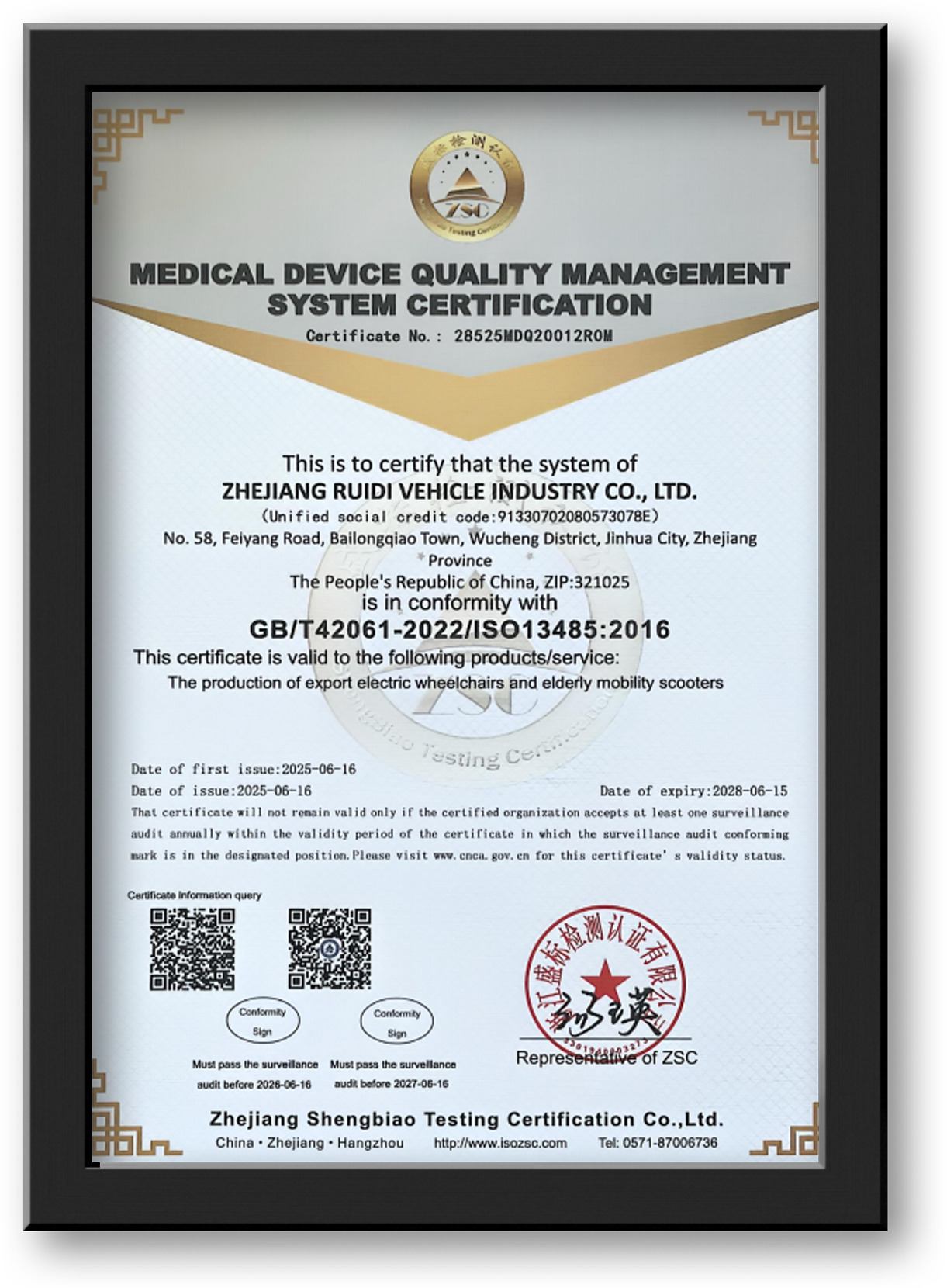
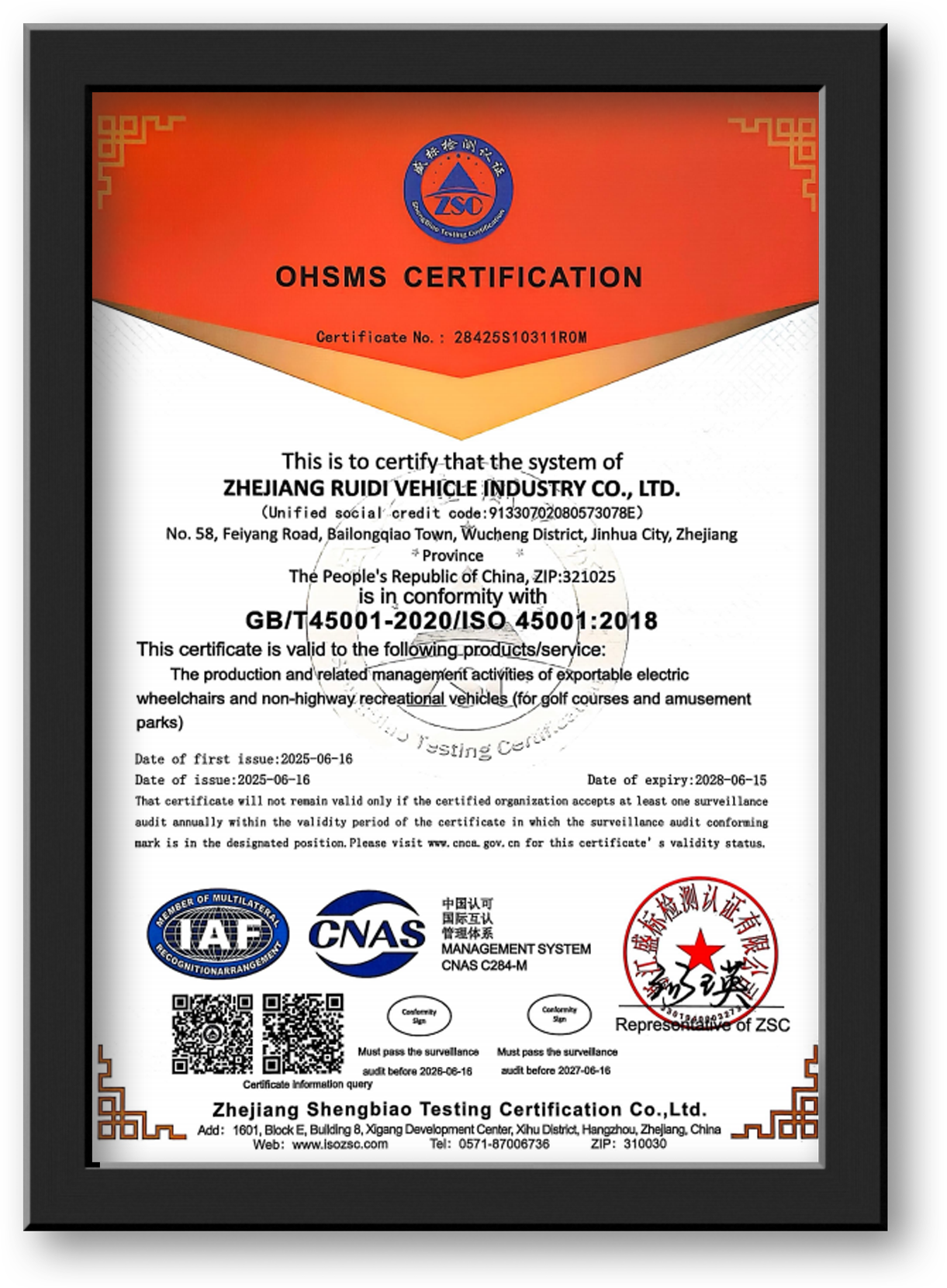
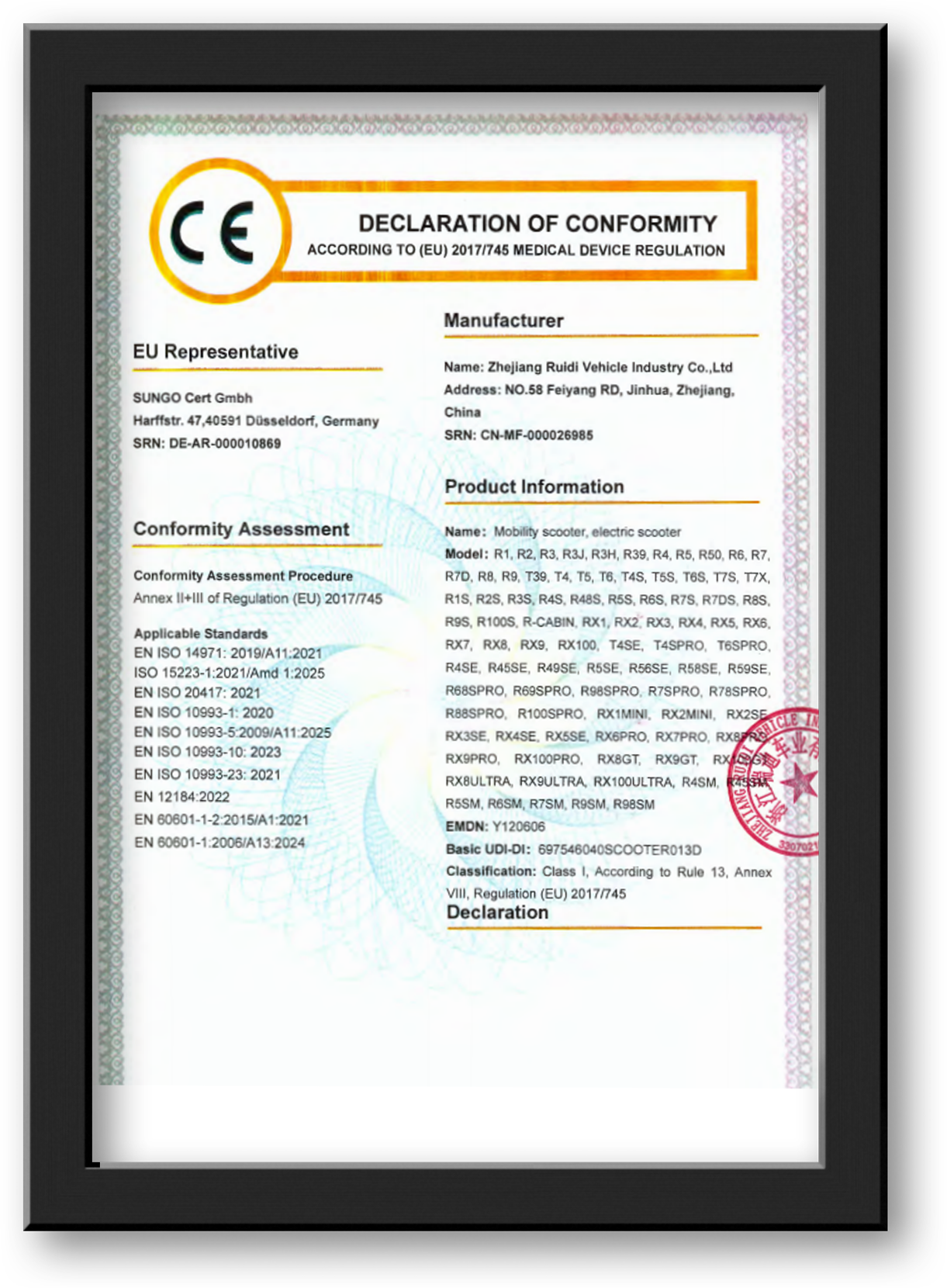
Patent Certificate
Latest Updates
View More-
2026.10.16
Travel Mobility Scooter Design Shifts Toward Outdoor Usability
A Travel Mobility Scooter designed for longer outdoor use faces different requirements from a compact model intended mainly for short local ...Read More -
2026.10.09
Small Lightweight Scooter Balances Portability With Daily Performance
A Small Lightweight Scooter is shaped by a practical balance between easy handling and usable mobility. Reducing dimensions can improve stor...Read More -
2026.10.02
How Do Factories Test Small Portable Mobility Scooters?
Testing Starts With the Folding Frame For small portable mobility scooters, the folding frame is a key part of product design. Users may fol...Read More -
2026.09.25
4 Wheel 2 Seat Mobility Scooter Expands Shared Mobility Options
A second seat changes more than the number of people a mobility scooter can carry. It changes how two people enter, sit, communicate, and mo...Read More
Industry Knowledge
The Dual Seat Mobility Scooter is a two-seater mobility vehicle designed to accommodate two passengers simultaneously, making it suitable for family outings, companion-assisted travel, or short-distance transit scenarios. Its design prioritizes both stability and comfort; by optimizing weight distribution and the propulsion system, it delivers a smooth, safe, and collaborative mobility experience for two people.
Redefining the System Positioning of Dual-Seat Mobility Scooters
The core value of the Dual Seat Mobility Scooter lies not merely in increasing passenger capacity, but rather in redefining the "collaborative relationship within low-speed mobility scenarios." This type of device typically serves the following categories of scenarios:
- Joint travel by family members (e.g., providing companionship or assisting the elderly)
- Shared mobility for two people during tourism or sightseeing at scenic spots
- Companion-assisted mobility support during medical rehabilitation
- Short-distance shared transit within urban environments
Compared to single-seat mobility scooters, the design constraints for these vehicles shift from "optimizing individual comfort" to "balancing the multi-passenger system."
Core system objectives include:
- Balanced weight distribution for two passengers
- Stability control during simultaneous acceleration and deceleration
- Management of comfort disparities between the two passengers
- Enhanced safety redundancy (particularly during turns and on inclines)
The Twin-Seat Mobility Scooter: A Side-by-Side Interaction Structure
The Twin-Seat Mobility Scooter features a lateral, side-by-side seating arrangement. This configuration more closely resembles the concept of a "compact shared cockpit," with "equal interaction" at the core of its design philosophy.
1. Spatial Structure Characteristics
The side-by-side layout means that both passengers occupy the same lateral field of view:
- They share a common forward view
- They can engage in natural verbal conversation
- Their body postures are relatively symmetrical
This structural design imposes higher demands on the vehicle's overall width; consequently, it typically entails:
- Increased lateral stability of the chassis
- An expanded wheelbase to prevent rollovers
- Enhanced control over the center of gravity during turns
2. Control System Logic
Twin-Seat models typically still utilize a single-driver control system; however, the engineering design incorporates considerations for:
- The impact of passenger weight shifts on the turning radius
- Compensation mechanisms for lateral sway during acceleration
- Algorithms for automatic stability-torque distribution
Due to the wider lateral distribution of the passengers, managing centrifugal forces during turns is a more complex challenge for these models compared to single-seat vehicles.
3. Advantages in Interactive Experience
The core advantage of the Twin-Seat configuration lies in its "social synchronicity":
- There are no physical obstructions between occupants.
- Emotional exchange occurs more naturally.
- It is well-suited for companion-assisted and family settings.
Consequently, this configuration leans more toward being a "shared-experience mobility tool" rather than a purely function-oriented transportation device.
Double-Seat Mobility Scooter: A Front-to-Rear, Functionally Layered Structure
Unlike the side-by-side arrangement, the Double-Seat Mobility Scooter employs a tandem layout—specifically, a front-and-rear seating arrangement. This design aligns more closely with the "driver-and-passenger" logic; its core defining concept is "functional layering."
1. Structural Layout and Center of Gravity Control
The primary advantages of the front-to-rear layout include:
- Vehicle width remains comparable to single-seat models (facilitating easier passage through narrow corridors).
- The center of gravity is distributed more stably along the vehicle's longitudinal axis.
- Both aerodynamic drag and structural resistance are reduced.
In terms of engineering design, the configuration typically designates:
- The front seat as the primary operating or control position.
- The rear seat as the companion or auxiliary position.
2. Power and Control Systems
The Double-Seat configuration imposes stricter requirements on the power system regarding longitudinal load management:
- During acceleration, the load transfer between the front and rear axles must be balanced.
- When ascending inclines, the influence of the rear occupant on the driving force becomes more pronounced.
- During braking, excessive forward pitching caused by inertia must be prevented.
Consequently, vehicles of this type often feature:
- An enhanced motor torque output system.
- Dynamic load distribution algorithms for the front and rear axles.
- Structural designs incorporating anti-pitch control mechanisms.
3. Typical Usage Scenarios
The Double-Seat configuration is good suited for:
- Medical accompaniment (caregiver + user).
- Guided mobility (driver + passenger).
- Navigation within narrow urban environments.
Its design emphasis lies not on social interaction, but rather on "clearly defined functional division."
System Comparison: Twin-Seat vs. Double-Seat Models
| Dimension | Twin-Seat (Side-by-Side) | Double-Seat (Tandem) |
| Spatial Structure | Side-by-side | Front-to-back (Tandem) |
| Interaction Mode | High social interaction | Functional differentiation |
| Vehicle Width | Wider | Comparable to a single-seat vehicle |
| Stability Focus | Lateral anti-rollover | Longitudinal center-of-gravity control |
| Usage Scenarios | Family/Sightseeing | Medical/Functional transport |
| Control Logic | Unified control system | Potential division of roles (Main/Auxiliary) |
Safety System Enhancements for Dual-Seat Mobility Scooters
Due to the increased number of occupants, Dual-Seat Mobility Scooters require a multi-layered approach to safety system design—a distinction that is particularly pronounced when compared to single-seat models.
1. Dynamic Center-of-Gravity Monitoring System
The system must monitor the following in real-time:
- Weight distribution between the two occupants
- Shifts in the center of gravity caused by changes in seating posture
- Changes in lateral load during turns
It then performs dynamic compensation using control algorithms.
2. Dual-Occupant Restraint and Protection Structures
Safety restraint systems typically include:
- Wider safety armrest structures
- Independent dual-seatbelt systems
- Non-slip seat materials
- Emergency power-cutoff braking mechanisms
3. Braking Coordination Mechanisms
Under a two-person load, braking distance and inertia increase significantly; therefore:
- The braking system must possess greater redundancy capabilities
- Braking force between the front and rear wheels must be dynamically distributed
- A ramp parking-lock system becomes even more critical
We'd love to hear from you!

QUICK LINKS
PRODUCTS
CONTACT INFORMATION
 No.58 Feiyang Road , Jinhua 321025, Zhejiang, China
 +86-13905796145
 [email protected]
  +86-579-82268015
Double-Seat Mobility Scooter Company
Copyright © Zhejiang Ruidi Vehicle Industry Co., Ltd. Rights Reserved.