English
 中文简体
中文简体 Español
 Deutsch
information to be updated

Product Categories
- Mobility Scooters
- Electric Wheelchairs
- Sightseeing Scooters
-
Recreational scooters/Golf Cart
-
Accessories
Double Sightseeing Scooters
ABOUT
Zhejiang Ruidi Vehicle Industry Co., Ltd.
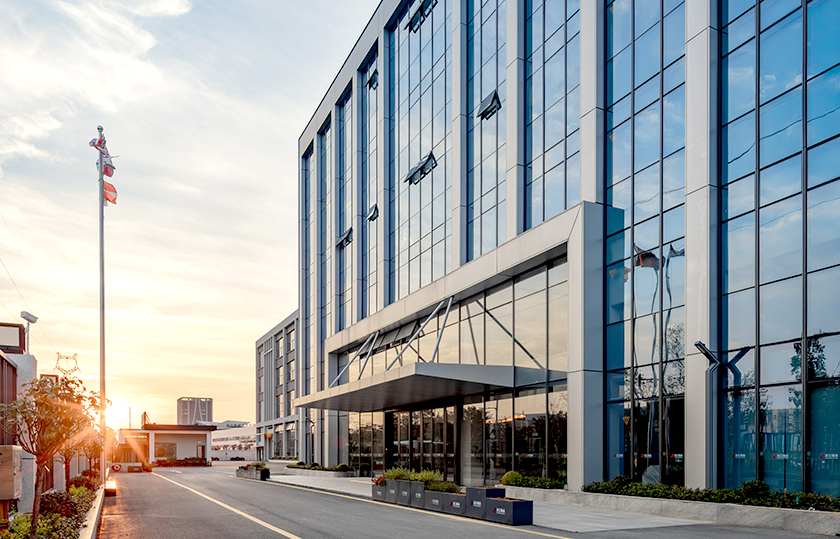
Zhejiang Ruidi Vehicle Industry Co., Ltd. is a professional manufacturer engaged in the research, development, and production of Double Sightseeing Scooters. Our products are widely applied in elderly mobility, sports and leisure, and recreational fields.
The company’s manufacturing base is located in Jinhua Industrial Park, Zhejiang Province, covering an area of approximately 35,000 square meters. The facility is equipped with over 100 sets of advanced production equipment and four efficient production lines, ensuring stable production capacity and reliable product quality.
At present, our products are exported to the United States, Canada, Europe, and Australia, as well as supplied to the Chinese domestic market. Our main product series include mobility scooters for the elderly, electric walking chairs, foldable electric mobility scooters, and enclosed cabin-type electric mobility scooters.
We consistently adhere to a quality-centered management philosophy and are supported by a professional and efficient team. We are committed to providing electric mobility products that are easy to operate, energy-saving, environmentally friendly, low-noise, and pollution-free. We believe these products bring greater comfort, convenience, and freedom to elderly and mobility-impaired users, helping them enjoy a higher quality of life.
View More
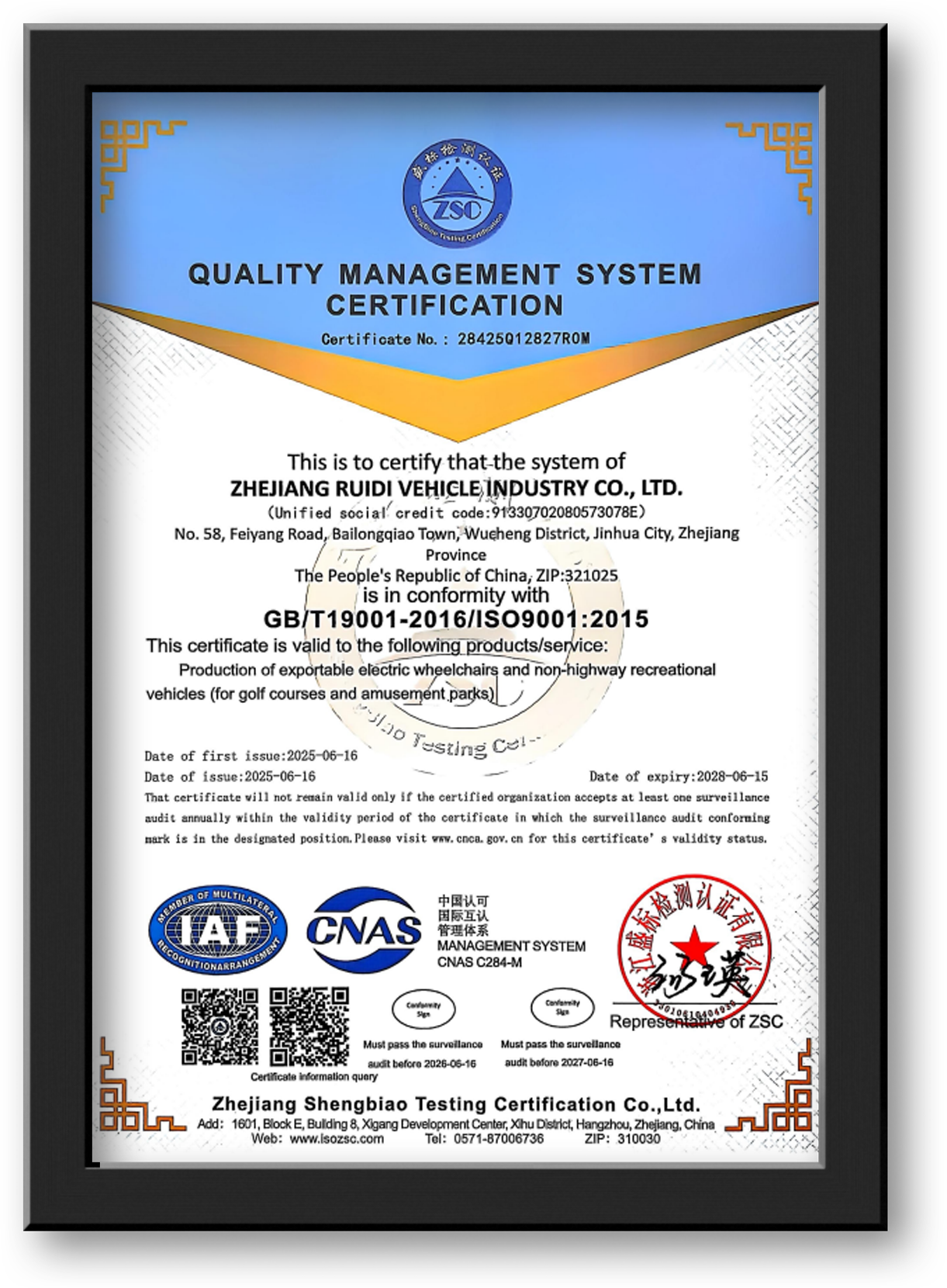
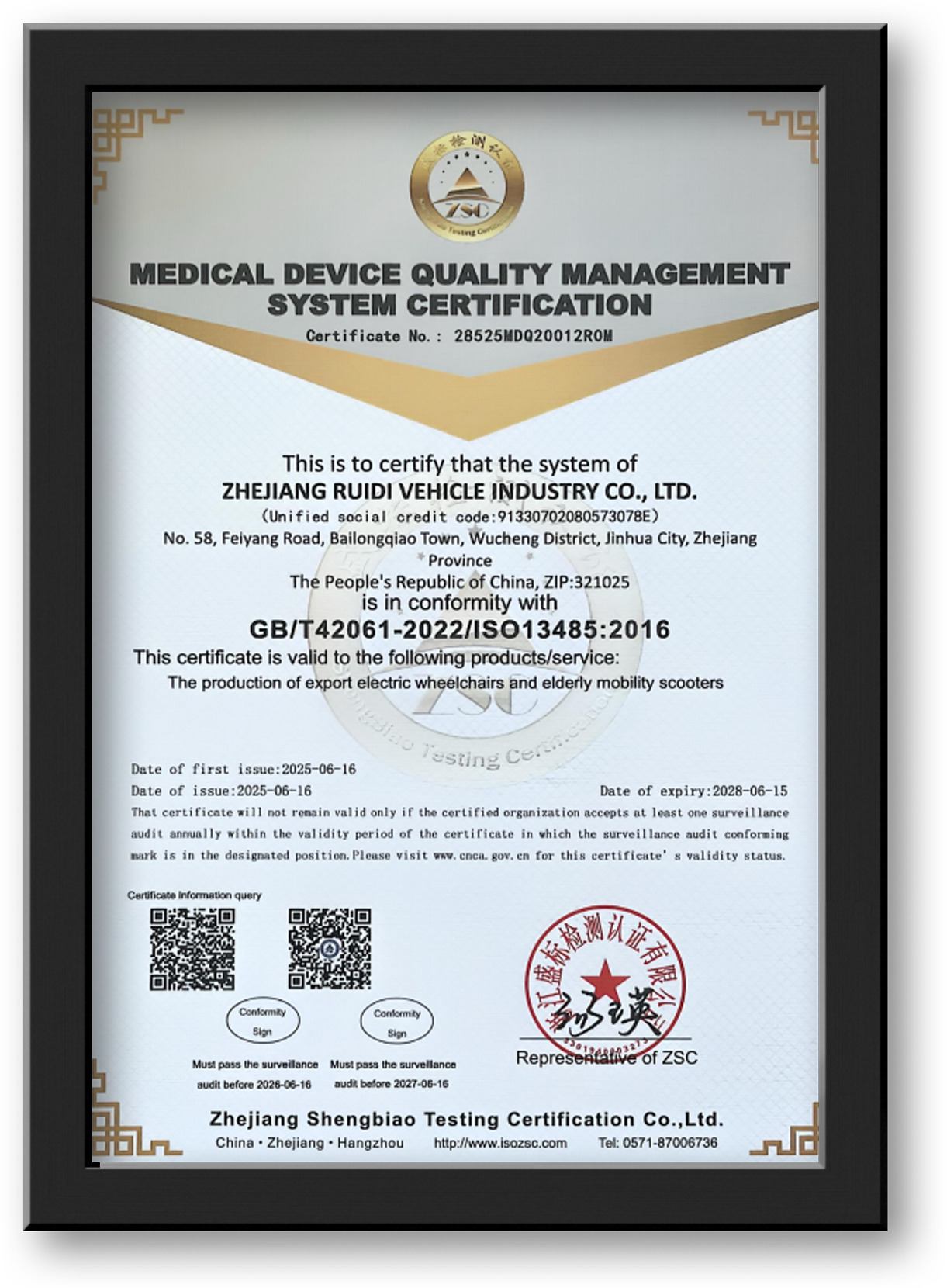
Patent Certificate

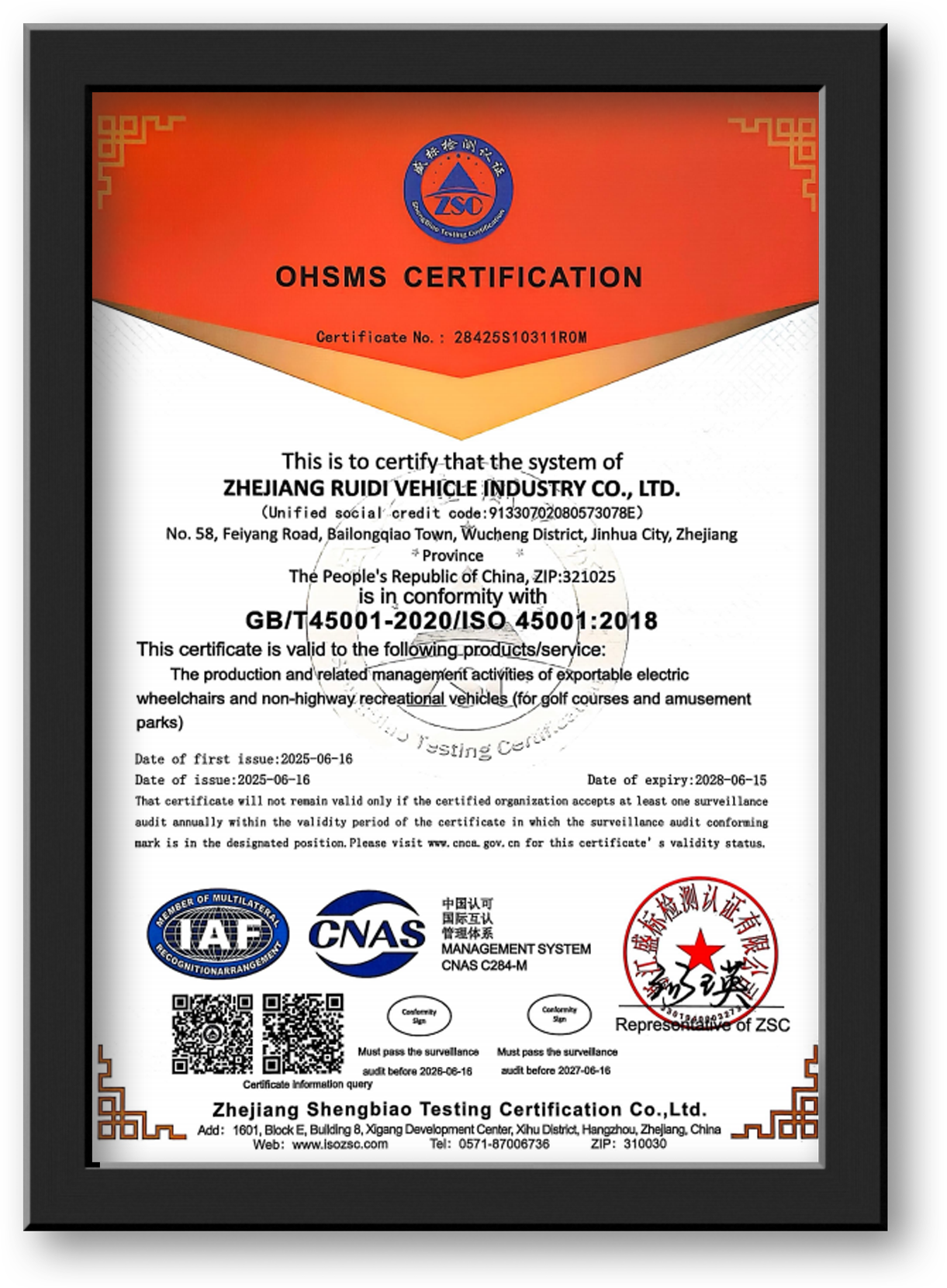
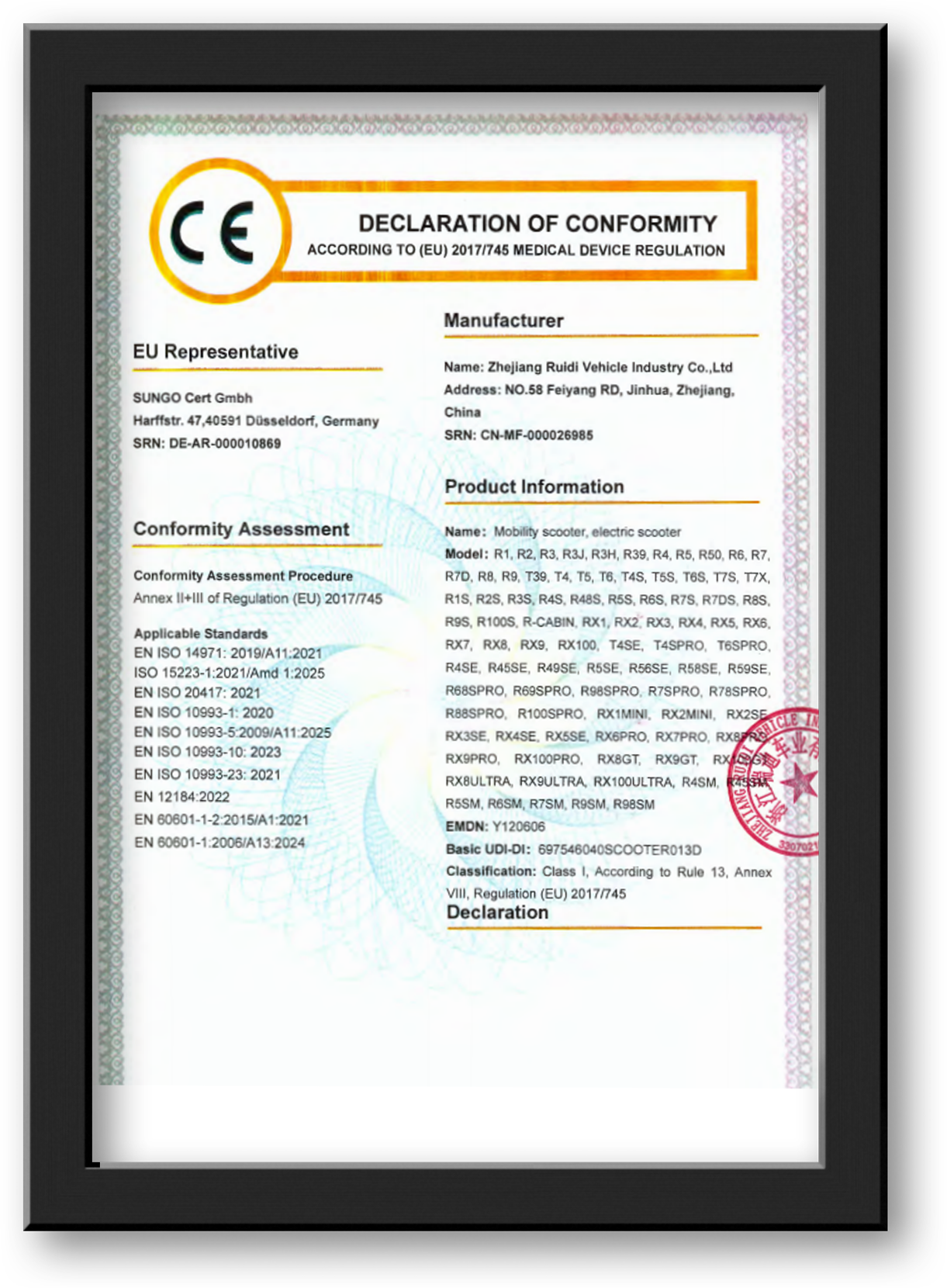
Latest Updates
View More-
2026.07.17
When Should A Senior Consider A Mobility Scooter For Elderly Use?
A parent skipping the grocery run because the parking lot feels too far, or a grandmother declining a family outing because standing in line...Read More -
2026.07.10
Ruidi Mobility to Attend REHACARE 2026
We are pleased to announce that Ruidi Mobility will participate in REHACARE International Trade Fair for Rehabilitation and Care 2026, one ...Read More -
2026.07.10
How Does Enclosed Mobility Scooter Improve Daily Travel?
Enclosed mobility scooter is becoming part of everyday transportation for people who want to remain active while reducing the physical effor...Read More -
2026.07.03
Who Actually Needs A Mini Electric Wheelchair?
A worn-out shoulder from folding a bulky wheelchair into a trunk, or a narrow apartment hallway that a full-size chair simply won't clear, i...Read More
Industry Knowledge
The Double Sightseeing Scooter is a two-person personal mobility device commonly utilized in scenic spots and recreational parks. Designed to accommodate two riders simultaneously, it enhances the interactive experience and is ideally suited for low-speed sightseeing environments. Featuring a stable structure and simple operation, it is well-suited for short-distance sightseeing excursions and leisurely riding scenarios.
Product Structural Classification and Key Features
From a structural design perspective, the more common types of two-person sightseeing scooters currently found in the industry can be broadly categorized into the following two groups:
1. Dual-Seat Sightseeing Scooter
This type typically employs a tandem seating arrangement (front-to-back), with the driver positioned in the front and the passenger in the rear. Its overall structure closely resembles that of a traditional single-rider scooter, though it features specific optimizations regarding frame length, load-bearing capacity, and battery configuration.
Key Features:
- Tandem seating layout (front and rear), resulting in a relatively stable center of gravity
- Controls are centralized and operated solely by the driver in the front
- Suitable for sightseeing routes with relatively flat terrain
- Places relatively low demands on spatial clearance and pathway width
2. Tandem (Side-by-Side) Sightseeing Scooter
The side-by-side structure typically features a dual-seat design arranged laterally (left and right). The driving control system may be either centralized or split between the riders, with a strong emphasis placed on enhancing the interactive experience between companions.
Key Features:
- Side-by-side seating arrangement, fostering greater interactivity
- Wider structural profile, requiring specific widths for pathways and corridors
- Ideal for sightseeing, photography, and leisurely cruising within scenic areas
- Leans more heavily toward providing a recreational and experiential atmosphere
Analysis of Application Scenarios
The application scenarios for two-person sightseeing scooters are becoming increasingly refined, with different structural designs demonstrating distinct advantages across various environments.
| Scenario Type | Suitability of Dual-Seat Scooter | Suitability of Side-by-Side Scooter | Notes |
| Large Scenic Areas | High | Moderate | Dual-seat models are better suited for narrow pathways |
| Urban Parks | High | High | Both types are well-suited for low-speed sightseeing |
| Campus Grounds | Moderate | High | Side-by-side models are better suited for interactive experiences |
| Cultural & Tourism Towns | High | High | High demand for distinctive sightseeing experiences |
| Gated Resort Areas | High | High | Routes can be flexibly configured to suit the environment |
Overall, the dual-seat structure holds a distinct advantage in terms of spatial adaptability and maneuverability, whereas the side-by-side structure stands out for its ability to enhance interactive experiences.
Design Changes Driven by User Needs
The rise of two-person sightseeing scooters is closely linked to shifts in the structure of user demands.
1. From Solo Riding to Shared Experiences
Traditional scooters emphasize individual mobility efficiency, whereas a two-person configuration places greater emphasis on the "shared journey experience." In tourism settings, users tend to prefer engaging in the mobility process alongside a companion rather than operating a vehicle in isolation.
2. Enhanced Photography and Social Attributes
The side-by-side seating arrangement is particularly well-suited for photography scenarios; it allows users to maintain a natural state of conversation while riding, thereby infusing the sightseeing process with a distinct social dimension.
3. A Clear Trend Toward Simplified Operation
Two-seater designs typically feature centralized controls operated by a single person. This reduces the learning curve associated with driving, making it feasible for users to enjoy a meaningful experience even during brief usage periods.
Structural Design and Key Technical Considerations
In terms of structural design, two-person sightseeing scooters require careful consideration of the following key aspects:
- Optimization of Load-Bearing Systems: Two-person occupancy necessitates higher load-bearing capacities.
- Battery Range Configuration: Must be sufficient to support extended periods of continuous sightseeing operation.
- Steering Stability Design: The turning radius must be optimized to compensate for the increased length or width of the vehicle body.
- Safety Braking Systems: Must ensure smooth and stable stopping, particularly at low speeds.
- Seat Comfort Design: Comfort levels must be enhanced to improve the riding experience during prolonged sightseeing tours.
Collectively, these technical factors determine the product's operational stability and scope of application in real-world settings.
Diversification of Operational Models
In practical application, two-person sightseeing scooters are typically integrated into the following operational models:
- Hourly Rental Model: Suitable for short-duration experiences within scenic areas.
- Route-Based Sightseeing Model: Involves operating on a fixed, looping route.
- Free-Riding Model: Allows for unrestricted use within a designated zone.
- Themed Tour Model: Integrates with specific park activities to create context-specific operational scenarios.
This coexistence of multiple operational models serves to boost equipment utilization rates while simultaneously enhancing the flexibility of the visitor experience.
Key Points for Maintenance and Management
During operation, two-person sightseeing scooters require a standardized and systematic maintenance framework:
- Regular checks of battery health status.
- Inspection of tire wear and tear.
- Calibration of brake sensitivity.
- Cleaning of the vehicle body structure and seats.
- Verification of the structural integrity of frame connection points.
Given the high frequency of usage—particularly during peak tourism seasons—the maintenance schedule typically requires appropriate intensification.
Observations on Industry Development Trends
From a macro perspective, the development of two-person sightseeing scooters appears to be trending in the following directions:
1. Lightweight and Modular Design
Future structural designs are likely to place greater emphasis on ease of assembly and disassembly to facilitate rapid deployment across diverse operational scenarios.
2. Enhanced Electrification and Intelligent Control
Beyond basic electric propulsion, features such as intelligent speed limiting and route assistance are gradually being introduced.
3. Enhanced Scenario Customization
Different scenic areas may differentiate the design of vehicle aesthetics and functionality to align with their specific cultural themes.
4. Enhanced Focus on the Experience Economy
Product value is gradually shifting from that of a mere "mode of transport" to that of a "vehicle for experiences."
We'd love to hear from you!

QUICK LINKS
PRODUCTS
CONTACT INFORMATION
 No.58 Feiyang Road , Jinhua 321025, Zhejiang, China
 +86-13905796145
 [email protected]
  +86-579-82268015
Dual Seat Sightseeing Scooter Company
Copyright © Zhejiang Ruidi Vehicle Industry Co., Ltd. Rights Reserved.