English
 中文简体
中文简体 Español
 Deutsch
information to be updated

Product Categories
- Mobility Scooters
- Electric Wheelchairs
- Sightseeing Scooters
-
Recreational scooters/Golf Cart
-
Accessories
Large Electric Wheelchairs

ABOUT
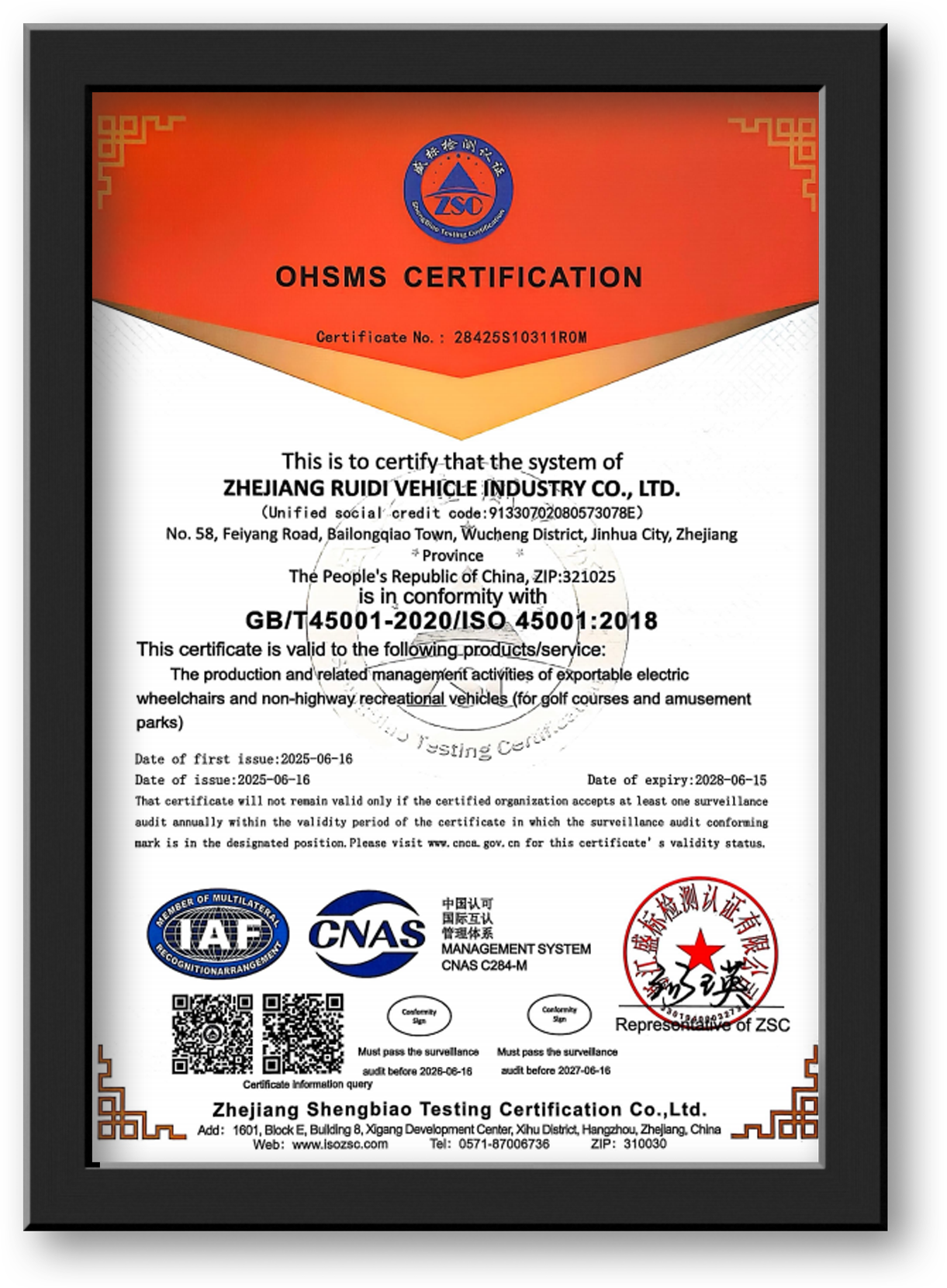
Zhejiang Ruidi Vehicle Industry Co., Ltd.
Zhejiang Ruidi Vehicle Industry Co., Ltd. is a professional manufacturer engaged in the research, development, and production of Large Electric Wheelchairs. Our products are widely applied in elderly mobility, sports and leisure, and recreational fields.
The company’s manufacturing base is located in Jinhua Industrial Park, Zhejiang Province, covering an area of approximately 35,000 square meters. The facility is equipped with over 100 sets of advanced production equipment and four efficient production lines, ensuring stable production capacity and reliable product quality.
At present, our products are exported to the United States, Canada, Europe, and Australia, as well as supplied to the Chinese domestic market. Our main product series include mobility scooters for the elderly, electric walking chairs, foldable electric mobility scooters, and enclosed cabin-type electric mobility scooters.
We consistently adhere to a quality-centered management philosophy and are supported by a professional and efficient team. We are committed to providing electric mobility products that are easy to operate, energy-saving, environmentally friendly, low-noise, and pollution-free. We believe these products bring greater comfort, convenience, and freedom to elderly and mobility-impaired users, helping them enjoy a higher quality of life.
View More
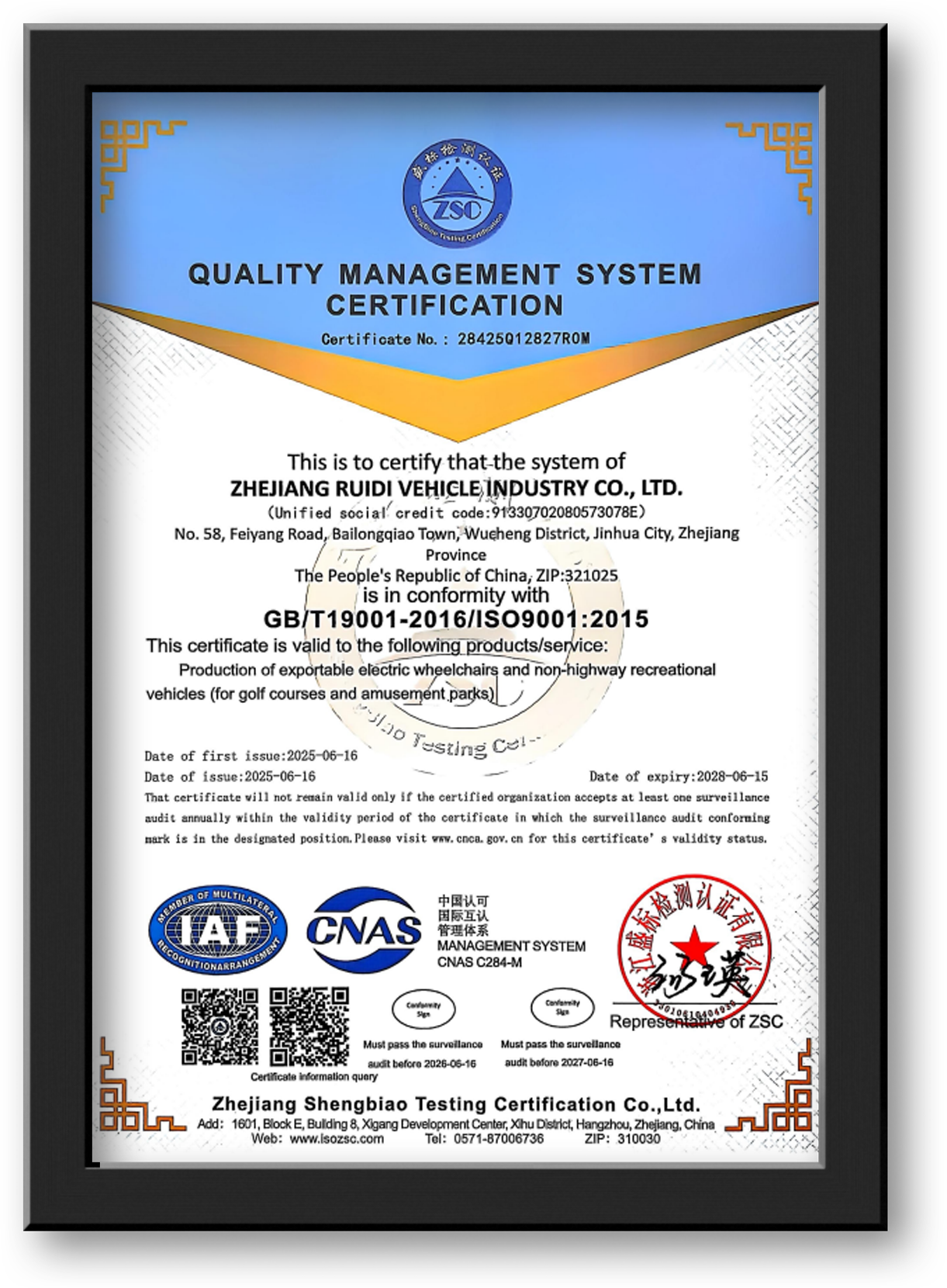
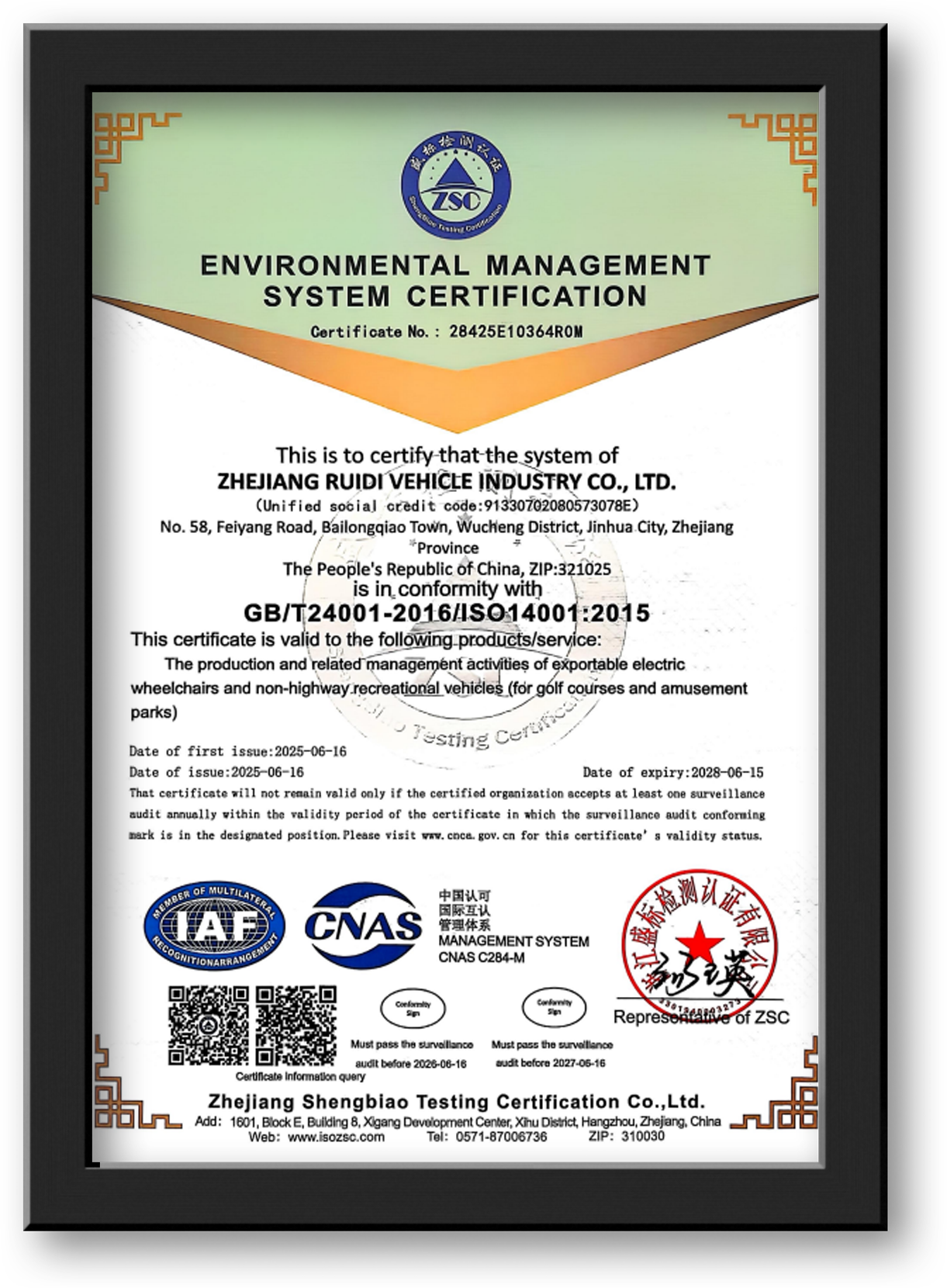
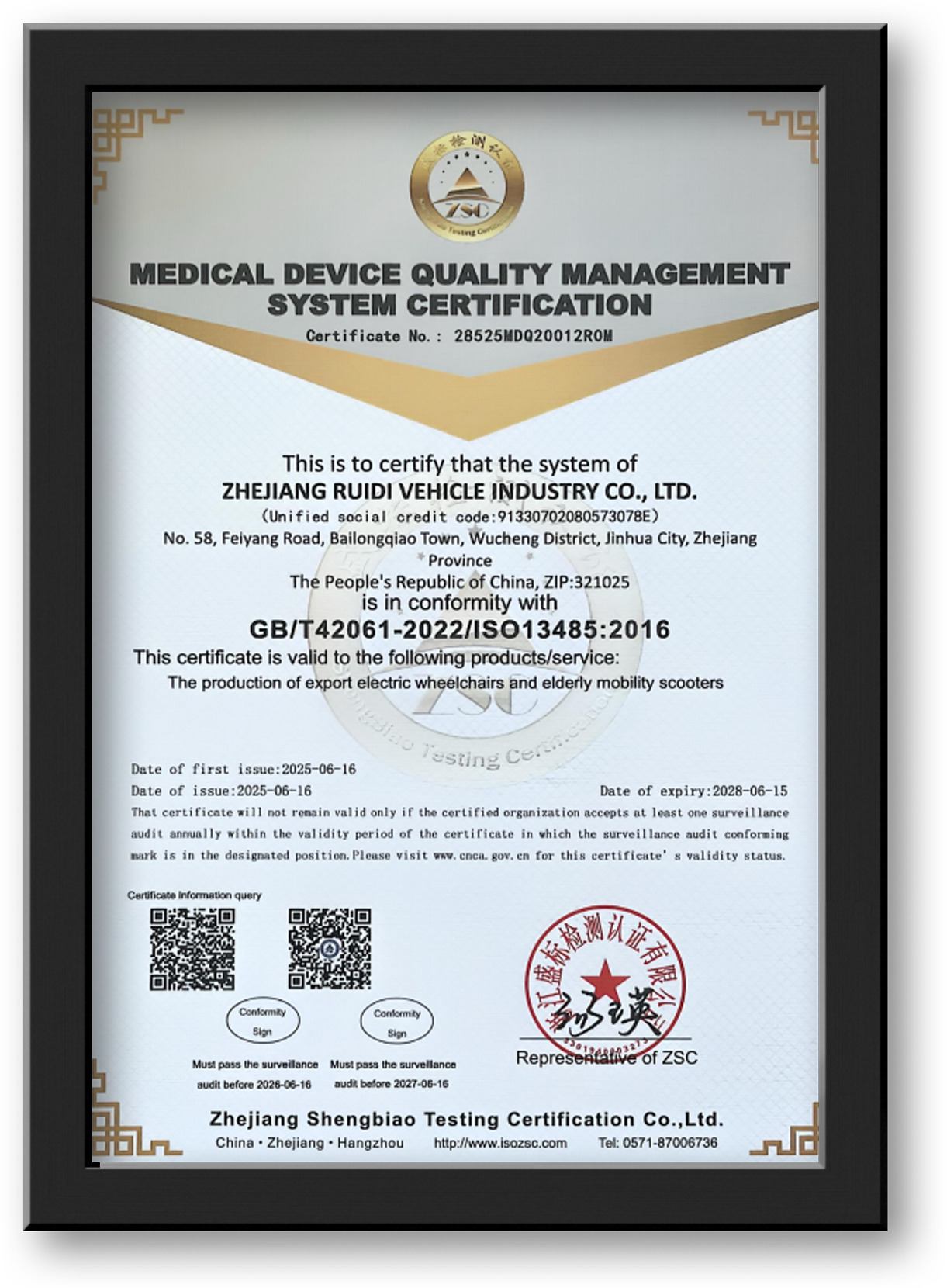
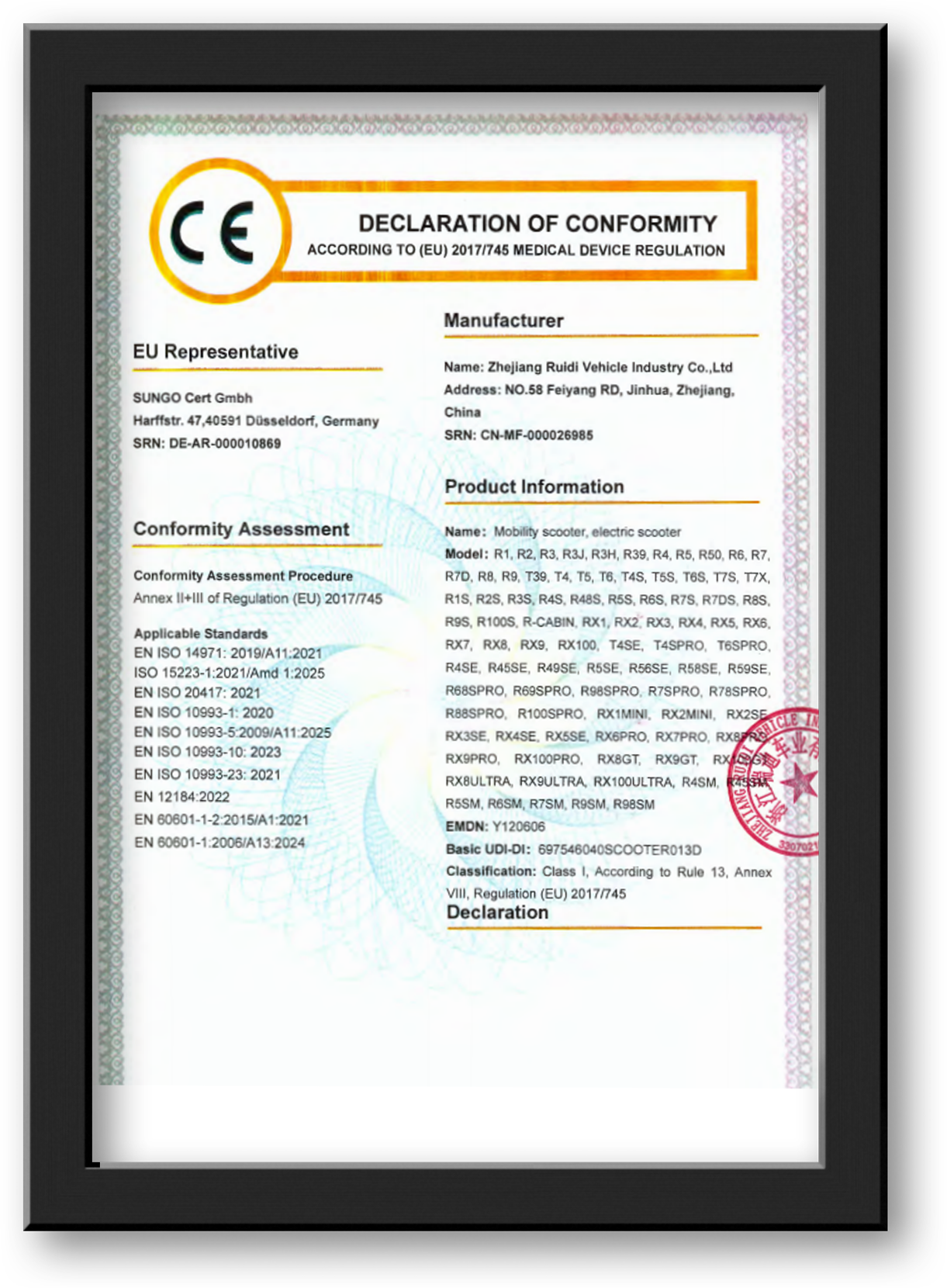
Patent Certificate
Latest Updates
View More-
2026.07.17
When Should A Senior Consider A Mobility Scooter For Elderly Use?
A parent skipping the grocery run because the parking lot feels too far, or a grandmother declining a family outing because standing in line...Read More -
2026.07.10
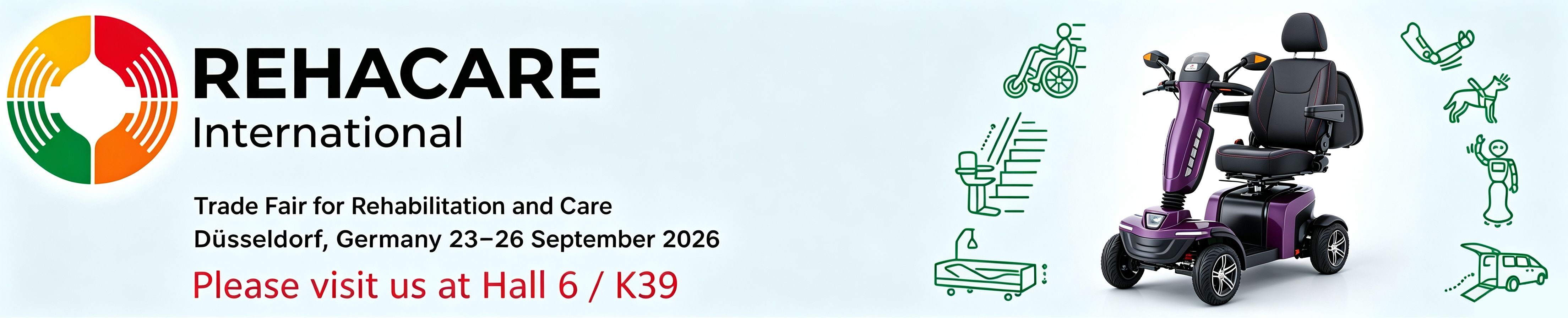
Ruidi Mobility to Attend REHACARE 2026
We are pleased to announce that Ruidi Mobility will participate in REHACARE International Trade Fair for Rehabilitation and Care 2026, one ...Read More -
2026.07.10
How Does Enclosed Mobility Scooter Improve Daily Travel?
Enclosed mobility scooter is becoming part of everyday transportation for people who want to remain active while reducing the physical effor...Read More -
2026.07.03
Who Actually Needs A Mini Electric Wheelchair?
A worn-out shoulder from folding a bulky wheelchair into a trunk, or a narrow apartment hallway that a full-size chair simply won't clear, i...Read More
Industry Knowledge
Large Electric Wheelchairs constitute a category of motorized wheelchairs characterized by their larger structural dimensions and higher weight-bearing capacities, making them suitable for users requiring greater physical support and spatial accommodation. Common subtypes include Heavy-Duty Electric Wheelchairs and Bariatric Electric Wheelchairs; these models feature exceptional stability, spacious seating, and smooth operation, rendering them ideal for both daily use and mobility across indoor and outdoor environments.
Market Positioning of Large Electric Wheelchairs
The term "Large Electric Wheelchair" typically refers to motorized wheelchair products featuring larger structural dimensions and good weight-bearing capabilities, designed primarily to serve individuals requiring enhanced physical support and greater spatial accommodation.
Compared to standard electric wheelchairs, their core characteristics include:
- A more robust chassis structure
- More spacious seating areas
- Higher-output motor systems
- Adaptability to more complex operating environments
In terms of design, this product category places a greater emphasis on "stable mobility capabilities" rather than on lightweight portability.
Structural Characteristics of Heavy-Duty Electric Wheelchairs
Heavy-Duty Electric Wheelchairs are primarily targeted at users requiring a higher weight-bearing capacity, with their design focus centered on structural reinforcement.
1. Frame Structure
Typically employs thickened metal structures or high-strength alloy materials to enhance overall load-bearing capacity and durability.
2. Power System
- Configuration featuring dual motors or high-torque motors
- Larger-capacity battery systems
- Enhanced capability for climbing inclines and navigating complex terrain
3. User Experience
In daily use, this category of wheelchairs prioritizes driving stability, making them well-suited for mixed indoor and outdoor environments.
Functional Positioning of Bariatric Electric Wheelchairs
Bariatric Electric Wheelchairs are designed specifically for users with larger body frames, featuring further optimization in terms of both spatial dimensions and weight-bearing capacity.
Core Characteristics:
| Dimension | Description |
| Seat Width | Relatively wider, enhancing seating comfort |
| Weight-Bearing Capacity | Designed to accommodate higher weight ranges |
| Structural Stability | Reinforced chassis and support structures |
| Control System | Better adapted to the demands of prolonged, continuous use |
The design of this product type places a strong emphasis on balancing long-term user comfort with safety.
Analysis of Usage Scenarios
The application scenarios for Large Electric Wheelchairs are relatively diverse, primarily concentrating on the following areas:
- 1. Home and Daily Mobility
Suitable for short-distance travel—both indoors and outdoors—emphasizing stability and ease of operation.
- 2. Medical and Rehabilitation Settings
Commonly utilized within rehabilitation training programs or long-term care environments.
- 3. Communities and Public Spaces
Suitable for relatively level outdoor environments such as parks and shopping malls.
Comparative Analysis of Product Types
| Comparison Dimension | Heavy-Duty Electric Wheelchair | Bariatric Electric Wheelchair |
| Design Focus | Reinforced Structure and Power System | Space and Load-Bearing Optimization |
| Seating Space | Moderately Wide | Wider |
| Target Users | Users requiring high load-bearing support | Users with larger body frames |
| Operational Stability | High | High |
| Usage Environment | Mixed Indoor/Outdoor | Indoor and Level Outdoor Environments |
Design and Technological Development Trends
With the advancement of assistive mobility devices, Large Electric Wheelchairs are exhibiting the following design trends:
- Trend 1: Structural Modularization
Some products are beginning to adopt modular designs to facilitate maintenance and component replacement.
- Trend 2: Comfort Optimization
Enhancing the user experience during prolonged use through improvements in seat materials and shock-absorption systems.
- Trend 3: Control System Upgrades
Diversification of control methods, such as simplified operating interfaces and assistive control designs.
Materials and Manufacturing Directions
At the manufacturing level, this category of products places high demands on materials:
- Widespread application of high-strength metal frames
- Gradual optimization of shock-absorption structures
- Increased energy density in battery systems
- Greater emphasis on support and breathability in seat materials
These factors collectively influence the overall performance of the product.
We'd love to hear from you!

QUICK LINKS
PRODUCTS
CONTACT INFORMATION
 No.58 Feiyang Road , Jinhua 321025, Zhejiang, China
 +86-13905796145
 [email protected]
  +86-579-82268015
Heavy Duty Electric Wheelchair For Sale
Copyright © Zhejiang Ruidi Vehicle Industry Co., Ltd. Rights Reserved.