English
 中文简体
中文简体 Español
 Deutsch
information to be updated

Product Categories
- Mobility Scooters
- Electric Wheelchairs
- Sightseeing Scooters
-
Recreational scooters/Golf Cart
-
Accessories
Small Electric Wheelchairs

ABOUT
Zhejiang Ruidi Vehicle Industry Co., Ltd.
Zhejiang Ruidi Vehicle Industry Co., Ltd. is a professional manufacturer engaged in the research, development, and production of Small Electric Wheelchairs. Our products are widely applied in elderly mobility, sports and leisure, and recreational fields.
The company’s manufacturing base is located in Jinhua Industrial Park, Zhejiang Province, covering an area of approximately 35,000 square meters. The facility is equipped with over 100 sets of advanced production equipment and four efficient production lines, ensuring stable production capacity and reliable product quality.
At present, our products are exported to the United States, Canada, Europe, and Australia, as well as supplied to the Chinese domestic market. Our main product series include mobility scooters for the elderly, electric walking chairs, foldable electric mobility scooters, and enclosed cabin-type electric mobility scooters.
We consistently adhere to a quality-centered management philosophy and are supported by a professional and efficient team. We are committed to providing electric mobility products that are easy to operate, energy-saving, environmentally friendly, low-noise, and pollution-free. We believe these products bring greater comfort, convenience, and freedom to elderly and mobility-impaired users, helping them enjoy a higher quality of life.
View More
Patent Certificate
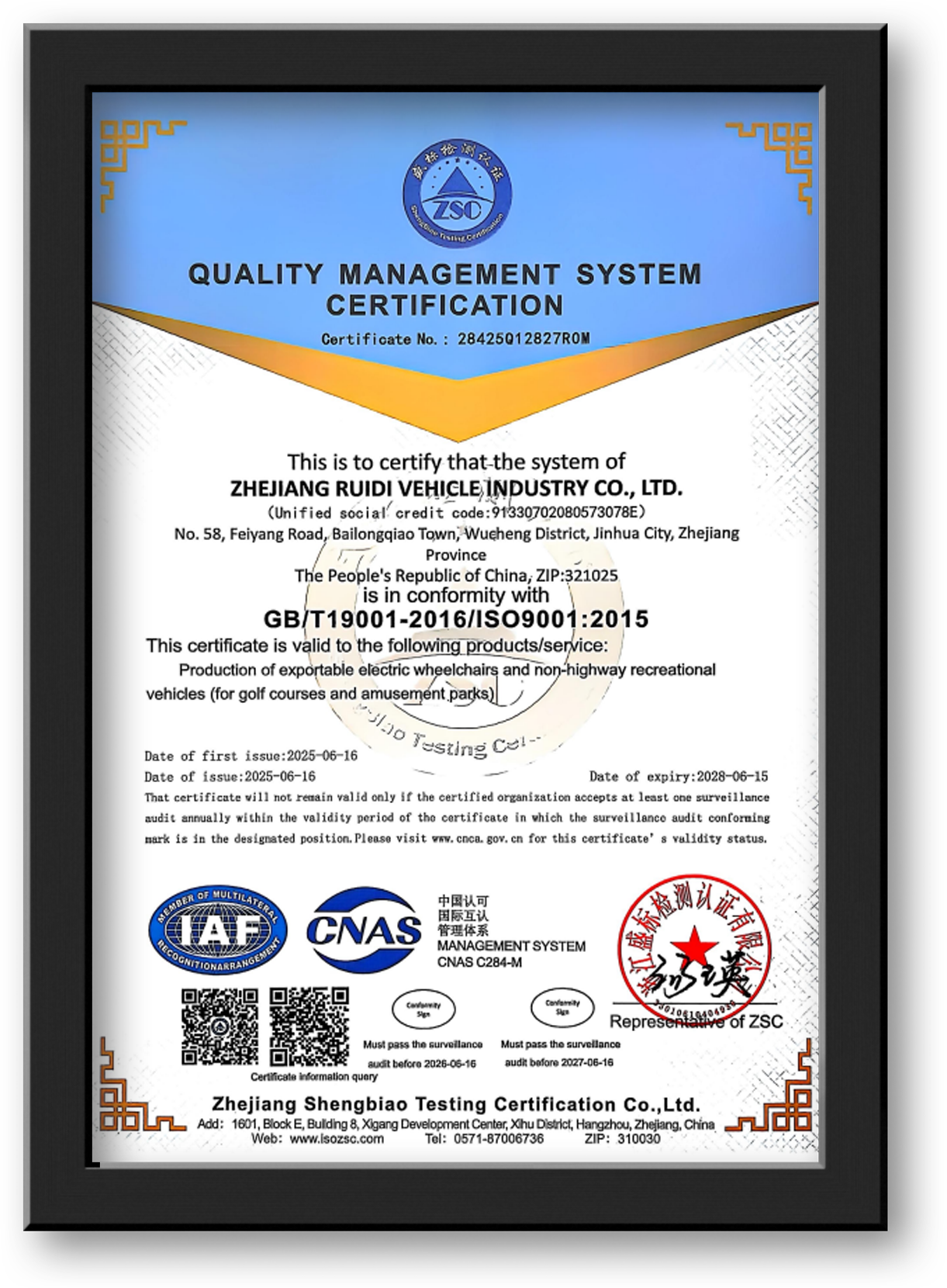
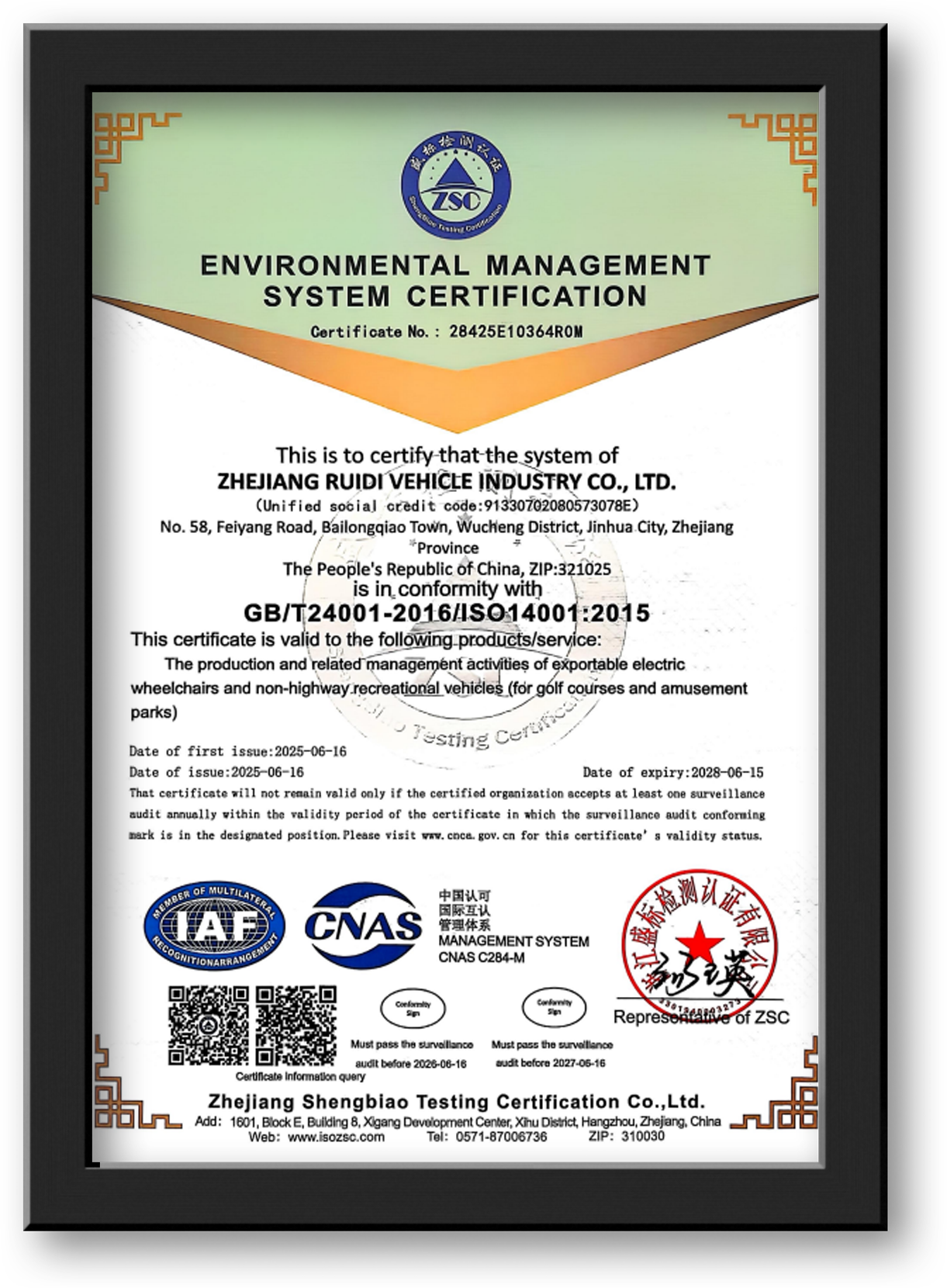
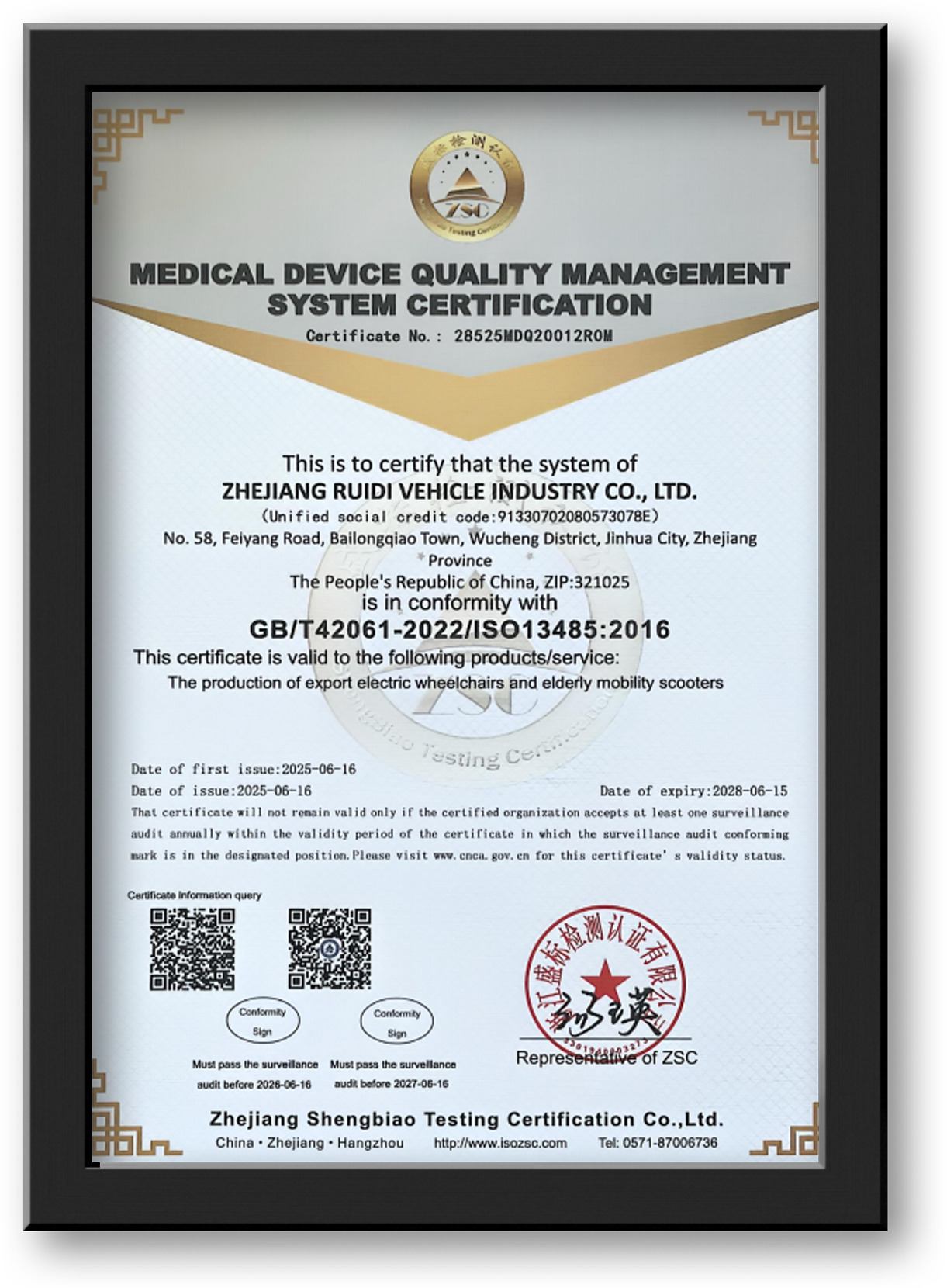
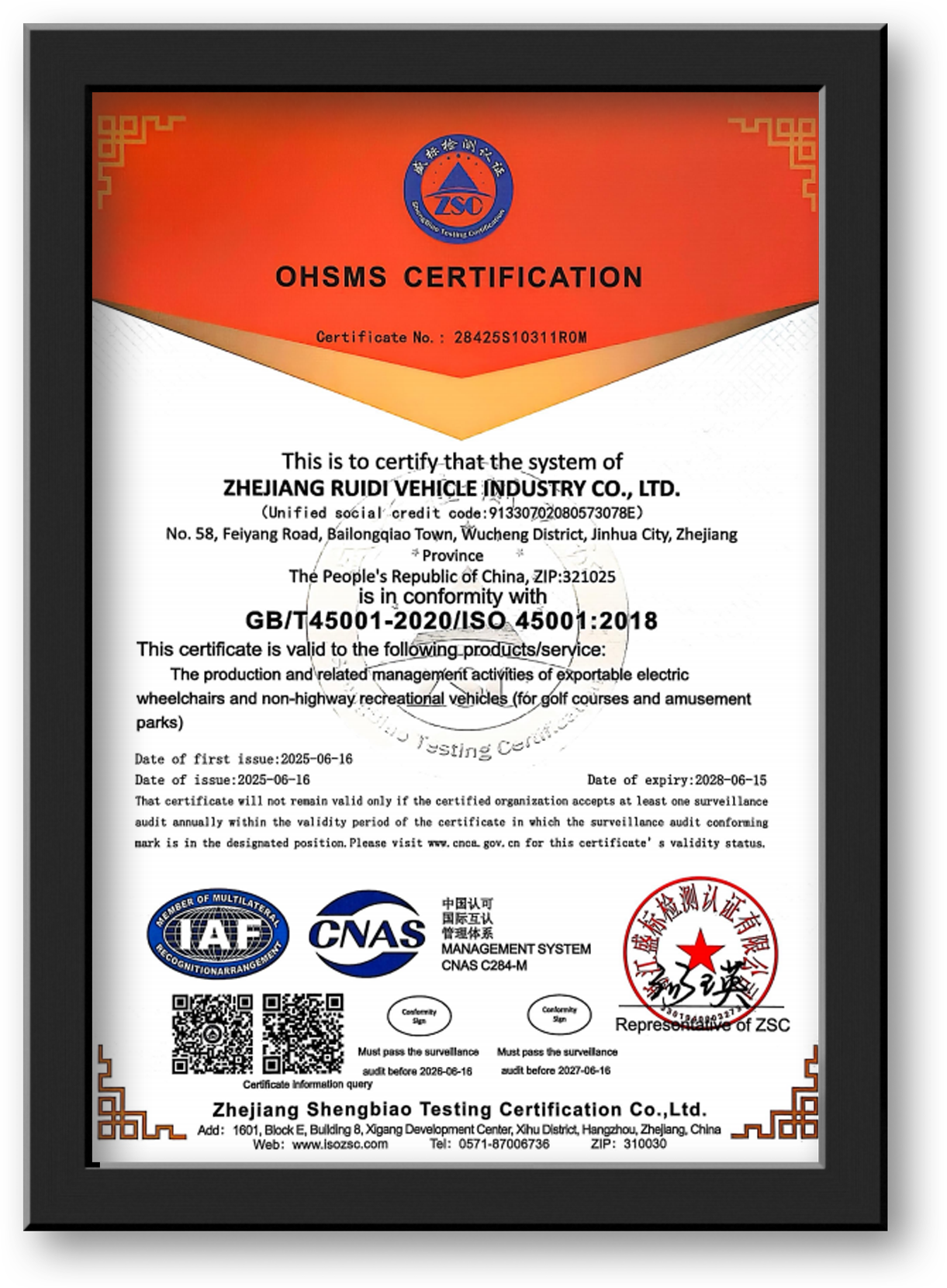
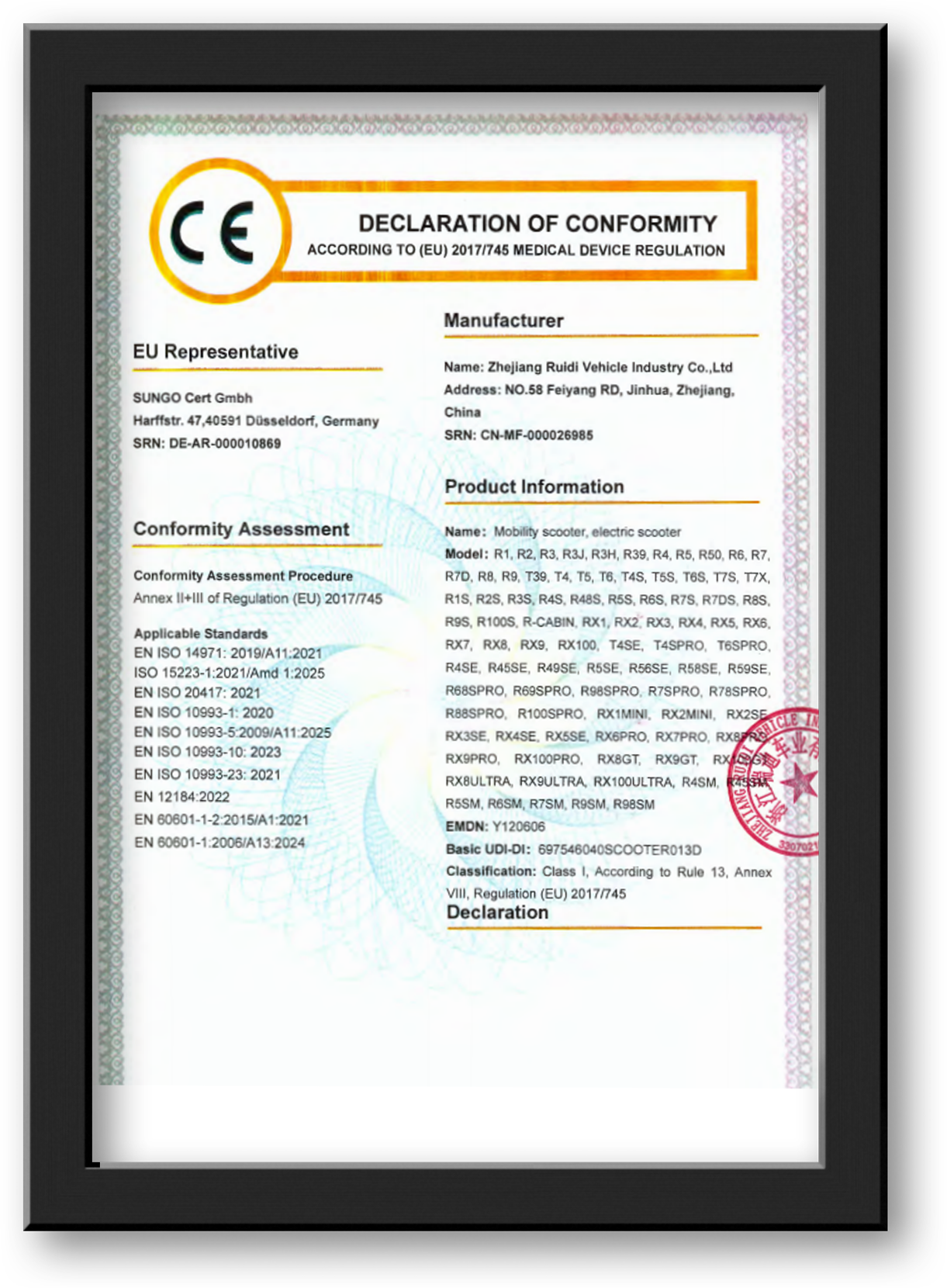
Latest Updates
View More-
2026.07.17
When Should A Senior Consider A Mobility Scooter For Elderly Use?
A parent skipping the grocery run because the parking lot feels too far, or a grandmother declining a family outing because standing in line...Read More -
2026.07.10
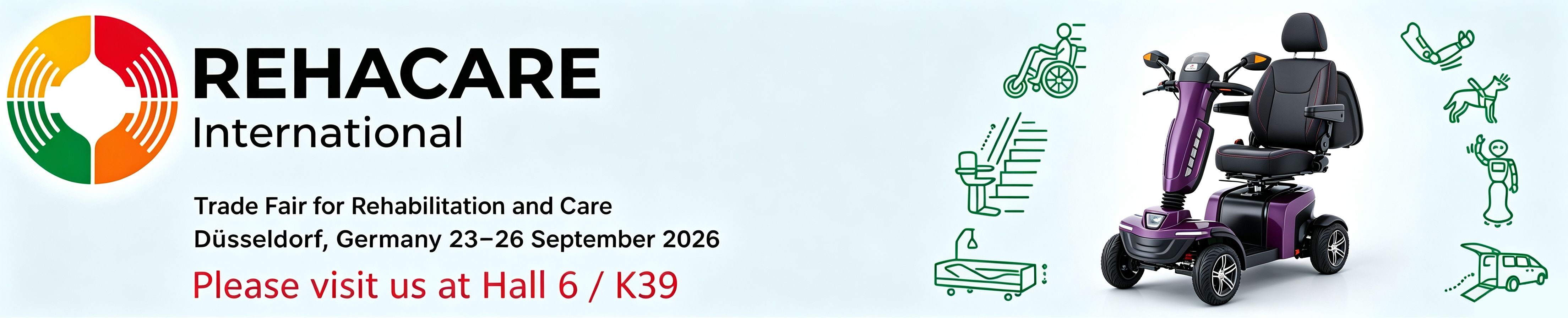
Ruidi Mobility to Attend REHACARE 2026
We are pleased to announce that Ruidi Mobility will participate in REHACARE International Trade Fair for Rehabilitation and Care 2026, one ...Read More -
2026.07.10
How Does Enclosed Mobility Scooter Improve Daily Travel?
Enclosed mobility scooter is becoming part of everyday transportation for people who want to remain active while reducing the physical effor...Read More -
2026.07.03
Who Actually Needs A Mini Electric Wheelchair?
A worn-out shoulder from folding a bulky wheelchair into a trunk, or a narrow apartment hallway that a full-size chair simply won't clear, i...Read More
Industry Knowledge
A Small Electric Wheelchair is a lightweight electric mobility aid designed specifically for individuals with mobility impairments, characterized by its compact size, light weight, and simple operation. Typically battery-powered, it is steered via a handlebar or joystick and is suitable for both indoor use and short-distance outdoor travel.
Mini Electric Wheelchairs and Compact Electric Wheelchairs typically refer to types of electric wheelchairs characterized by their smaller size, lighter weight, and ability to be folded or easily disassembled. Compared to traditional electric wheelchairs, they prioritize "portability" and "agility" rather than long-distance travel or heavy-duty off-road capabilities.
The core positioning of these product categories primarily encompasses:
- Short-distance personal mobility aids (e.g., for use in shopping malls, hospitals, or residential communities)
- Indoor mobility assistance devices for home use
- Portable travel aids for trips and excursions
- Daily, light-duty mobility support for the elderly
Analysis of Mini Electric Wheelchair Features
Mini Electric Wheelchairs are typically designed with a highly compact profile, making them ideal for users with limited living space or those who require frequent lifting and transport of the device.
Key Features:
- Ultra-lightweight construction: Some models weigh less than 20 kilograms.
- Foldable design: Facilitates easy storage in a car trunk.
- Simple operation: More models utilize a joystick control system.
- High indoor adaptability: Suitable for navigating narrow corridors, restrooms, and similar environments.
- Low-energy consumption system: Battery life is sufficient to meet daily short-distance travel needs.
Target Users:
- Elderly individuals with mild mobility impairments
- Patients in the post-operative recovery phase
- Individuals requiring temporary mobility assistance
Analysis of Compact Electric Wheelchair Advantages
Compact Electric Wheelchairs place greater emphasis on combining "compactness" with "stability," enhancing overall performance while maintaining a small physical footprint.
Core Advantages:
- More robust structure: Better suited for light outdoor use compared to "Mini" models.
- Extended battery range: Some models offer a travel range of 15–25 kilometers.
- Enhanced seating comfort: Incorporates shock absorption and ergonomic design features.
- Multi-terrain adaptability: Capable of handling slight inclines and uneven surfaces.
- Comprehensive safety systems: Equipped with anti-slip tires and electronic braking systems.
Applicable Scenarios:
- Daily commuting within residential communities
- Light outdoor activities in parks, public squares, etc.
- Medical rehabilitation and therapy
- Transit mobility in locations such as airports and train stations
Analysis from the Perspective of User Experience
Whether it is a Mini Electric Wheelchair or a Compact Electric Wheelchair, user experience remains the primary consideration.
1. Operational Experience
- More models feature 360° joystick control.
- They support precise control for forward movement, reversing, and turning.
- Some high-end models include an intelligent speed-limiting function.
2. Comfort Experience
- Seat cushions are made from breathable materials.
- Backrests feature adjustable angles.
- Some products incorporate pressure-relief designs to reduce fatigue associated with prolonged sitting.
3. Portability Experience
- Foldable structures make them ideal for travel.
- Some models feature detachable batteries.
- They can be easily stowed in a car trunk.
Technological and Safety Performance Developments
In recent years, small electric wheelchairs have undergone continuous technological upgrades:
Technological Trends:
- Widespread adoption of lithium batteries: Lighter weight, enhanced safety, and longer range.
- Intelligent control systems: Some products support control via mobile apps.
- Automatic braking systems: Enhanced safety with anti-slip capabilities on inclines.
- Modular design: Facilitates easy maintenance and parts replacement.
- Application of lightweight materials: Such as aluminum alloy and carbon fiber structures.
Safety Features:
- Anti-tip design
- Electromagnetic braking system
- Low-speed protection mode
- Overload protection mechanism
Purchasing Advice (Practical Considerations)
When choosing a "Mini Electric Wheelchair" or "Compact Electric Wheelchair," you should base your decision on your actual needs:
1. Prioritize Usage Environment
- Primarily indoors → Mini Electric Wheelchair
- Indoors + light outdoor use → Compact Electric Wheelchair
2. Battery Range
- Short distances (<10km) → A basic model is sufficient.
- Daily commuting (10–25km) → A model with extended range is recommended.
3. Portability Requirements
- Frequent travel → A foldable, lightweight model is essential.
- Stationary use → Comfort can be prioritized.
4. Safety Configuration
- Must feature a braking system.
- Recommended: Models with anti-slip wheel designs.
- For environments with inclines: An anti-tip structure is required.
Usage and Maintenance Advice
To extend the lifespan of the device and ensure safety, please observe the following points:
- Charge regularly; avoid deep discharge.
- Check tires for signs of wear and tear.
- Keep the controller clean and dry.
- Avoid prolonged exposure to direct sunlight or rain.
- Perform basic maintenance checks every 3–6 months.
We'd love to hear from you!

QUICK LINKS
PRODUCTS
CONTACT INFORMATION
 No.58 Feiyang Road , Jinhua 321025, Zhejiang, China
 +86-13905796145
 [email protected]
  +86-579-82268015
OEM/ODM Mini Electric Wheelchair
Copyright © Zhejiang Ruidi Vehicle Industry Co., Ltd. Rights Reserved.