

 English
 中文简体
中文简体 Español
 Deutsch
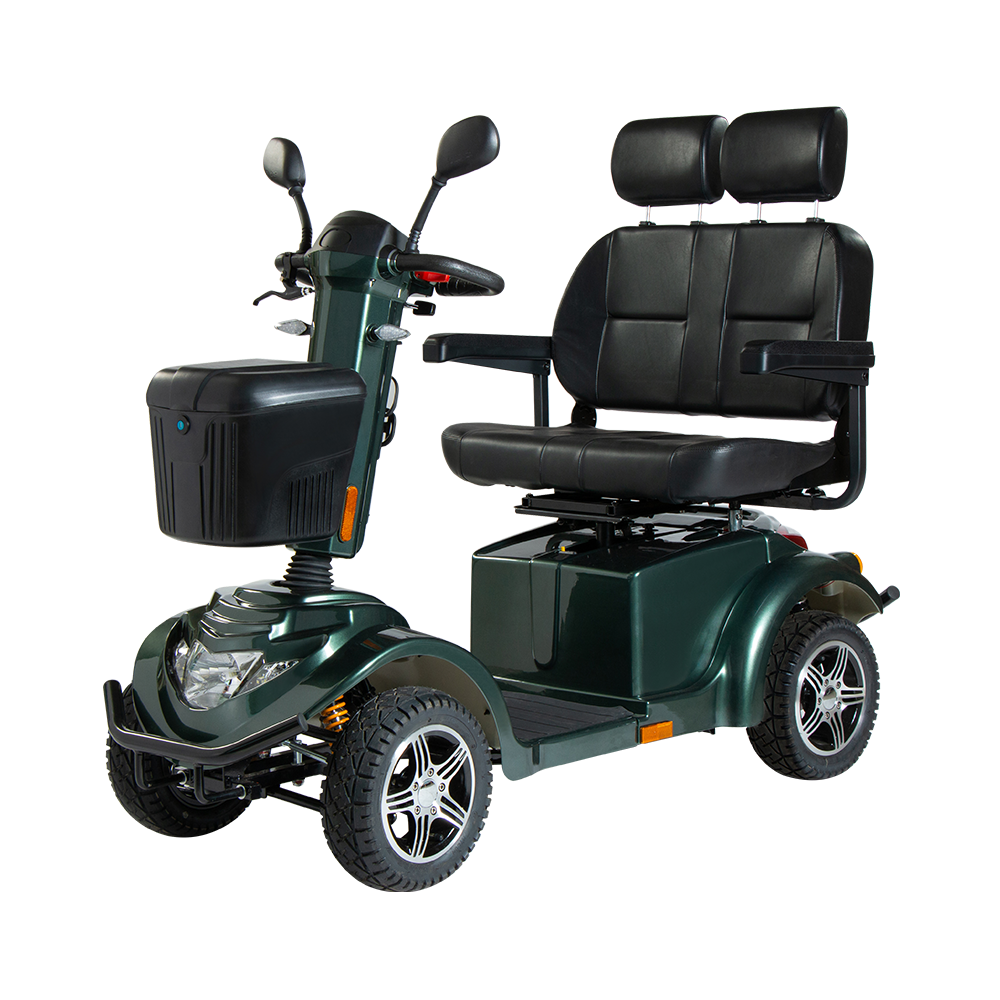
A second seat changes more than the number of people a mobility scooter can carry. It changes how two people enter, sit, communicate, and move through the same space. As shared mobility becomes a more visible part of short-distance travel, the 4 Wheel 2 Seat Mobility Scooter is developing into a distinct vehicle format rather than simply a larger version of a single-seat scooter.
Side-By-Side Seating Changes The Cabin Experience
Most dual-seat mobility scooters place the two occupants next to each other. That arrangement gives both riders a forward-facing view and keeps the passenger close to the driver throughout the journey.
The layout also changes the width of the vehicle. More lateral space is needed around the seats, armrests, foot areas, and steering position. Designers have to prevent the passenger area from becoming cramped while keeping the controls within comfortable reach of the person driving.
A 4 Wheel 2 Seat Mobility Scooter therefore has a different interior relationship from a tandem vehicle. The passenger is part of the driver's immediate surroundings rather than occupying a separate position behind the steering area.
This can be useful for companions who need to remain together during a trip, particularly when conversation or visual contact forms part of the journey.
Entry And Exit Become Shared Movements
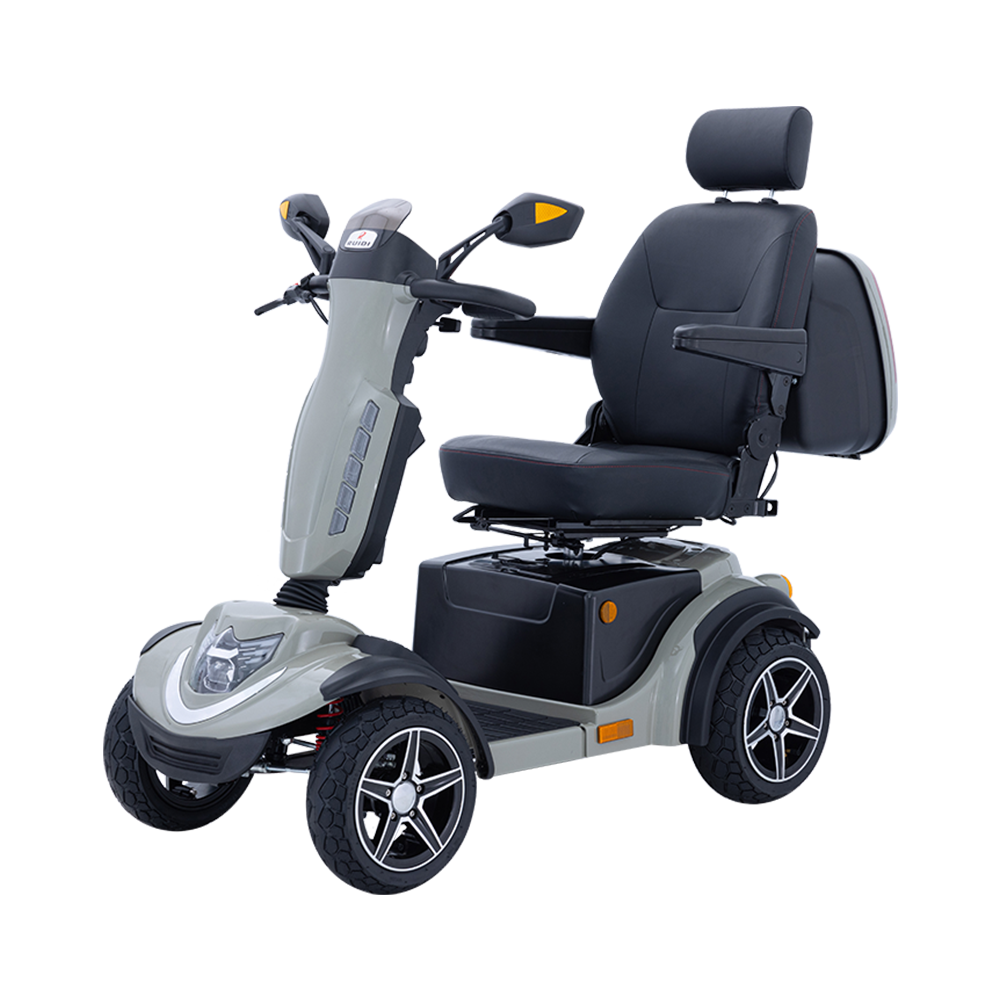
Getting onto a single-seat scooter usually involves one person approaching the seat, positioning their feet, and settling into the driving position. A two-seat configuration introduces another person into the sequence.
Seat spacing and the position of armrests can affect how easily both occupants settle into place. If the passenger has limited room to move their legs, a wide body alone does not solve the problem. The entry path needs to work with the seat structure and surrounding frame.
For a 4 Wheel 2 Seat Mobility Scooter, this makes boarding geometry a practical design consideration. A vehicle used by couples, family members, or a rider accompanied by a caregiver may be boarded and dismounted several times during a single outing.
The arrangement also needs to account for the driver's access to the steering controls after both occupants are seated.
Four Wheels Support A Wider Shared Platform
The four-wheel configuration gives designers a broad foundation for a side-by-side seating arrangement. Wheel placement, chassis width, and seat positioning all contribute to how the vehicle occupies space on the road.
A current dual-seat configuration in the category uses four wheels, a 14-inch wheel setup, and a 2.4 m turning radius. These specifications illustrate the physical scale required to accommodate two seats while retaining maneuverability for everyday routes.
The 4 Wheel 2 Seat Mobility Scooter is consequently larger than many compact single-rider models. That difference is noticeable in parking areas, paths, building entrances, and other locations where turning space is limited.
The wider footprint can also create a more open seating area, giving both occupants a defined position instead of asking the passenger to share a narrow rear section.
Passenger Comfort Is A Shared Design Problem
A passenger who is not controlling the vehicle still needs stable seating, appropriate foot support, and enough room to maintain a comfortable posture. Their experience is affected by the same acceleration, braking, and road vibration experienced by the driver.
Dual-seat models therefore increasingly treat the passenger seat as a functional part of the vehicle rather than an extra cushion attached to the frame. Seat height, back support, armrest placement, and suspension behavior all contribute to how the second occupant experiences the ride.
On a 4 Wheel 2 Seat Mobility Scooter, the two seating positions also need to work together. A seat that provides generous space for one occupant should not interfere with the driver's steering movement or reduce access to controls.
This is particularly relevant when journeys last longer than a quick trip around a parking area. Shared mobility places both occupants inside the same ride environment, so comfort cannot be considered from the driver's position alone.
Storage Needs Grow With Two-Person Trips
Two people also tend to bring more belongings. Shopping bags, personal items, small mobility aids, or other equipment may need to travel alongside the occupants.
This creates another design question: where should those items go without occupying the passenger's foot space?
Some dual-seat mobility scooters incorporate rear storage areas or baskets, separating personal cargo from the seating area. On a current Ruidi configuration, a rear box has a stated safe working load of 8 kg.
For a 4 Wheel 2 Seat Mobility Scooter, practical storage can therefore influence how useful the vehicle becomes outside a purely recreational setting. A shared trip to a shopping area or community facility often involves carrying something back, making storage part of the overall mobility arrangement.
Shared Mobility Is Creating A Different Vehicle Category
The development of two-seat scooters reflects a wider shift from individual mobility toward accompanied travel. The second rider may be a spouse, family member, friend, or caregiver, and each relationship creates slightly different expectations for seating, access, storage, and control.
A 4 Wheel 2 Seat Mobility Scooter sits between personal mobility equipment and a small shared electric vehicle. Its four-wheel structure provides the foundation for side-by-side seating, while the enlarged body creates room for another person without turning the vehicle into a full-size passenger cart.
As this category develops, attention is moving beyond simply adding another seat. The more interesting engineering questions involve how two people share the same driving space, how they board and leave the vehicle, and how the chassis, seating, controls, and storage work together during ordinary journeys.

 No.58 Feiyang Road , Jinhua 321025, Zhejiang, China
 +86-13905796145
 +86-579-82268015