


 English
 中文简体
中文简体 Español
 Deutsch
Travel mobility has created a different design challenge for the scooter industry. A vehicle used mainly around a neighborhood can remain at home between trips, but a travel-oriented model may need to move through several stages in one journey: storage, loading, transport, unloading, and riding at the destination. That sequence is shaping how the Lightweight Travel Mobility Scooter category continues to develop.
The Journey Starts Before The Scooter Is Driven
Portability is often associated with lifting weight, but travel use involves more than the number shown on a specification sheet. The shape of the scooter, how its components are arranged, and how easily it can be handled in a limited space can all affect the loading process.
A compact scooter may need to be placed in a vehicle compartment, moved through a hotel entrance, or stored temporarily in a room. These situations favor designs that occupy less space without creating complicated preparation steps.
The Lightweight Travel Mobility Scooter has therefore evolved around the idea of reducing the physical burden of the entire travel sequence. Some small mobility scooter designs use folding structures, detachable sections, or compact frames to make transportation easier without turning the vehicle into a purely indoor device.
Storage Space Is Becoming Part Of Mobility Design
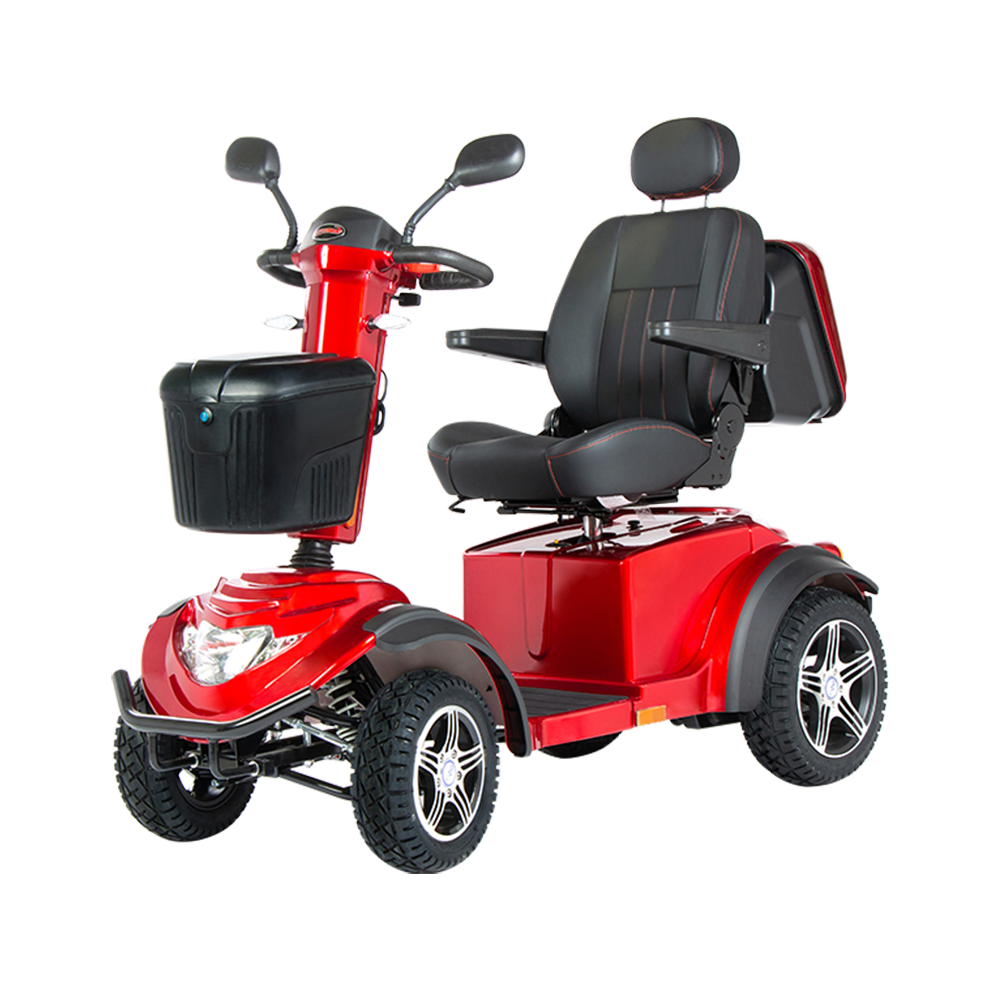
Vehicle storage presents a different constraint from ordinary riding. A scooter that performs well on the road can still be inconvenient if its folded or separated form occupies an awkward shape.
Manufacturers of small mobility scooters increasingly consider the relationship between chassis dimensions and storage volume during development. The goal is not simply to reduce every dimension, since extremely compact structures can affect seating, wheel placement, or ground clearance.
For a Lightweight Travel Mobility Scooter, the useful configuration is often the one that creates a practical compromise between riding geometry and transport dimensions. A shorter frame may fit more easily into a vehicle, while a stable wheelbase remains necessary once the scooter is being ridden.
This is also why folded dimensions and assembled dimensions should be considered separately. The relates to transport and storage; the second determines how the scooter behaves during actual use.
Frequent Loading Can Influence Structural Choices
Travel equipment may be loaded and unloaded repeatedly rather than remaining stationary for long periods. Repeated handling places attention on hinges, locking points, detachable connections, and the way weight is distributed across the frame.
A Lightweight Travel Mobility Scooter needs enough structural rigidity for normal riding while remaining manageable during transport. Folding mechanisms therefore need to secure the frame firmly in the riding position and remain practical during repeated operation.
The same consideration applies to detachable battery systems. When the battery can be separated from the main frame, storage and charging arrangements can become more flexible. Battery configuration also affects how much of the scooter's total mass must be moved at one time.
Travel Scooters Still Need Outdoor Stability
Reducing size does not remove the need for stable handling once the scooter leaves a vehicle. Travel routes can include pavement joints, ramps, parking areas, building entrances, and uneven sections that require appropriate wheel and chassis design.
Small mobility scooters commonly use compact wheelbases and relatively low operating speeds, making them suitable for short-distance travel. Some models in the category are designed around removable or foldable structures while retaining four-wheel configurations for added stability.
The Lightweight Travel Mobility Scooter therefore occupies a specific position between a fully portable personal device and a larger outdoor mobility scooter. Its design has to account for two different moments: being carried or transported, and supporting the rider once assembled.
Battery Arrangements Affect Travel Convenience
Electric mobility adds another consideration to travel planning. Battery size, charging method, removable components, and available charging locations all influence how the scooter fits into a trip.
A compact travel model may prioritize a battery configuration that can be handled separately from the chassis. This can make charging more flexible when the scooter is stored in a different location from the vehicle itself.
For a Lightweight Travel Mobility Scooter, battery design also interacts with range. A larger battery can provide more stored energy but adds weight and occupies additional space. A smaller travel-oriented configuration may instead focus on the distances typically associated with short trips between transport points and destinations.
Compact Mobility Is Moving Toward Multi-Stage Use
The development of small travel scooters reflects a broader change in how mobility equipment is used. The vehicle is no longer considered only as a means of moving from one point to another. Its transport, storage, charging, assembly, and riding stages are increasingly treated as one connected experience.
That shift gives the Lightweight Travel Mobility Scooter a distinct engineering direction. Frame structure, folding mechanisms, battery placement, seating geometry, and wheel configuration all need to work across different stages of the same journey.
The strongest travel-oriented designs are therefore not defined by low weight alone. Their value comes from how naturally the scooter moves between storage, transportation, setup, and everyday riding without making any single stage unnecessarily complicated.

 No.58 Feiyang Road , Jinhua 321025, Zhejiang, China
 +86-13905796145
 +86-579-82268015