

 English
 中文简体
中文简体 Español
 Deutsch
As urban transportation infrastructure continues to improve—and as public demand for travel comfort and safety rises—a new type of enclosed electric mobility scooter, emphasizing "all-weather adaptability," is gradually gaining attention. Often referred to as weather-resistant enclosed scooters, these devices are capable of operating stably under a variety of weather conditions—including rain, snow, strong winds, and low temperatures—thereby providing a more reliable mode of transportation for individuals with mobility impairments and those making short-distance trips.
The Evolution of Enclosed Structural Design
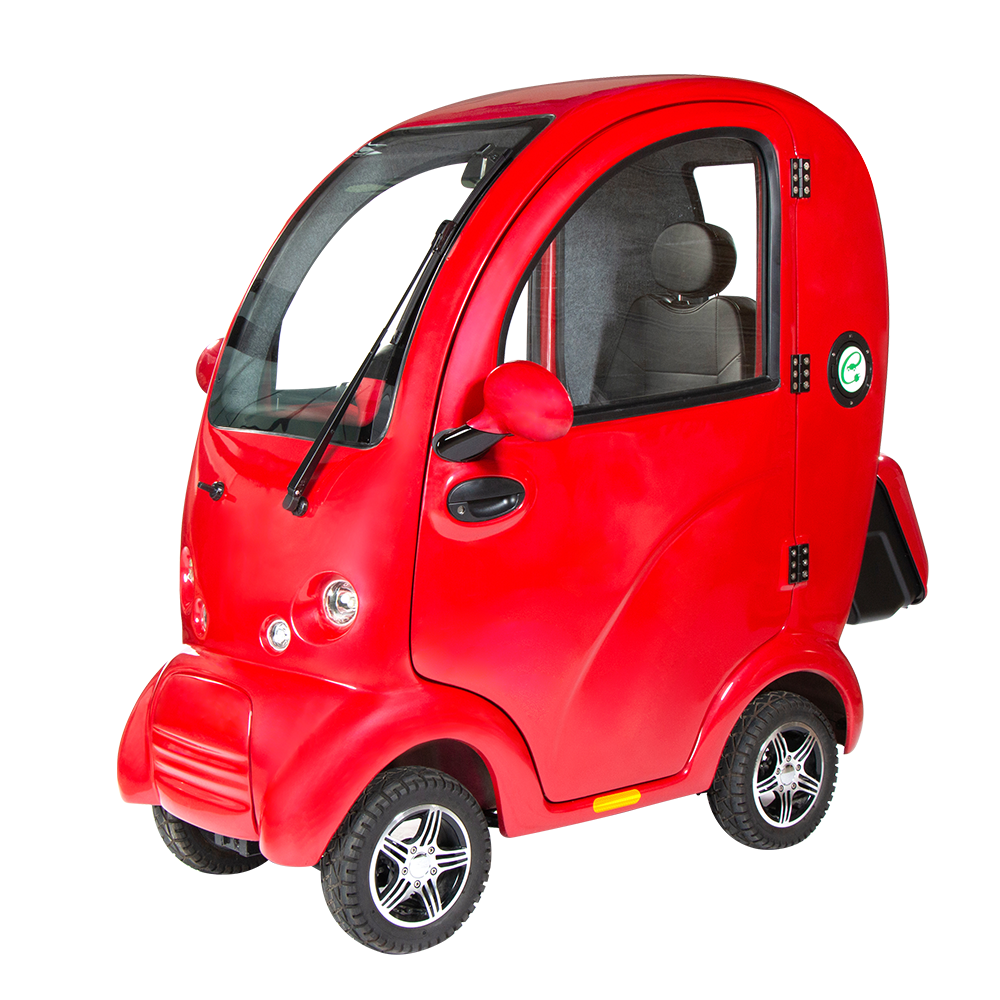
The defining characteristic of enclosed electric mobility scooters lies in their overall structural design, which adopts either a semi-enclosed or fully enclosed configuration. Compared to open-structure models, these designs incorporate transparent or translucent protective shields on the exterior, effectively creating a relatively self-contained cabin space for the driver.
This structure typically comprises several key components: the body frame, the protective shell, the door and window system, and various sealing elements. The outer shell is frequently constructed from high-strength, lightweight materials; this choice ensures robust impact resistance while simultaneously minimizing the overall weight burden of the vehicle.
Some designs also feature operable doors, offering users greater convenience when entering or exiting the vehicle while simultaneously providing a basic level of isolation from the external environment when closed. This design approach demonstrates significant adaptability for both daily urban commuting and short-distance travel in suburban areas.
Enhanced Climate Adaptability
One of the more significant advantages of the enclosed design is its exceptional ability to adapt to complex weather conditions.
In rainy environments, the vehicle's outer shell effectively prevents rainwater from penetrating the interior cabin, thereby mitigating the risk of moisture damage to the device. In low-temperature environments, the enclosed structure helps to minimize heat loss to a certain extent, contributing to a more stable and comfortable internal climate.
Under windy conditions, the protective shell structure helps to reduce the impact of airflow on driving stability, thereby enhancing overall ride comfort.
Some models are also equipped with basic ventilation systems designed to maintain air circulation within the cabin while it is enclosed, preventing the interior atmosphere from becoming overly stuffy. This feature is particularly crucial for scenarios involving prolonged periods of use.
Power Systems and Energy Management
Enclosed electric mobility scooters continue to rely primarily on electric propulsion as their main power source. Given the increased overall weight and structural complexity inherent in these designs, their energy management systems are typically optimized to enhance operational efficiency and extend driving range.
The battery systems commonly employed in these vehicles feature rechargeable configurations and support a variety of charging methods—ranging from standard indoor charging to designs utilizing removable battery modules for convenient off-board recharging. Some devices are also equipped with a battery level display system, allowing users to monitor their usage status in real-time.
The drive system typically employs a stable output mode, ensuring the vehicle maintains smooth operation across various road conditions. Some designs prioritize smoothness at low speeds to accommodate mobility requirements within indoor environments or densely populated areas.
Furthermore, some systems incorporate a basic energy-saving mode; by adjusting power output to minimize unnecessary consumption, this feature effectively extends the operating time per single charge.
Comfort and Interior Space Design
The interior space design of enclosed mobility scooters typically centers on "basic comfort," with a primary focus on the user's experience during prolonged periods of use.
Seat structures generally feature a highly supportive design to mitigate fatigue associated with sitting for extended durations. Some models incorporate adjustable features within the seating area, allowing users to customize their seating posture according to their individual needs.
The interior cabin is typically equipped with a simple control panel for managing driving direction, speed adjustments, and status monitoring. The interface design prioritizes simplicity and intuitiveness to minimize operational complexity.
Some designs also include small storage compartments for stowing personal belongings, thereby enhancing convenience for daily use.
Safety Systems and Stability Control
In terms of safety performance, enclosed electric mobility scooters are typically equipped with multi-layered protection mechanisms.
A basic braking system ensures stable stopping control, preventing skidding or loss of control. Some designs also incorporate a hill-assist function to provide additional control support when ascending or descending slopes.
The vehicle body structure itself serves a protective function, acting as a buffer against minor collisions or external impacts.
Regarding visibility, some devices are equipped with front and rear lighting systems as well as reflective markings to enhance their conspicuity in low-light environments. This is particularly crucial for operation during nighttime hours or in adverse weather conditions.
Additionally, the enclosed structures of some models feature anti-fog designs to minimize instances where internal visibility is compromised by temperature differentials.
Diversification of Application Scenarios
The range of application scenarios for enclosed electric mobility scooters is gradually expanding, evolving from their initial role as basic mobility aids to encompass a wider variety of daily environments.
In urban settings, they are utilized for intra-community travel, short-distance shopping trips, medical appointments, and similar activities. In regions characterized by frequently changing weather conditions, the protective capabilities of these vehicles ensure greater operational reliability and stability. Within public transportation hubs, such devices can also serve as short-distance connectors, facilitating users' transitions between different modes of transport.
In certain open areas or scenic environments, the enclosed structure provides users with a relatively private and self-contained mobile space, thereby mitigating the impact of external weather fluctuations.
Maintenance and Operational Management
Given the relative complexity of their enclosed structure, these devices require specific attention regarding routine maintenance.
For instance, cleaning the exterior casing and inspecting the seals are critical steps in maintaining good performance. The integrity of the sealing strips directly affects the device's waterproofing and wind resistance capabilities; therefore, they require periodic inspection.
- The battery system must be charged and stored in accordance with standard protocols to prevent prolonged over-discharge or improper charging practices.
- Furthermore, maintenance of the ventilation system is equally important to ensure proper internal air circulation.
- Through proper usage and regular inspections, the overall service life of the device can be extended, and its performance stability can be sustained.
As an assistive mobility tool capable of adapting to complex climatic conditions, the enclosed electric mobility scooter is gradually finding its way into an expanding range of application scenarios. Through its enclosed structural design, electric propulsion system, and fundamental safety features, it offers users a relatively stable and reliable mobility experience.

 No.58 Feiyang Road , Jinhua 321025, Zhejiang, China
 +86-13905796145
 +86-579-82268015