

 English
 中文简体
中文简体 Español
 Deutsch
Rain. Wind. Cold. These conditions keep many mobility scooter users indoors. An open scooter offers no protection. The rider feels every drop of rain and gust of wind. A weatherproof enclosed mobility scooter solves this problem with a full cabin that shields the user from the elements.
This is not a simple add-on. The enclosed design changes the entire vehicle structure. Weight, stability, visibility, and comfort all get reengineered.
What enclosed means in practice
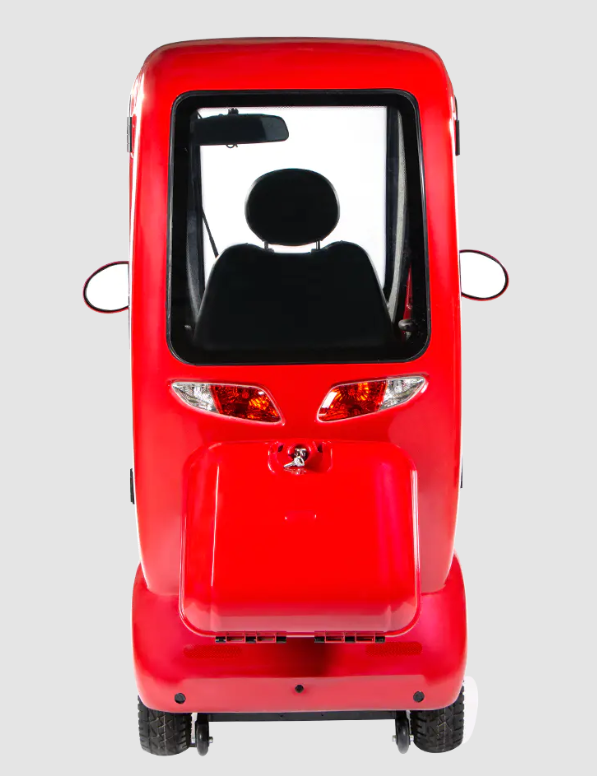
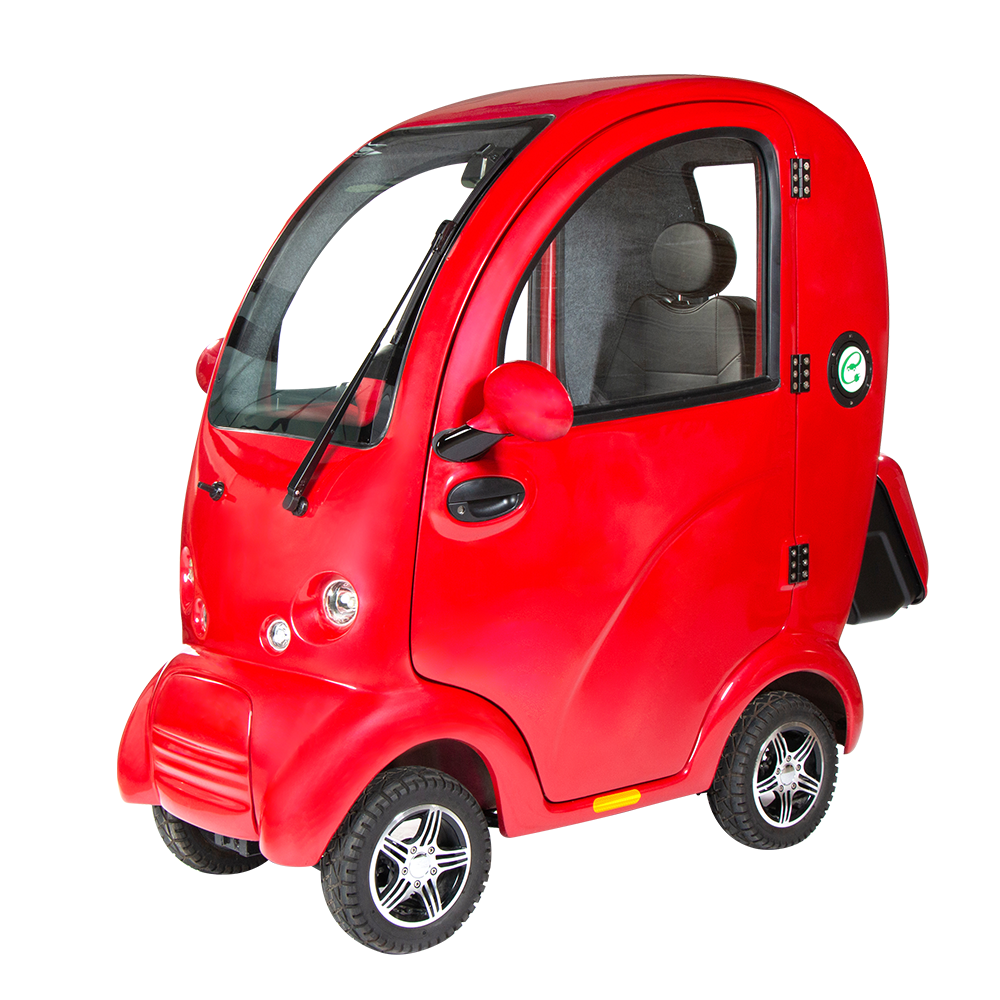
A weatherproof enclosed mobility scooter has a rigid body shell. The cabin surrounds the rider completely. A windshield provides forward visibility. Side windows or panels block wind and rain. Some models have doors. Others use a partial enclosure that still protects the upper body.
The enclosure serves several purposes. Rain stays outside. Cold wind does not reach the rider. Dust and road spray are blocked. The weatherproof enclosed mobility scooter turns bad weather days into usable travel days.
Why suspension matters more
Adding a cabin increases weight. A weatherproof enclosed mobility scooter can weigh significantly more than an open model. The extra weight affects how the scooter handles.
The suspension system on a weatherproof enclosed mobility scooter must work harder. It needs to absorb bumps while managing the higher center of gravity. Without good suspension, the ride becomes harsh. Vibrations from the road travel through the seat and into the rider.
Some weatherproof enclosed mobility scooter models use independent front suspension. This design helps each wheel react separately to bumps. The scooter stays more stable during turns.
Heat and ventilation challenges
A closed cabin traps heat. In warm weather, a weatherproof enclosed mobility scooter can become uncomfortable. Good ventilation is necessary.
Some models include small fans. Air circulates through vents. The rider stays cooler. In cold weather, the same enclosure keeps body heat inside. The rider stays warmer without needing heavy winter clothing.
The windshield on a weatherproof enclosed mobility scooter must resist fogging. Without proper airflow, condensation builds on the inside glass. The rider cannot see clearly. Some models have dual-pane windshields or anti-fog coatings.
Visibility and safety features
Seeing the road is essential. A weatherproof enclosed mobility scooter has a large windshield. Side windows provide peripheral views. The A-pillars (frame between windshield and side windows) should be narrow enough to avoid blind spots.
Reverse driving is harder in an enclosed scooter. The rider cannot simply turn their head and look back. The cabin blocks the view. A weatherproof enclosed mobility scooter should have mirrors on both sides. Many models include a rearview camera and display.
Lights are more important on an enclosed scooter. The cabin reduces how much others can see the rider. Bright headlights, taillights, and turn signals help compensate.
Weight and range considerations
The body shell of a weatherproof enclosed mobility scooter adds weight. The glass or polycarbonate windows add more. The result is a heavier vehicle that requires more power to move.
Range typically suffers. A weatherproof enclosed mobility scooter may travel 30 to 50 kilometers on a charge. The same battery in an open scooter might go 10 to 20 kilometers farther.
The tradeoff is weather protection. For riders who live in rainy or cold climates, the reduced range is acceptable. The ability to go out any day outweighs the need to charge more often.
Getting in and out
Entry and exit are different with an enclosed scooter. A weatherproof enclosed mobility scooter often has a door. The rider must open it, step in or out, then close it.
This is more challenging than an open scooter where the rider simply sits down. People with limited arm strength or poor balance may struggle with a door. Some weatherproof enclosed mobility scooter models use sliding doors or large openings without a door.
The seat inside a weatherproof enclosed mobility scooter should be positioned for easy transfer. Swivel seats help. The rider can face outward, sit, then rotate into driving position.
Who needs an enclosed scooter
A weatherproof enclosed mobility scooter is not for everyone. If you live in a mild climate with little rain, an open scooter works fine. If you live where winters are cold and wet, the enclosure changes your life.
Consider how often you skip going out because of weather. If bad weather keeps you home for weeks at a time, a weatherproof enclosed mobility scooter opens those days back up. Medical appointments, shopping trips, and social visits become possible year-round.
The enclosure also provides privacy. Some riders feel exposed on an open scooter. People stare. A weatherproof enclosed mobility scooter creates a personal space. The rider moves through public areas without being on display.
Storage and parking
A weatherproof enclosed mobility scooter is larger than an open model. It needs more space in a garage or storage area. Measure your available space before purchasing.
Parking outside is possible but not ideal. The enclosure protects the rider, but the scooter itself still faces weather. UV rays can damage plastic windows. Rain can seep through seals over time. Indoor storage extends the life of a weatherproof enclosed mobility scooter.
For riders who need all-weather independence, an enclosed scooter is worth the extra cost and size. The ability to go out any day, regardless of weather, restores freedom that open scooters cannot provide.

 No.58 Feiyang Road , Jinhua 321025, Zhejiang, China
 +86-13905796145
 +86-579-82268015