

 English
 中文简体
中文简体 Español
 Deutsch
Design Philosophy: Shifting from Functionality to Portability
The development of compact, lightweight electric mobility scooters for travel is closely intertwined with evolving patterns of personal mobility. As the frequency of intra-city travel increases, users are placing increasingly high demands on the portability of their mobility devices.
While traditional mobility aids have reached a mature stage in terms of stability and battery range, they often face limitations regarding transport and storage. Issues such as bulky dimensions and complex assembly/disassembly processes can easily create inconveniences during travel or frequent transit.
Consequently, the design focus has gradually shifted toward "portability first." By optimizing structural layouts, eliminating redundant components, and utilizing lightweight materials, manufacturers aim to achieve a higher degree of portability without compromising the device's fundamental functionality.
Structural Characteristics: The Fusion of Compactness and Foldability
Compact, lightweight mobility scooters typically feature foldable or modular structural designs, allowing them to occupy minimal space when not in use.
The vehicle body generally comprises a seating system, chassis structure, battery module, and drive system. During the design process, complex interconnections between these components are minimized to ensure a cleaner, more streamlined overall structure.
Folding mechanisms typically fall into two categories: single-piece folding and segmented folding. Single-piece folding prioritizes rapid stowage capabilities, making it ideal for situations requiring quick folding and unfolding. Segmented folding, conversely, places greater emphasis on volume compression, making it better suited for long-distance travel or situations where storage space is limited.
Some designs also incorporate detachable structures, allowing users to disassemble the vehicle body into several lightweight components for easier individual handling and storage.
Material Application: Balancing Lightweight Design with Structural Strength
In terms of material selection, these mobility scooters predominantly utilize lightweight alloys or high-strength composite materials to strike a balance between weight control and structural stability.
A lightweight design not only enhances portability but also helps reduce energy consumption, thereby improving overall battery range performance. Furthermore, material durability is a critical consideration during the design process, ensuring that the structure remains stable and sound despite the repeated stresses of frequent folding and unfolding.
Certain components also undergo anti-corrosion treatments to ensure suitability for use in diverse climatic conditions—including humid environments or regions subject to significant temperature fluctuations.
Power Systems and Range Management
As electric-powered devices, the propulsion systems of compact travel mobility scooters rely primarily on rechargeable batteries.
Due to the necessity of controlling overall vehicle weight, battery systems are typically designed to strike a balance between capacity and physical volume. The goal is to optimize range performance as much as possible while still meeting the demands of daily short-distance travel.
Some models feature a detachable battery design, allowing users to charge the battery independently and thereby enhancing operational flexibility. Furthermore, certain systems are equipped with battery level indicators and basic energy management functions, helping users plan their travel distances effectively.
The drive system prioritizes stable power output, ensuring smooth operation across various road conditions and minimizing any abrupt sensations of acceleration or deceleration.
Operational Experience and Ergonomic Design
In terms of operation, compact and lightweight mobility scooters typically employ simplified control systems, enabling users to master the controls quickly and easily.
The control interface is generally concentrated within the handlebar area, facilitating basic driving functions—such as steering and speed adjustment—through simple inputs. Some designs also incorporate a switchable "low-speed mode" to better suit indoor environments or areas with heavy pedestrian traffic.
Regarding human-machine interaction, the design focus is on minimizing the learning curve, ensuring that users of all age groups can rapidly adapt to the device's operational logic.
Additionally, some models integrate basic notification features into the control panel—such as battery status indicators or mode displays—to enhance operational transparency and user awareness.
Comfort Design: Adapting to Short Trips and Travel Scenarios
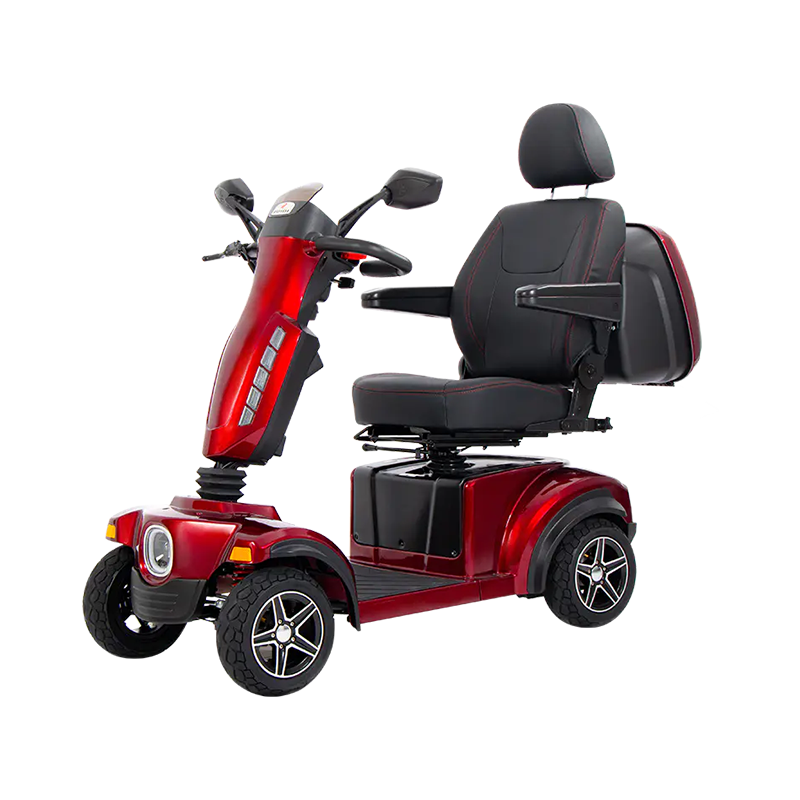
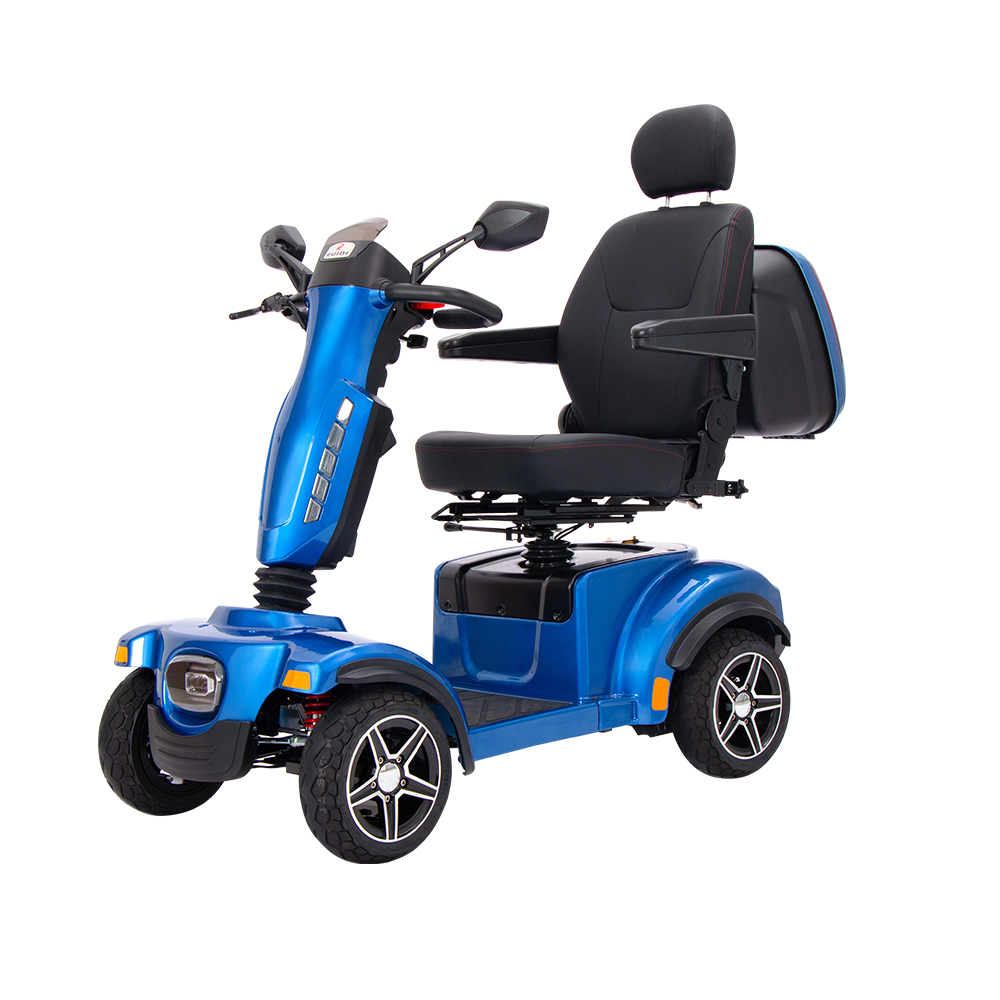
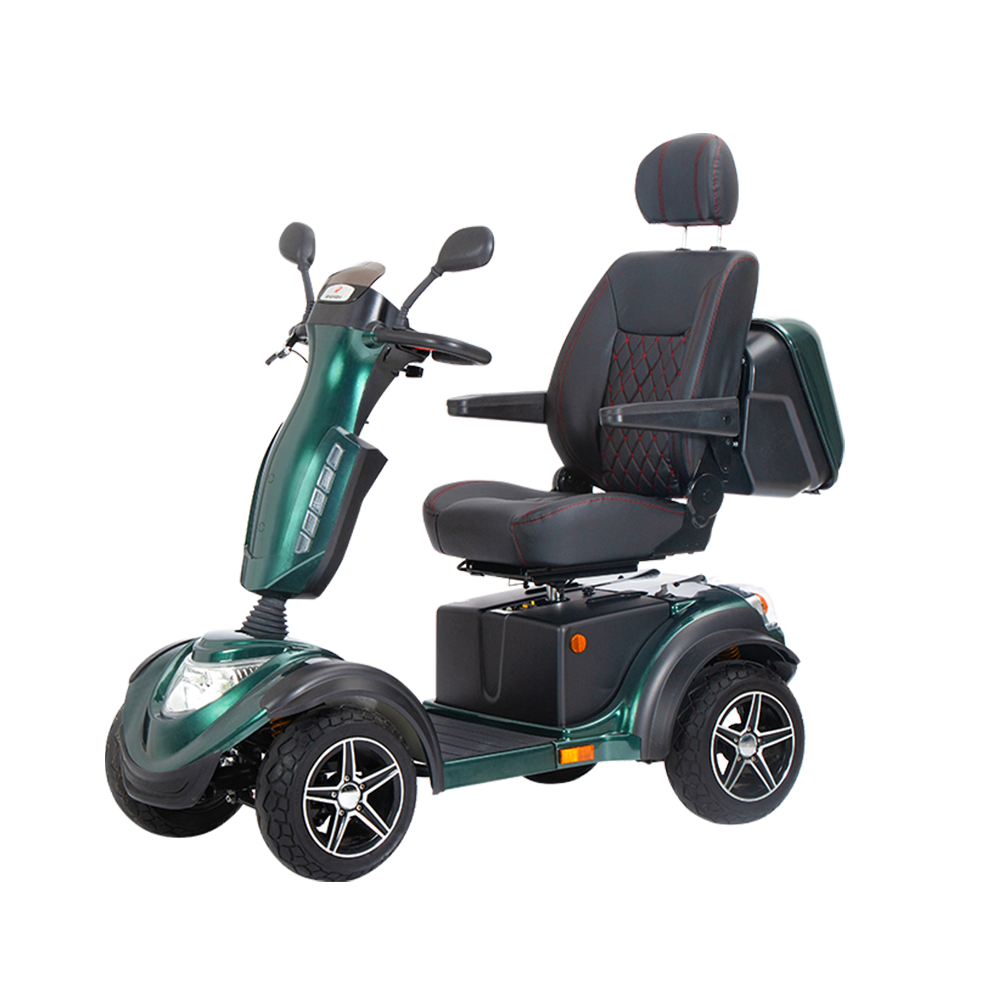
Despite their emphasis on lightweight construction and compact dimensions, these mobility scooters are still designed to meet fundamental comfort requirements.
Seat designs typically feature ergonomic structures that provide adequate body support, thereby minimizing fatigue during prolonged use. Some models incorporate adjustable backrests or cushioning mechanisms to further enhance the riding experience.
In terms of shock absorption, compact models typically utilize basic suspension systems to mitigate the impact of uneven road surfaces on ride comfort.
Storage space is designed with practicality in mind, typically providing room for personal belongings or small travel essentials, thereby enhancing convenience for daily use.
Applicable Scenarios: Extending from Urban Life to Travel
Compact and lightweight travel mobility scooters have a wide range of applications, primarily centering on the following areas:
- In daily urban life, they serve as ideal aids for navigating within residential communities, running shopping errands, and undertaking short-distance commutes.
- In public transportation settings, the foldable nature of these devices allows them to be seamlessly integrated with subway, bus, or car travel, thereby accommodating multi-modal commuting structures.
- In travel scenarios, such devices serve as short-distance mobility aids, enabling users to navigate flexibly within tourist attractions, airports, or hotel surroundings.
Furthermore, within certain large-scale indoor environments—such as exhibition centers or commercial complexes—they can also be utilized as supplementary mobility tools.
Safety Design and Operational Stability
Safety constitutes a critical component in the design of compact mobility scooters.
A fundamental braking system is employed to manage stopping and deceleration processes, ensuring stability across various road conditions. Some models also incorporate hill-assist functions to facilitate safe operation on inclines and declines.
The structural design of the vehicle prioritizes center-of-gravity control; by strategically positioning the battery and seating components, the overall operational stability is significantly enhanced.
Regarding visibility, certain devices are equipped with basic lighting systems or reflective markings to improve their detectability in low-light environments.
Additionally, some designs incorporate speed-limiting mechanisms to address safety requirements within indoor spaces or areas with high pedestrian traffic.
Their application continues to expand across both daily urban commuting and travel scenarios, offering a highly flexible option to meet diverse mobility needs. As technology continues to evolve, these devices hold significant potential for further expansion within the future mobility ecosystem.

 No.58 Feiyang Road , Jinhua 321025, Zhejiang, China
 +86-13905796145
 +86-579-82268015