

 English
 中文简体
中文简体 Español
 Deutsch
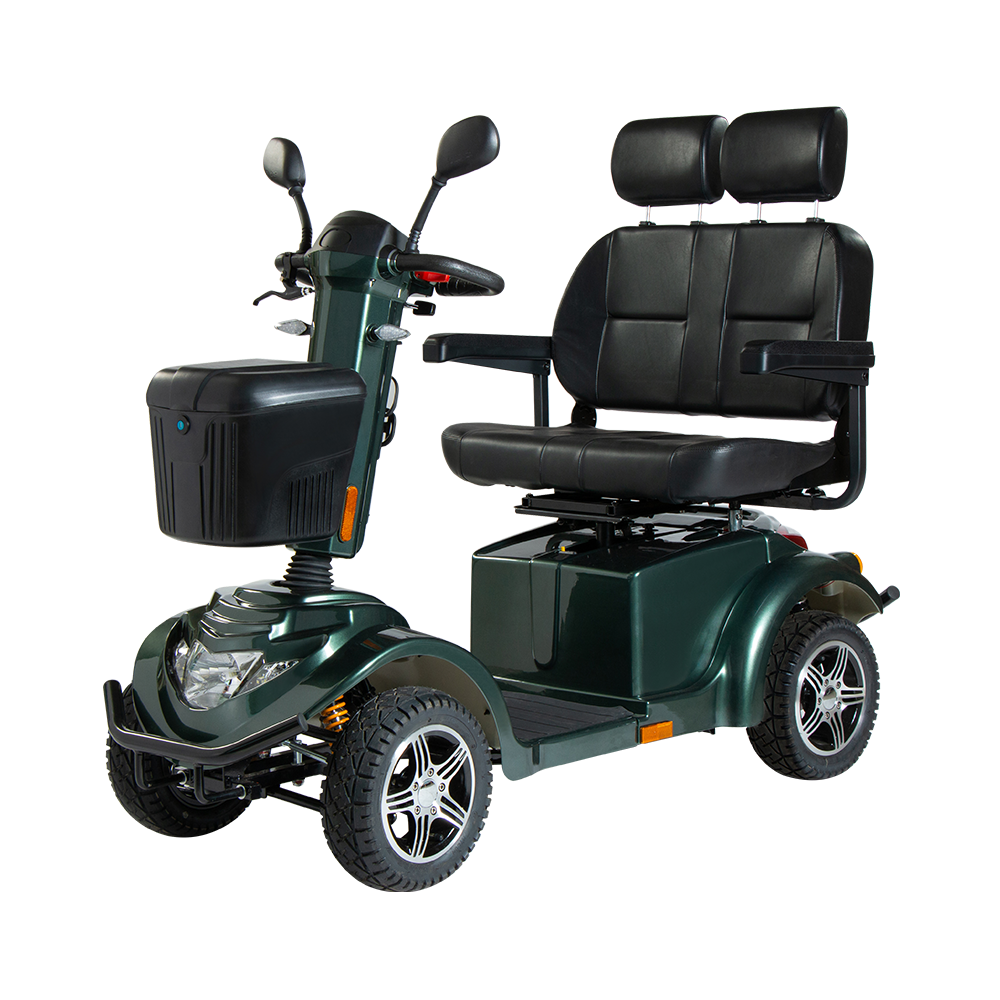
Many mobility scooters carry one person. That works for many users. But some people need to travel with a companion. A dual seat mobility scooter solves this problem by adding a second seat. The design allows two people to ride together.
This is not just a larger scooter. The engineering changes significantly. Weight distribution, turning stability, and power requirements all shift when a second passenger joins the ride.
Two different seating layouts
Not all dual seat mobility scooter models arrange seats the same way. Two common layouts exist. Each serves different needs.
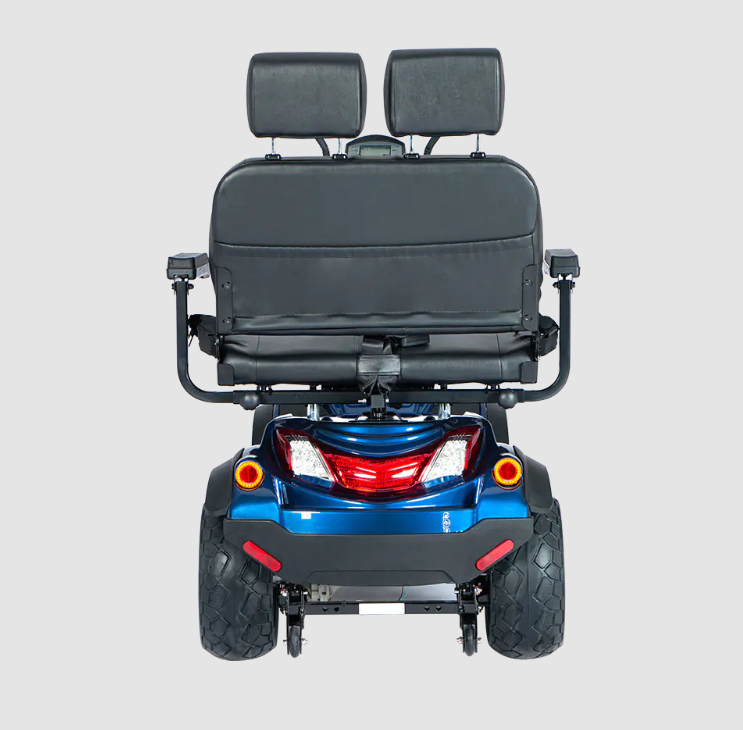
Side-by-side seating places both passengers next to each other. This layout works well for couples or caregiver-patient pairs who want equal interaction. The riders share the same forward view. Conversation comes naturally. The vehicle is wider than a standard scooter. That affects where it can go.
Tandem seating puts one passenger behind the other. This layout looks more like a traditional scooter with an extended rear section. The dual seat mobility scooter with tandem seats fits through narrower doorways. The tradeoff is less direct interaction between riders.
Who uses the side-by-side layout
The side-by-side dual seat mobility scooter is popular in family and social settings. A couple can ride together to run errands or visit neighbors. An elderly parent and an adult child can share the ride without one person walking alongside.
Tourist areas and scenic spots often use dual seat mobility scooter models for rentals. Two visitors can explore together. The shared experience adds value beyond simple transportation.
The wider stance of a side-by-side dual seat mobility scooter provides good lateral stability. Passengers sit low. The center of gravity stays between the wheels. That design reduces rollover risk during turns.
Who uses the tandem layout
The tandem dual seat mobility scooter serves a different market. Medical transport and rehabilitation settings are common. A caregiver sits behind the user. The front rider controls the scooter. The rear passenger can assist but does not need to operate the vehicle.
This layout keeps the dual seat mobility scooter narrow enough for standard doorways. The overall width remains close to a single-seat model. That matters for indoor use or navigating through tight spaces.
Some tandem dual seat mobility scooter models allow control from either seat. The rear passenger can take over if the front rider becomes tired or unable to steer. This adds a layer of safety for users with variable conditions.
Engineering challenges of two passengers
Adding a second seat changes everything. A dual seat mobility scooter must handle more weight. The frame needs reinforcement. The motor requires more torque. The braking system needs extra capacity.
Weight distribution becomes critical. In a tandem dual seat mobility scooter, the rear passenger sits behind the rear axle. That puts more load on the back wheels. Acceleration and braking feel different compared to a single-rider scooter.
The side-by-side dual seat mobility scooter spreads weight across the full width. Turning forces increase because the passengers sit farther from the center line. The suspension must manage lateral roll during cornering.
Stability and safety features
A dual seat mobility scooter typically has a longer wheelbase than single-seat models. That improves straight-line stability. The scooter feels more planted at higher speeds.
Anti-tip wheels are common on dual seat mobility scooter designs. These small rear wheels prevent tipping backward when climbing steep ramps. With two passengers, the risk of rearward tipping increases. The safety hardware compensates.
Braking distance increases with two riders. A dual seat mobility scooter needs larger brakes or more aggressive brake tuning. Some models use regenerative braking to assist the mechanical system.
When a single seat still makes sense
A dual seat mobility scooter is not for everyone. The vehicle is heavier. It costs more. It takes up more storage space.
If you always travel alone, a single-seat scooter is simpler. If you occasionally need to carry a second person, consider whether a dual seat mobility scooter is worth the tradeoffs. Some users buy a double for the few times they ride with someone else. Others find the extra capability essential.
The right choice depends on your daily routine. A dual seat mobility scooter shines for regular paired travel. For solo trips with less companions, the added size and weight may be unnecessary.

 No.58 Feiyang Road , Jinhua 321025, Zhejiang, China
 +86-13905796145
 +86-579-82268015